Get Full Government Meeting Transcripts, Videos, & Alerts Forever!
Get email alerts on the Homelessness Services topic
No spam. Unsubscribe anytime.
Council advances several shelter contracts amid protests over cost, concentration of services
Summary
Council considered multiple contracts and resolutions to expand non‑congregate shelter capacity and support services, including contracts with the Other Ones Foundation and Family Endeavors and a state‑funded expansion tied to Esperanza. Public commenters praised the added capacity while many residents criticized costs, concentration of services and lack of neighborhood input.
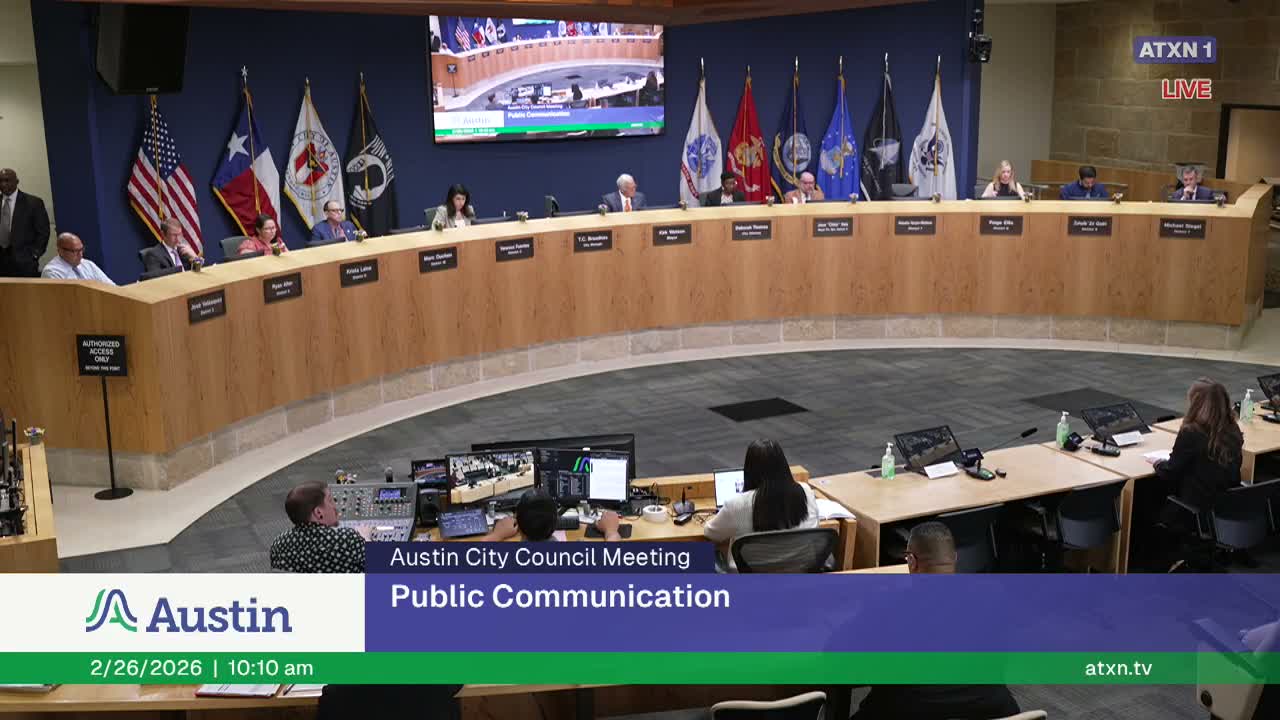
Austin City Council heard sustained public comment and took action on multiple homelessness‑related items Feb. 26, including contracts and resolutions intended to expand shelter capacity and support services.
Speakers on both sides framed the proposals as responses to urgent needs. Elizabeth Baker of the Other Ones Foundation said the group has a refined, non‑congregate shelter model and thanked council for support of item 25, which authorizes a contract to operate the Southbridge shelter. Bill Bridal of the Downtown Austin Alliance and supporters described a plan to leverage $48 million in HOME‑ARP state capital funds to expand Esperanza and create additional non‑congregate shelter beds.
Opponents including longtime Austin resident Jen Robichaud and community advocate Zenobia Joseph criticized the contracts as costly and argued the city is concentrating services in particular neighborhoods without sufficient neighborhood hearings or transportation planning. Robichaud cited figures from the record — including per‑bed monthly costs and past outcome data for Family Endeavors — and urged the council to demand better performance and more neighborhood engagement before awarding large contracts.
Council adopted the items as presented or as part of related consent actions; staff noted some contracts are tied to external deadlines and state funding that required timely commitment. Councilmembers said the objective is to expand capacity while working on transparency, transportation and dispersal strategies. The record shows continued neighborhood concern about concentration of services and specific requests for public hearings and clearer community benefits.