
City audit finds strong flood preparedness programs but calls for clearer public messaging and data fixes
Get AI-powered insights, summaries, and transcripts
Subscribe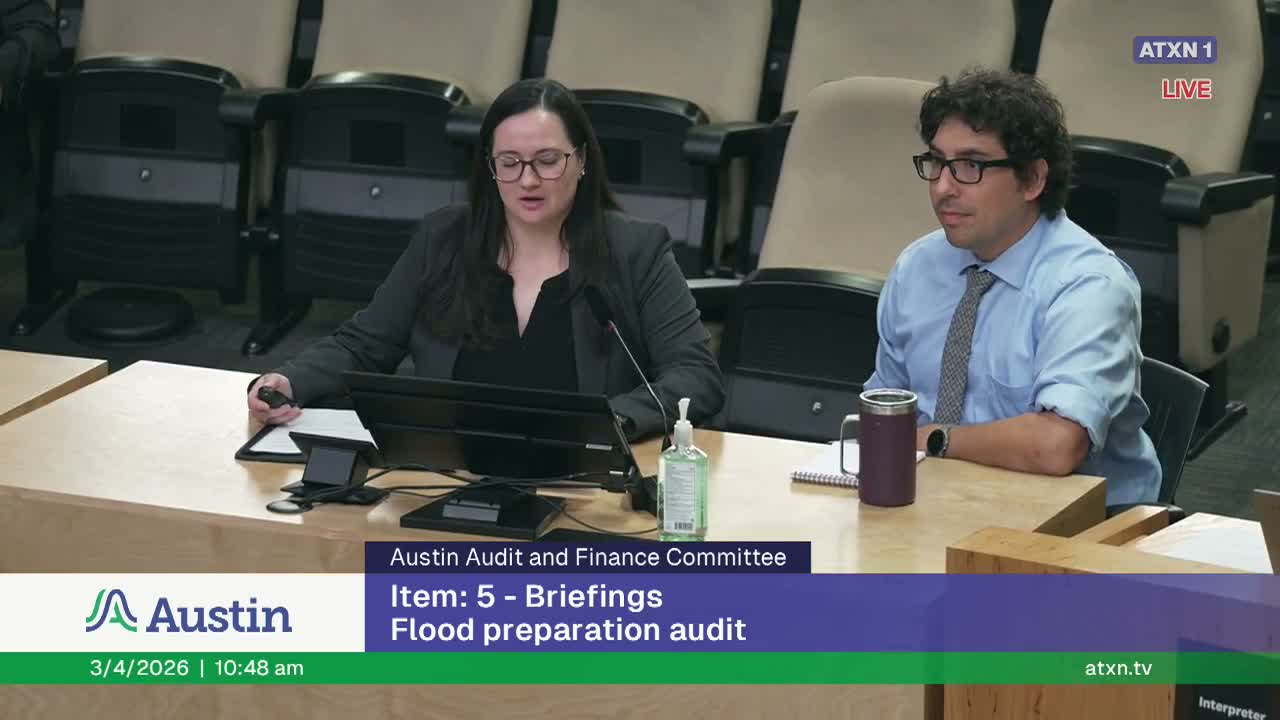
Summary
An audit of Austin’s flood preparedness praised Watershed Protection Department programs but found public information is often buried, Spanish-language and platform alerts inconsistent, and data collection gaps hinder prioritization; auditors recommended clearer plain-language outreach and better data standards.
The Austin City Auditor’s Office presented a flood-preparedness audit to the Audit and Finance Committee on March 4, finding the city has a robust, year-round approach to flood risk — including mapping, regulation, capital projects such as the Waller Creek Tunnel, an early warning system, and ongoing outreach — but that the Watershed Protection Department could do more to ensure residents and visitors receive clear, accessible flood information.
Kendall Byers, presenting the audit, said updated rainfall studies have expanded the floodplain and that approximately 90% of the city’s 311 flood-related service requests come from locations outside the modeled floodplain, underscoring the need for broader outreach. The audit recommended two principal actions: (1) ensure residents and visitors receive clear, consistent, and accessible messaging about flood risks, including tailored guidance for vulnerable populations and improved Spanish-language messaging; and (2) standardize and improve flood-related data collection and quality-assurance processes so the department better prioritizes maintenance and capital investments.
Jorge Morales, Director of Watershed Protection, agreed with the recommendations and said the department is already working to align communications with its strategic plan update, improve asset-management practices (including TV inspection of pipe systems), and refine how 311 data are used to prioritize work. Morales said the department will return with implementation strategies and noted Austin’s participation in FEMA’s Community Rating System (Austin currently holds a class 5 rating, which provides a 25% flood-insurance discount).
Why it matters: Austin is in "Flash Flood Alley," and the audit highlights that many flood incidents affect areas outside the mapped floodplain. Clearer messaging and improved data could reduce life and property losses and help the city target capital projects to areas of need.
What’s next: Watershed Protection committed to report back on communications and data improvements; council members requested follow-up briefings on strategic-plan alignment and opportunities to improve public access to flood resources.