Get Full Government Meeting Transcripts, Videos, & Alerts Forever!
Get email alerts on the School Transportation topic
No spam. Unsubscribe anytime.
Residents urge North Kingstown School Committee to reconsider termination after minibus incident
Summary
Dozens of town residents, many with long experience in school transportation, urged the School Committee to reconsider a termination related to a July minibus incident, citing weak training for bus monitors, low pay and gaps in procedures.
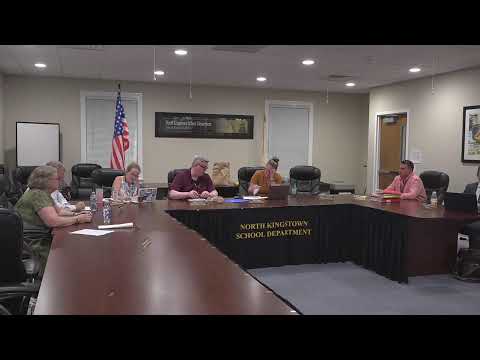
Dozens of North Kingstown residents told the School Committee on Aug. 1 that a recent minibus incident reflected systemic failures in training and pay, not just individual misconduct, and asked the district to reconsider terminating the driver involved.
At the public-comment portion of the committee’s meeting, William Howard, who said he has been involved in the bus industry for more than 50 years, said monitors receive “poor to non‑existent” training and that drivers are left to compensate. “They are not watched. They are not monitored. They are not disciplined,” Howard said, describing drivers’ added safety burden when monitors fail to do their work.
Several other speakers backed that view. Donnell Cooper, a 33‑year bus driver, described how minibuses rely more heavily on monitors to disengage alarms and secure seat belts for students with special needs and asked the committee to consider a lighter penalty for the monitor involved in the incident. “It would really be a disservice to our association and to the community to not at least consider giving her a second chance,” Cooper said.
Contractors and monitors who spoke — including Tony Mumford, Laurie Howard and Carrie Cochran — emphasized low compensation and understaffing. Mumford noted pay differences in neighboring towns and urged routine oversight and cameras on buses. Laurie Howard, who identified herself as a bus contractor and driver, said she has relied on her monitor for 14 years and asked the committee not to terminate the driver: “We are shorthanded. We can’t split ourselves in half.”
Pam Panaro, who said her mother has been a monitor for nearly 40 years, urged the committee to “do the deep dive” into training and procedures, especially the differences between large bus and minibus operations. She suggested inviting monitors and drivers as stakeholders when the policy subcommittee reviews transportation policies.
Committee members did not take public comment on the record as a vote; the meeting later moved to executive session where personnel matters were discussed and, after reconvening, the committee implemented disciplinary actions the board described in open session. The committee has signaled it will review transportation policies in upcoming subcommittee meetings and said the administration will present personnel and procedural recommendations for moving forward.
The public comments highlighted three recurring concerns: the adequacy of monitor training on minibuses, the low pay for monitors and drivers compared with neighboring districts, and the district’s incident-reporting and disciplinary follow-up. Several speakers suggested practical remedies — improved training specific to minibuses, cameras on buses, clearer assignment of pickup/drop‑off responsibilities at school sidewalks, and better pay to retain qualified monitors.
The committee referred transportation policy items to the policy subcommittee and administration for follow-up; several members asked administration to bring results of reviews and any proposed policy changes back to the committee at a future meeting.