Get Full Government Meeting Transcripts, Videos, & Alerts Forever!
Get email alerts on the Public Comment Social Services topic
No spam. Unsubscribe anytime.
Nonprofit leaders tell Austin committee cuts to social-service contracts will hurt families and survivors
Summary
Multiple nonprofit leaders testified that recent contract reductions and a proposed FY27 reset threaten core services for survivors, older adults and families; they urged the council to halt further cuts, conduct impact assessments and include providers in planning.
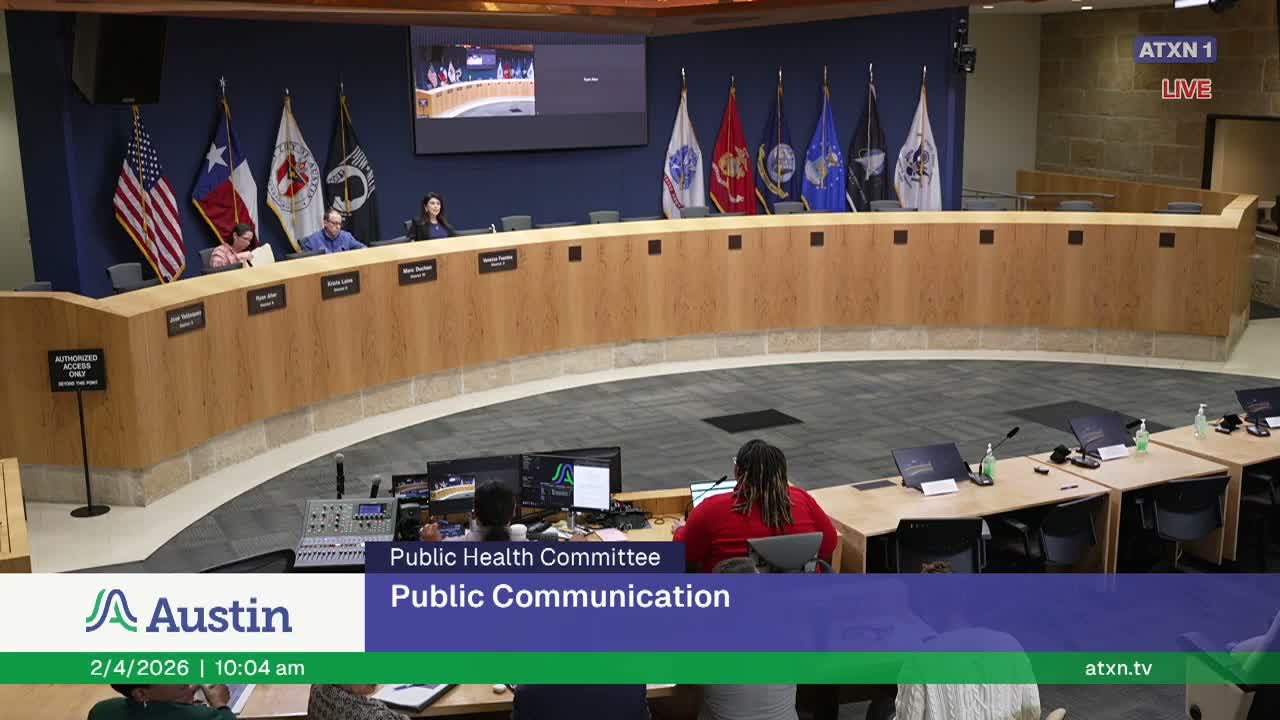
Nonprofit leaders and service providers told the Austin City Council Public Health Committee on Feb. 4 that recent cuts to city social-service contracts are already disrupting services and will cause greater costs and harm if not reversed or mitigated.
Speakers representing SAFE Alliance, 1 Voice Central Texas, Family Elder Care, Any Baby Can, United Way for Greater Austin and El Buen Samaritano described the operational and community impacts of cuts enacted in Budget 2 and urged the committee to protect core services as staff develop a prioritization framework. "Budgets are moral documents," said Dr. Peter Brestain, CEO of SAFE Alliance, during public testimony; he also offered to provide a five-page letter and supporting data to the committee.
Several witnesses described the cuts and immediate impacts: Dr. Rosa Maria Murillo of 1 Voice Central Texas said the city reduced social-service contracts by 10% retroactive to Oct. 1, 2025, which she estimated at about $5 million, and she said the city reduced the I Belong in Austin eviction-prevention program by $1 million (about a 25% reduction). Murillo asked the committee to stop additional cuts, conduct an impact assessment of the current reductions, host a budget work session that includes providers, and convene cross-sector stakeholders.
Other providers described program-level effects. Aaron Alarcon, CEO of Family Elder Care, said programs that help older adults remain at home faced a 10% cut this year and are at risk of deeper reductions next year, adding that local home- and community-based services are under-resourced. Veranda Durden, CEO of Any Baby Can, said her organization will be forced to turn away families on the brink of homelessness and that cuts will extend already long wait lists for services. Georgia Hernandez of El Buen Samaritano outlined the nonprofit's emergency-response role and said the contract reductions and cuts to eviction-prevention will immediately reduce the organization's ability to serve families at risk of eviction.
Witnesses repeatedly warned of downstream costs if prevention and survivor services are weakened: "Eroding it now will not create savings," Dewey Smith, a board member of SAFE Alliance, said, adding that reduced capacity shifts costs to hospitals, law enforcement and housing systems and harms families. Several speakers urged the committee to include nonprofit providers in designing a rubric or framework so decisions avoid unintended cascading effects.
The committee heard the testimony before staff presented an overview of the city's proposed evaluation framework and possible portfolio reductions. Committee members acknowledged the testimony and approved a policy recommendation directing the city manager to develop a rubric and pursue sustainable funding sources and stakeholder engagement.