Get Full Government Meeting Transcripts, Videos, & Alerts Forever!
Get email alerts on the Gas Franchise Renewal topic
No spam. Unsubscribe anytime.
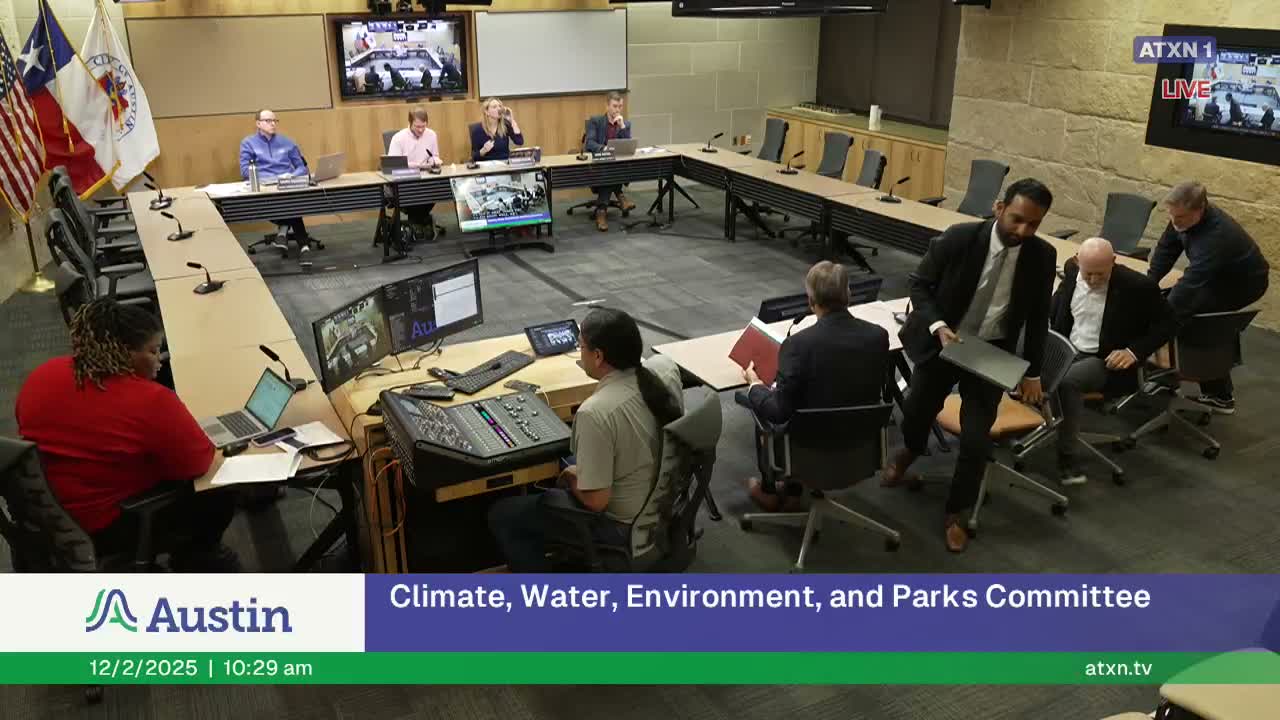
Staff brief committee on scope, limits and timeline for Texas Gas Service franchise renewal
Summary
City staff explained franchise agreement basics, statutory limits and a tight timeline to renew the Texas Gas Service (TGS) franchise (current contract expires 2026-10-15); staff noted the Railroad Commission’s retained authority over rate-making and conservation programs and said the city must be prepared to present a negotiated agreement to council by May 7, 2026.
Maria Norton, the city controller, and outside counsel outlined the legal framework, timeline and negotiable elements the committee will face as the city prepares to renew the Texas Gas Service franchise that expires Oct. 15, 2026.
Norton explained that franchise agreements allow utilities to use city rights of way in exchange for a fee and that the city’s charter (article 10) constrains long‑term franchises and sets ordinance and reading requirements. "Franchise agreements essentially allow utilities to use a city's right of way," Norton said. She told the committee staff must aim to present a negotiated agreement at the May 7 council meeting so any new ordinance can satisfy required readings and timing before the existing franchise expires.
Outside counsel Thomas Vercado described typical franchise provisions — permitting and right‑of‑way management, safety and restoration obligations, relocation and cost‑recovery language, indemnification, and the compensation structure (franchise fee). He emphasized limits: matters such as rate setting and many conservation programs are subject to the Railroad Commission rather than being exclusively within the city’s power. Vercado noted that 2023’s HB 2263 granted the Railroad Commission exclusive jurisdiction over conservation programs, which complicates including conservation‑program terms in a franchise.
Council members pressed staff about how far the city can go to address affordability and low‑income assistance within a franchise. Norton and Vercado said the city can request provisions (for example, dedicating franchise fee revenue to assistance), but the utility may resist and some rate and program elements are functionally outside the franchise because of Railroad Commission authority. Staff also reported a recent negotiated outcome in a TGS rate case: the company sought about $41,100,000 in additional annual revenue and staff negotiated that request down to about $15,000,000.
Members asked about municipalization and other leverage options. Staff said municipalization appears legally possible but would be a multiyear, high‑cost undertaking that the city has not studied for this cycle. Committee members also urged stronger public engagement from the gas utilities and asked staff to consider how franchise reporting or public‑engagement language could be improved.
Next steps: staff said they will solicit Resource Management Commission recommendations in January, feed those recommendations into negotiations with TGS, and return to the committee with proposed negotiation objectives and potential franchise language for council consideration.