Get Full Government Meeting Transcripts, Videos, & Alerts Forever!
Get email alerts on the Local Mobility Plan topic
No spam. Unsubscribe anytime.
City previews 2026 Local Mobility Annual Plan, highlights Vision Zero gains and more than 200 projects planned
Summary
Assistant Director Anna Martin told the Mobility Committee the 2026 Local Mobility Annual Plan will be published Jan. 31 and forecasts work on more than 200 projects funded by mobility bonds; staff highlighted Vision Zero outcomes, sidewalk and bikeway delivery and a target to meet 2027 bond spending deadlines.
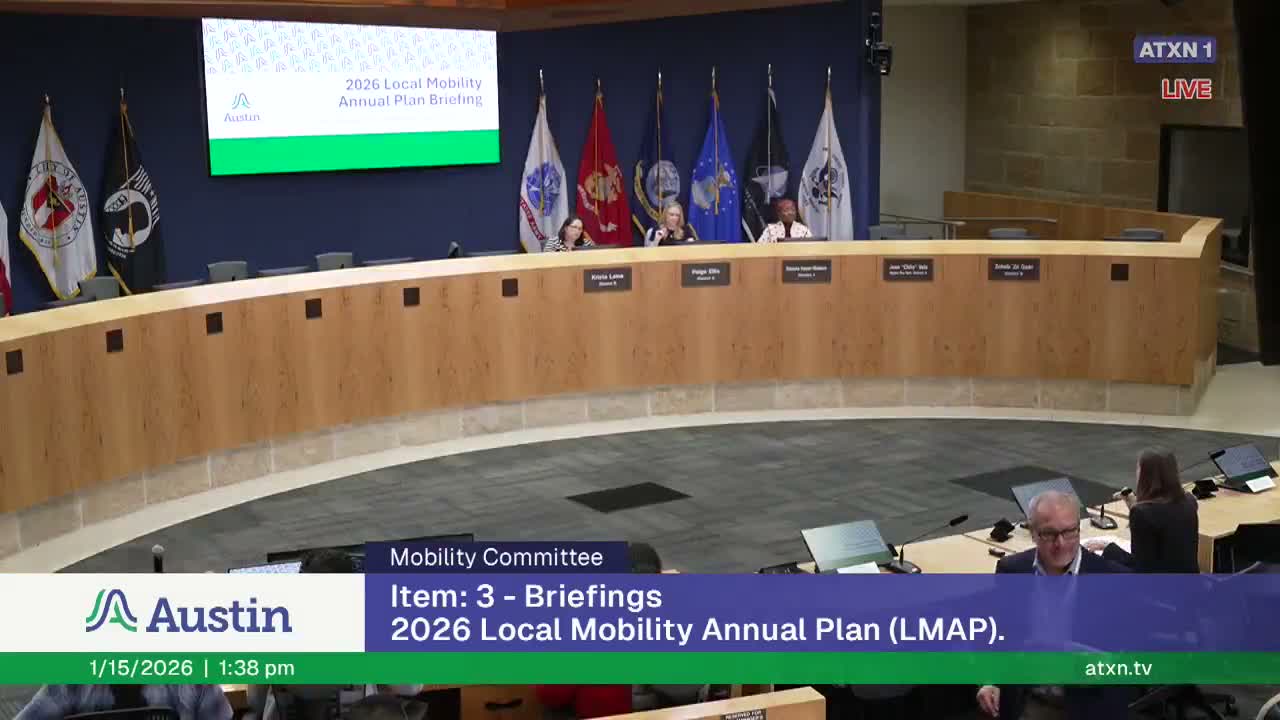
Anna Martin, assistant director for Austin Transportation and Public Works, presented the 2026 Local Mobility Annual Plan preview on Jan. 15 and said the plan will be published on Jan. 31 as the city’s working plan for the next 12 months.
Martin summarized the history and funding that underpin the program and cited the 2016 mobility bond ($720,000,000) that allocated $137,000,000 to local mobility programs. She told the committee that 95% of the 2016 local mobility allocation has been delivered in projects and that the city expects to meet the 2020 bond delivery timeline, with an overall target to spend remaining 2020 bond funds by March 2027.
"A big highlight of 2025 was completion of our Vision 0 10 year report, which has shown substantial reductions in crashes, injuries, and fatalities where Austin has invested in safer infrastructure," Martin said, noting the report showed "a 38% reduction in serious injuries and fatalities at the Vision 0 major intersection project locations." She outlined 2025 accomplishments (48 miles of new and rehabilitated sidewalks; 1,000 new curb ramps; multiple protected bike lanes and enhanced bus stops) and said the 2026 plan will include more than 200 projects across sidewalks, bikeways, safe routes to school, urban trails and Vision Zero interventions.
Martin described the program's annual planning process (data sharing across programs, a working charrette to resolve overlaps, production of an "L map" and continuous community feedback) and said staff will publish an interactive map of projects and status on Jan. 31. Committee members asked for copies of presentation notes and for staff to brief more specifically on Safe Routes to School for schools affected by extraterritorial jurisdictions; Martin recommended a follow‑up meeting or office briefing with Safe Routes staff for deeper review.
The presentation emphasized delivering completed neighborhood‑scale projects quickly while coordinating larger regional projects with partners such as Capital Metro and Project Connect. Martin said staff will follow up with council offices to provide the interactive map and project details for newsletters and constituent outreach.