Get Full Government Meeting Transcripts, Videos, & Alerts Forever!
Get email alerts on the Police Oversight topic
No spam. Unsubscribe anytime.
Austin Police Oversight reports jump in sustained external complaints to 69 in 2024; council seeks more data clarity
Summary
Austin Police Oversight presented its 2024 annual report, reporting fewer total contacts but a large increase in sustained external complaints (14 in 2023 to 69 in 2024), more officers disciplined overall, expanded outreach and use‑of‑force and body‑worn camera reviews. Council members pressed APO for detailed breakdowns and timelier data.
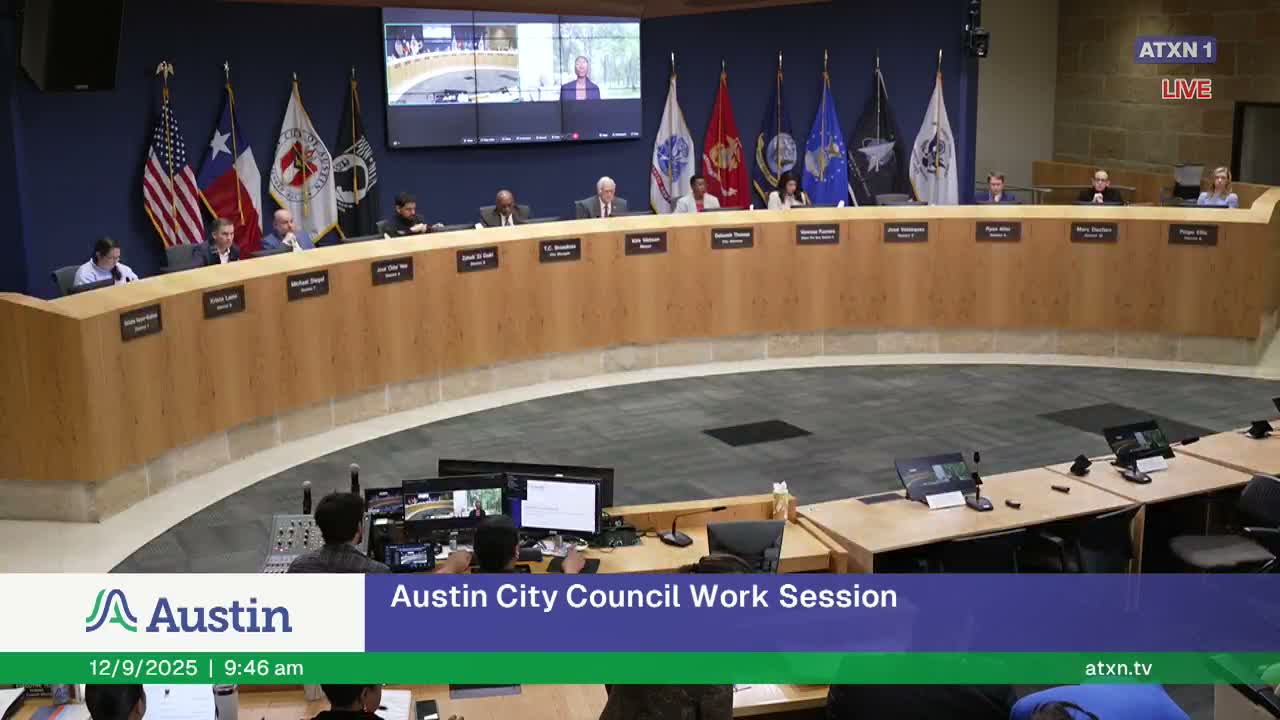
Austin Police Oversight (APO) presented its 2024 annual report to City Council, describing a shift in complaint patterns that the office said may reflect improved community engagement and changes to oversight operations.
Gail McCann, APO director, told council the report’s timing (published the following year) reflects a desire to include completed Internal Affairs investigations: "The Internal Affairs Division have 180 days to complete an investigation," McCann said, and APO aligns annual reporting to those timelines to provide complete data.
Key findings and numbers: APO reported a drop in total community contacts (from 1,552 in 2023 to 1,052 in 2024) while sustained external complaints rose sharply, from 14 in 2023 to 69 in 2024. Kevin Masters, APO deputy director, summarized complaint handling and disciplinary trends and said that discipline resulting from sustained external complaints decreased while internal complaints and discipline from internal investigations rose.
Councilmembers asked detailed questions about definitions and outcomes. Several members asked how APO measures public confidence and why sustained findings do not always produce formal discipline; APO and the department explained that sustained findings can yield a range of outcomes (training, supervisor referrals, oral counseling) that are not always captured in the dataset of “formal discipline.” "It's not a 1‑to‑1 game," Kevin Masters said when asked why more sustained findings do not equal more posted discipline.
Other audit‑and‑process topics: Council asked APO to provide further breakdowns of categories such as the largest complaint type labeled “no assistance,” and requested clearer timetables for when the 2025 report will be available. APO said it plans more data‑mining capacity, improved public information presentation (including updating some QR codes cited in the presentation) and projects to publish more timely incident dashboards.
Body‑worn camera audits and use‑of‑force reporting were discussed. APO said it conducted roughly 1,200 body‑worn camera reviews in 2024 (more than 1,000 hours of video). Chief Davis and APO staff also noted an identified double‑counting issue in online use‑of‑force reporting that led the dataset to be temporarily removed for correction.
Public comment and oversight independence: Neli Paulina Ramirez, chair of the Public Safety Commission, urged a full audit of APO’s complaints process and said community members want APO to be a stronger advocate for complainants. APO acknowledged the concern and said it will continue outreach and consider additional data and auditing work.
What happens next: APO committed to follow up with requested data breakdowns, correct inconsistencies on public dashboards, and explore options for more timely preliminary reporting to satisfy council interest in earlier indicators. The council did not take formal action at the work session beyond asking for follow‑up information.