Get Full Government Meeting Transcripts, Videos, & Alerts Forever!
Get email alerts on the Homelessness Plan topic
No spam. Unsubscribe anytime.
City presents first Homeless Strategies & Operations strategic plan; council presses for measurable targets and partner coordination
Summary
Director David Gray introduced Austin’s first HSO strategic plan, which sets five focus areas including expanding shelter capacity by 650 beds, navigation centers, and KPIs. Councilmembers sought clearer targets, partner engagement (including veterans services), and funding/milestone detail before final adoption.
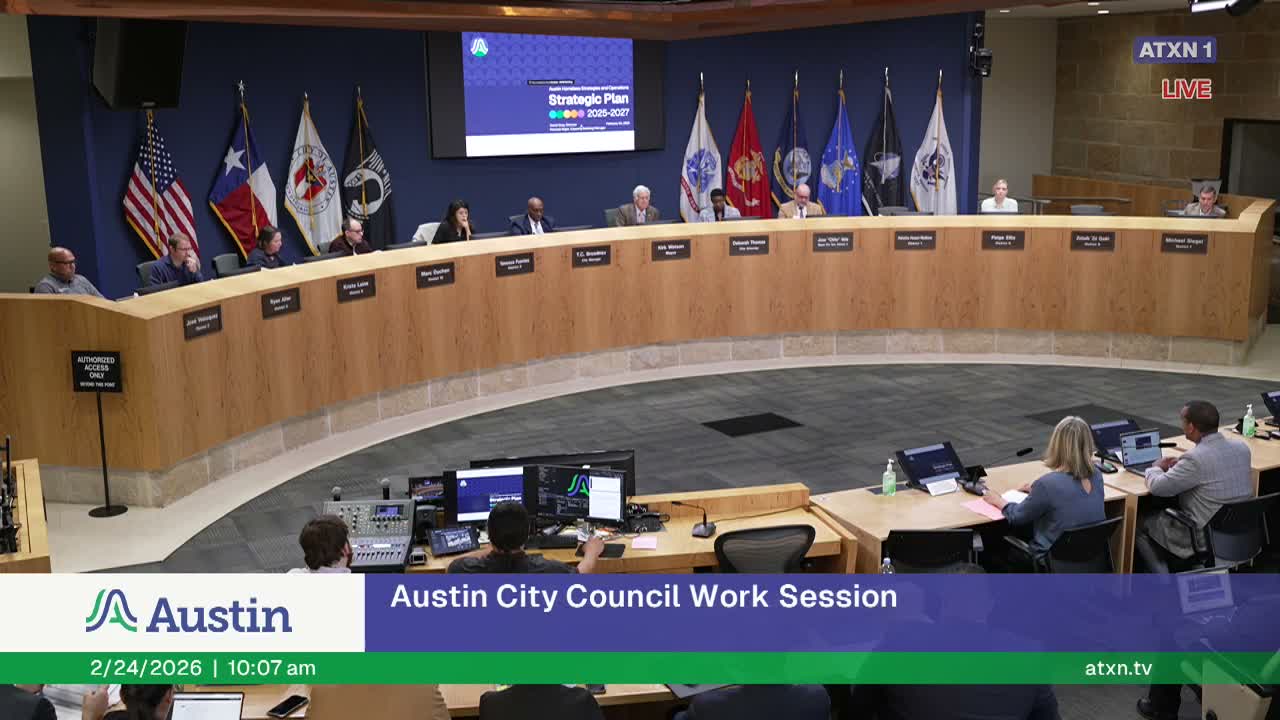
David Gray, director of Austin Homeless Strategies & Operations, presented the office’s first strategic plan on Feb. 24, calling it a time‑bound roadmap to align investments, partnerships and measurable outcomes across the city’s homeless‑response system.
Gray said the community housed more than 3,000 people in the prior year, reduced housing wait times by 25%, and launched prevention programs now among the largest sources of rehousing for families and students. The plan lays out five focus areas and includes specific goals such as expanding shelter capacity by 650 beds, adding navigation centers, strengthening rapid rehousing and permanent supportive housing, and improving transparency through KPIs and quarterly reporting.
Public commenters and councilmembers pressed staff on several points. Jason Denny, CEO of the Military Veterans Empowerment Network, asked why the word "veteran" did not appear in the draft materials and sought a clear, measurable commitment to veteran‑specific coordination with federal partners. Dr. Pierre Brastain (SAFE Alliance) said SAFE’s community shelter contributes more than 120 beds and that shelters serving survivors of domestic violence should be reflected in the city’s inventory.
Councilmembers asked that the plan be both an operational decision tool and publicly measurable. David Gray said the plan will inform funding requests and that action teams will set milestones, targets and project plans; staff committed to quarterly reviews beginning in March. Gray and Marissa Vogel (HSO capacity‑building manager) said the plan was developed over eight months through stakeholder interviews and internal assessments and that further stakeholder outreach, focus groups and deeper partner engagement will occur during implementation.
Members also pressed for clarity on HMIS and coordinated entry. Gray said ECHO remains the HMIS administrator and is migrating to a platform called Clarity, which staff hope to leverage for real‑time bed coordination while preserving shelter capacity reserved for encampment response and law‑enforcement diversions. Staff agreed to analyze the comparative outcomes of shelter entrants who entered via coordinated entry versus other referral pathways.
What’s next: Staff said action teams will flesh out milestones, targets and funding strategies and will return with updates before the plan is brought back for final adoption. Councilmembers asked staff to incorporate clearer references to veterans, behavioral health, philanthropic and partner funding goals, and concrete deliverables that can be measured in annual and quarterly reports.