
Wachusett Regional School District committee approves FY27 budget amid hold‑harmless funding concerns
Get AI-powered insights, summaries, and transcripts
Subscribe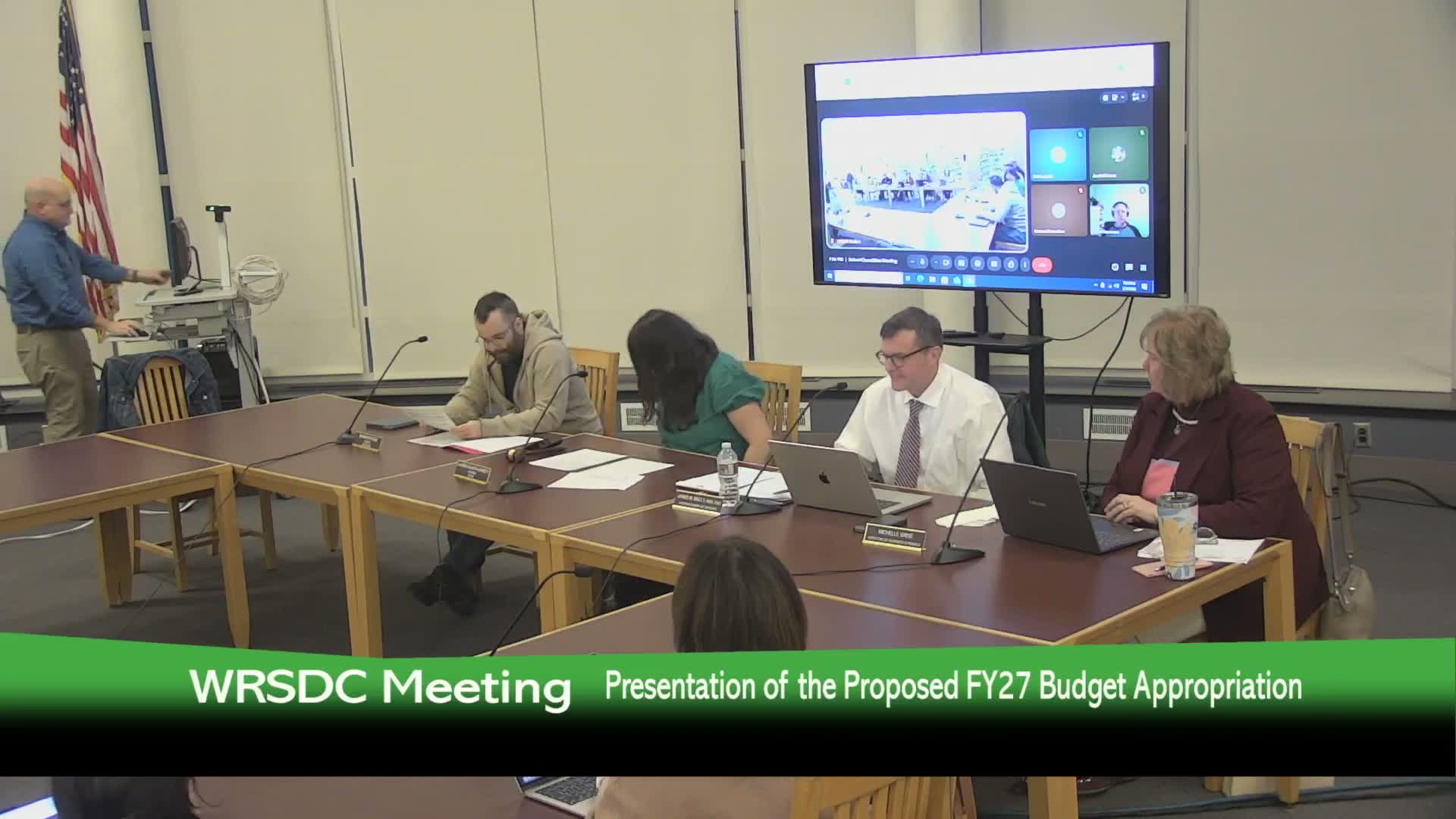
Summary
After a two‑hour presentation and discussion focused on state funding shortfalls, the Wachusett Regional School District Committee voted to approve a $91 million FY27 appropriation, while debating use of reserves and the potential impact on member towns’ assessments.
The Wachusett Regional School District Committee voted to approve the district’s FY27 appropriation after a detailed presentation by Superintendent Dr. Riley and business director Michelle Corizet and extended committee discussion about state funding, reserves and town impacts.
Dr. Riley told the committee that state funding rules have left the district at a disadvantage, saying “for the third consecutive year, the district is in hold harmless status,” and warning that the mechanism suppresses Chapter 70 increases even where local need remains. He and Director Corizet pointed to a mix of one‑time reimbursements and targeted conservation of reserves that allowed the administration to limit the proposed districtwide budget increase to 4.44 percent while the average town assessment would rise more — a disparity they linked to the state formula.
The administration recommended preserving a portion of the district’s excess and deficiency (E&D) reserve while allocating funds for targeted classroom supports for high‑needs students. Director Corizet summarized the appropriation drivers: “our overall increase is 4.44%,” she said, and called out increases in health and retirement costs, higher instructional‑support spending for consumable curricula, and planned capital work at the high school.
Committee members focused much of their questioning on the tradeoff between returning any additional Chapter 70 revenue to towns and holding money in E&D to absorb future volatility. Member Amber Woodland said the approach of staging investments made sense for this year’s priorities, noting the administration’s emphasis on special‑education supports: “this makes sense for this year to be so focused on special education needs,” she said. Other members pressed for contingency planning in case town votes or overrides fail; administration responses noted that roughly 80 percent of district costs are personnel, and that a 1/12 contingency would require disruptive staff reductions.
With no public comments at the budget hearing, the committee moved to a formal motion. Member Amber Woodland moved to approve the FY27 appropriation and assessments as presented and Member Poole seconded. The committee proceeded to a roll‑call vote; the chair announced the motion passed.
What the committee approved will next go to each member town’s meeting according to its schedule: Holden (May 18), Paxton (May 4), Princeton (May 12), Rutland (May 9) and Sterling (May 4). Administration said it will continue to monitor Chapter 70 changes and recommended the committee retain the authority to decide whether to return any additional state funds that may be allocated after the vote.
The committee’s action ends the district’s internal budget approval step; district staff said they will continue outreach to town officials and will present follow‑up staffing and financial details as they are finalized.