Get Full Government Meeting Transcripts, Videos, & Alerts Forever!
Get email alerts on the Education Budget topic
No spam. Unsubscribe anytime.
Katy ISD projects lower enrollment, $29M general-fund gap and staffing ‘rightsizing’
Summary
Katy ISD officials told trustees the district projects about 95,279 students for 2026–27, down roughly 1,600–1,800 from budget assumptions, prompting a staffing 'rightsizing' plan and a projected $29 million operating deficit before anticipated underspending and other offsets.
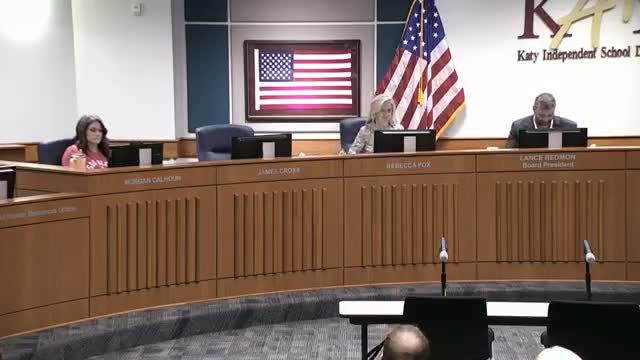
Katy Independent School District officials on Feb. 16 told the board a notable decline in enrollment has forced planners to rework next year’s budget and staffing plan.
Chief Financial Officer Chris Smith said the district is projecting 95,279 students for 2026–27, down from the 97,161 used in the adopted budget. He said taxable values assumptions are conservative and the district has a healthy fund balance, but slower enrollment and rising health‑care costs are squeezing operations.
“The enrollment projection is a dip from where we are right now,” Smith said, adding that the district will use attrition and other measures to reduce staff counts where positions are no longer needed. He described the process as “rightsizing,” not layoffs, and said the staffing plan adopted in March had been built for growth that did not materialize.
Trustees pressed for details about which programs or positions might be scaled back and asked how the district could avoid last‑minute cuts. Smith and Superintendent Dr. Grigorski described several approaches being evaluated, including a review of departmental and special‑project budgets, a software usage audit to consolidate subscriptions, and possible program model changes for emergent‑bilingual services.
Board members also raised a long‑running concern about maintaining competitive compensation. Smith said roughly 89–90% of the operating budget goes to salaries and benefits, and the district has invested more than $90 million beyond monthly employer contributions to stabilize its self‑insured health plan over several years.
Director of Budget Esperanza Rios presented February budget amendments that together increase certified local and state revenues by about $13.5 million but recognize a state revenue reduction tied to updated student demographics of $17.59 million; the amendments would reduce the general‑fund balance by about $4.05 million and bring the projected operating deficit to roughly $29 million before anticipated underspending.
Administrators said the district will continue to monitor actual collections, state funding adjustments (including ASHIE/hold‑harmless aid related to homestead exemptions) and underspending trends before returning with refined figures in May and again during the summer budget process. Trustees asked for more detailed staffing impact projections and for continued communication with campus leaders and employees.
Next steps: administration said it will present updated staffing numbers in March and will not adopt the final budget until August.