
HHS and Education Secretaries announce 40-hour nutrition curriculum at 53 medical schools
Get AI-powered insights, summaries, and transcripts
Subscribe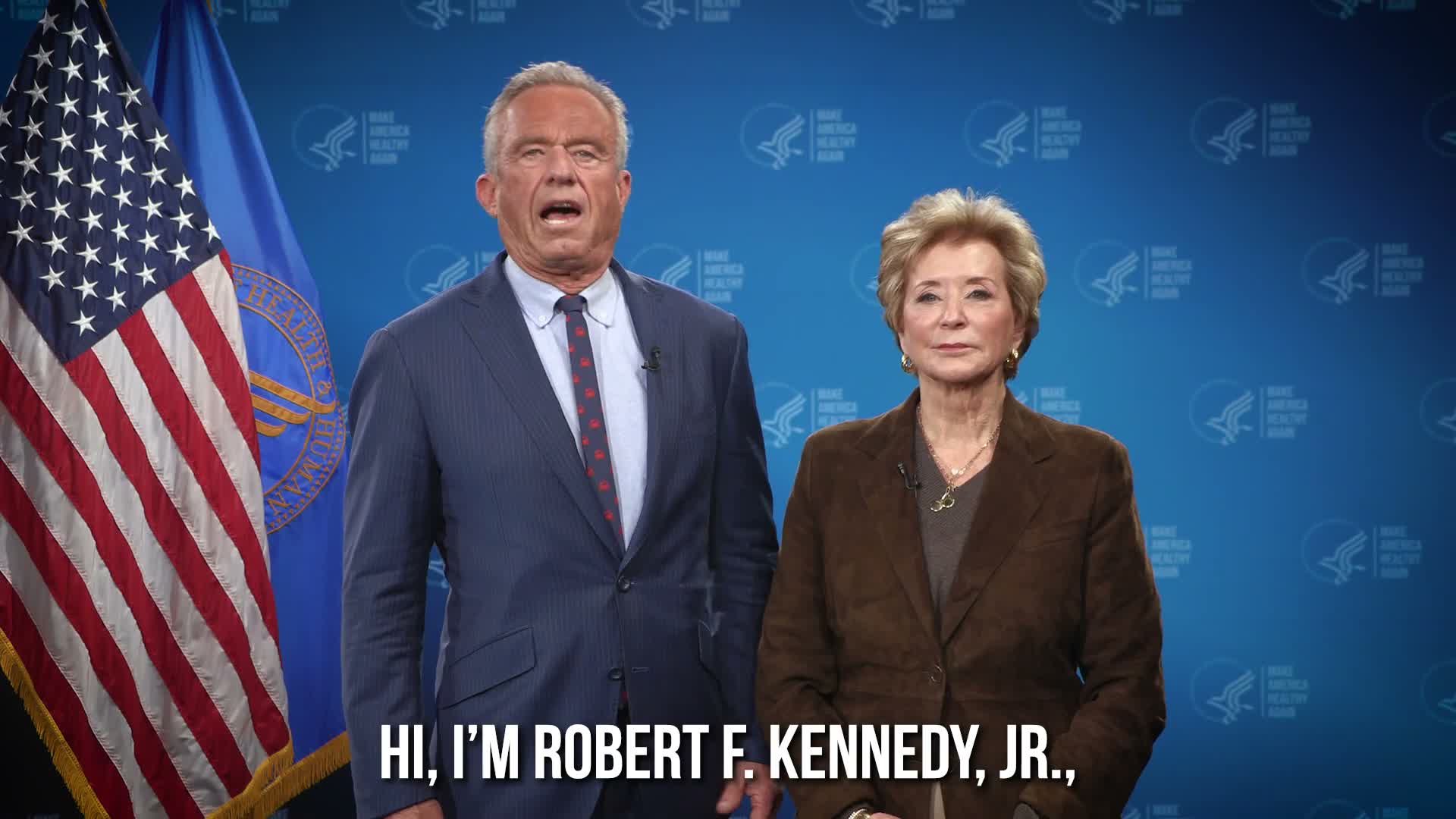
Summary
HHS Secretary Robert F. Kennedy Jr. and Education Secretary Linda McMahon announced a voluntary initiative enrolling 53 medical schools in 31 states to add at least 40 hours of nutrition education across four years; a public website (hhs.gov/nutrition-education) lists participating schools and invites others to join.
HHS Secretary Robert F. Kennedy Jr. and Education Secretary Linda McMahon announced a national initiative to expand nutrition education in medical schools, saying participating institutions will begin offering at least 40 hours of nutrition instruction across all four years of undergraduate medical training.
"Starting this fall, participating medical schools will deliver at least 40 hours of nutrition education across all 4 years of undergraduate medical training," HHS Secretary Robert F. Kennedy Jr. said, framing the plan as a step toward preventing chronic disease and reshaping how doctors are trained.
Education Secretary Linda McMahon said the effort will "revolutionize medical education by putting nutrition and prevention front and center in how we train tomorrow's doctors and health care leaders" and described the work as led voluntarily by national experts in medical education.
Kennedy Jr. emphasized that the announcement is not a federal mandate on curricula, calling it "not a Trump administration dictating medical curriculums" and characterizing the effort as a collaborative standard developed after months of feedback among HHS, the Department of Education, and leaders in American medicine.
Officials said 53 medical schools in 31 states are participating in the initial cohort. The administration also launched a public website, hhs.gov/nutrition-education, where the public can check whether a particular school is on the list. "If your school is not on today's list, that does not mean the door is closed," McMahon said, encouraging other schools to step forward.
Kennedy Jr. described the initiative as a prevention-focused approach to health care that will help future doctors understand how diet affects conditions such as obesity, diabetes, heart disease and autoimmune illness, and to talk with patients about diet with confidence.
He thanked the American Medical Association, the Association of American Medical Colleges (AAMC), AECOM, and "the dozens of medical school deans who are stepping forward to lead this effort." The event concluded with a brief closing exchange and a note that the briefing was produced by the U.S. Department of Health and Human Services.
The administration said participating schools will begin the curriculum this fall and invited other medical schools to join; no formal rulemaking, legislation, or vote was announced during the briefing.