Get Full Government Meeting Transcripts, Videos, & Alerts Forever!
Get email alerts on the Criminal Law Flee Elude topic
No spam. Unsubscribe anytime.
Court of Appeals hears arguments over whether 'flee or elude' conviction required proof of intent
Summary
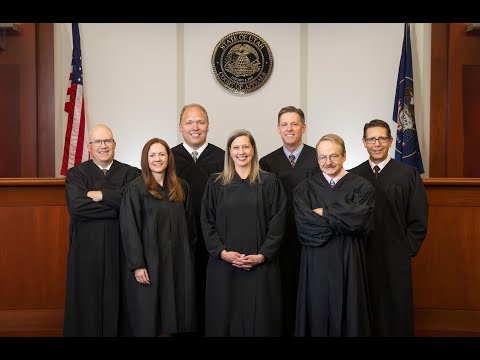
At a traveling-session oral argument at BYU, the Utah Court of Appeals heard competing views over whether evidence and jury instructions in Michael Chacon’s conviction for failing to stop required proof that he intentionally attempted to flee or elude a peace officer.
The Utah Court of Appeals heard oral argument on an appeal of Michael Chacon’s conviction for failing to stop for law enforcement, with defense counsel arguing the State never proved the specific intent necessary for a ‘flee or elude’ offense and that an incomplete jury instruction was prejudicial.
Appellant’s counsel Dylan Carlson told the three-judge panel that State v. Byrd requires more than mere temporal delay: to convict under the statute the jury must find a deliberate effort to get away from officers, not simply a decision to delay stopping. Carlson argued the record lacked evidence of that specific purpose and that the jury instruction omitted a mens rea word — “intentionally” — that could have changed the jury’s understanding of the element at issue. “We would ask that this court vacate Mr. Chacon’s conviction,” Carlson told the panel.
The State, represented in argument by counsel who told the court that affirming under Chacon’s reading would “sow chaos,” said the record supported the conviction even without the missing word. The prosecutor pointed to the defendant’s own testimony and other facts in the record to argue that jurors reasonably could find Chacon intentionally attempted to avoid officers, and urged the panel to treat the instruction error as harmless.
Panel members pressed both sides over how to distinguish lawful delay from conduct that satisfies the statutory element. Judges asked whether an objective standard or particular objective acts (for example, crossing jurisdictional boundaries or maneuvers that prevent an officer from following) are necessary to infer intent. The bench also explored practical hypotheticals — including whether driving to a police station would be treated differently from driving home — and asked whether the defendant’s subjective fear of a specific officer (who, in the transcript, may not have been the officer signaling him to stop) alters the analysis.
Counsel for the defense emphasized that the officer who followed Mr. Chacon testified she did not believe he was fleeing or eluding and that, without the mens rea word in the instruction, jurors could conflate intentional evasion with other intentional but non-culpable choices (such as driving deliberately to a known, public location). The State countered that a defendant’s motive (safety or returning a vehicle to a friend) is distinct from the specific intent element the prosecution must prove, and that the record — including admissions and surrounding facts — supports a finding of intentional avoidance.
The court took the matter under advisement and said it would issue a written opinion in due course. No immediate ruling was announced from the bench.
Why it matters: The panel’s decision will clarify how Utah courts apply the 'flee or elude' statute when a defendant slows or delays after an officer signals and when jury instructions omit an express mens rea term. That determination could affect how lower courts instruct juries and which cases merit trial versus lesser-included or infractions-level charges.
What’s next: The Court of Appeals will issue a written decision after taking the arguments under advisement.