Get Full Government Meeting Transcripts, Videos, & Alerts Forever!
Get email alerts on the Property Boundaries topic
No spam. Unsubscribe anytime.
Court of Appeals hears Park City boundary dispute over misplaced subdivision pin
Summary
A three-judge panel heard oral argument in a Park City boundary dispute centered on a 7-foot survey-pin error and competing legal theories — quiet title via a 'monument' rule versus boundary-by-acquiescence — and took the case under advisement for a written opinion.
The Utah Court of Appeals heard oral argument Wednesday in a property dispute arising from a survey error in the Reisner Ridge Subdivision that left a narrow triangular strip of land—about 160 feet long and roughly 7 to 7.5 feet wide—contested by neighboring owners.
Rodney Parker, counsel for the appellants, said the dispute began with monuments placed when the subdivision was created and that a 2020 survey showed a front pin about seven feet west of where the plat and course-and-distance calls indicated it should be. "That's what we're fighting over is this triangular piece of property, 160 feet long and approximately 7 or 7 and a half feet wide," Parker told the panel.
Parker asked the court to sustain the appellants' quiet-title theory, arguing that much of the trial evidence—placement of a limit-of-disturbance fence in 1994, subsequent landscaping, and witness testimony about where an original monument stood—was probative of the legal question whether monuments should control the boundary.
Opposing counsel, Eric Lee for the appellees, countered that Utah precedent requires specific pleading and factual predicates for a "boundary by monument" theory and that the complaint did not allege required elements such as that the contested pins were original monuments or that a recorded document presented a conflict between a monument call and a course-and-distance description. "There is no conflict," Lee told the panel when discussing the recorded documents, arguing the relevant conflict standard appears in cases such as Otman v. Baldwin and Clark v. Smey.
The judges probed whether the monument argument had been tried by consent or improperly injected after trial through expert testimony. The bench focused on whether the trial court and the parties had sufficient notice that a monument-based quiet-title theory was being advanced and on whether any late amendment would have prejudiced the opponent. Counsel debated the interplay of doctrines—boundary by acquiescence, boundary by estoppel, and the monument rule—and whether reliance interests and specific factual findings at trial made amendment unnecessary.
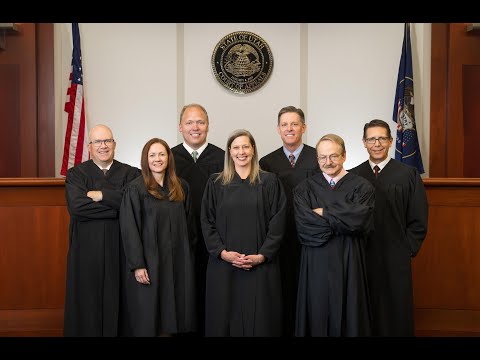
Judge Michelle Christianson Forrester, sitting with her colleagues, asked detailed questions about whether the complaint and trial record put the parties on notice of the monument argument and whether the trial court's factual findings about the pins were adequate to support the monument-based relief. The panel said it would "take this matter under advisement" and issue a written opinion resolving the legal questions raised.
The oral argument referenced several reported decisions and doctrines the court may consider on appeal, including Keller v. Southwood and earlier Utah cases invoking monuments in boundary disputes. The panel did not announce a decision from the bench; it will issue a written opinion that will explain the court's reasoning and any instructions to the trial court.
The panel's disposition and reasoning are pending publication in the written opinion.