Get Full Government Meeting Transcripts, Videos, & Alerts Forever!
Get email alerts on the Civil Rights And Procedure topic
No spam. Unsubscribe anytime.
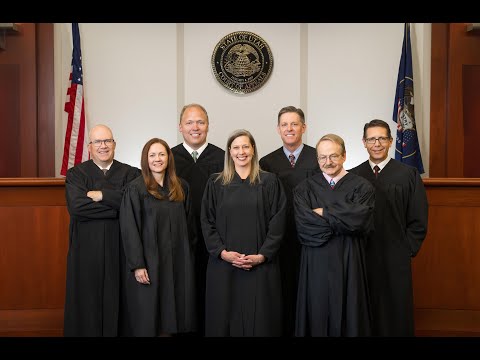
Court of Appeals hears challenge over tow-rotation removal, standing and discovery sanctions
Summary
In Mountain West Towing v. West Jordan, the Utah Court of Appeals heard arguments about whether individual plaintiffs can recover emotional-distress damages tied to harms to their companies, whether tow-rotation participation created a protectable property interest, and whether the trial court properly excluded economic-damages evidence under discovery rules.
The Utah Court of Appeals heard oral argument in Mountain West Towing v. West Jordan over whether individual tow-operator owners may recover emotional-distress damages the city says derive from harms to their companies, and whether the district court properly excluded economic-damages evidence.
Chris Bartolamucci, counsel for West Jordan and the municipal defendants, told the panel the individual plaintiffs’ emotional-distress claims are “entirely derivative” of harms to their companies and therefore lack standing. Bartolamucci cited the state and federal decisions the defense relied on, telling the court the owners “were never on the tow rotation, only their companies,” and urging that precedent bars individual recovery for distress tied to corporate losses.
Judges pressed on procedural posture and standard of review — whether the operative order is a judgment-as-a-matter-of-law ruling or a pretrial summary-judgment decision — because that determines whether the appellate court reviews legal correctness or deference to the jury. One judge observed foreseeability is part of the standing analysis: would a city that withdraws a corporate contract reasonably foresee the shareholders suffering compensable emotional distress?
On property interest, the city argued the application form applicants signed — which states participation is voluntary and “not a legal right” — overrides internal police General Directive 45 and precludes a protectable property interest in the tow rotation. Bartolamucci invited the court to treat the application language as a codicil to policy 45 and said any property interest was contractually disclaimed.
Plaintiffs’ counsel, April Hollingsworth, countered that the plaintiffs brought direct constitutional claims as citizens of West Jordan rather than derivative shareholder suits. Hollingsworth emphasized two separate deprivations she said the jury found: removal from the tow-rotation list and a separate instruction to cease operating from an owned lot. She argued those harms deprived individuals of use and expectations they testified about at trial, and that close family ownership structures in these closely held companies make the constitutional claim distinct from ordinary corporate-derivative disputes.
The judges probed whether that theory would swallow the corporate form — for example, whether every shareholder of a large publicly traded company could claim constitutional distress — and counsel acknowledged the plausible limiting line might be closely held or single-owner businesses.
A central, contested discovery point concerned the exclusion of economic-damages evidence. Plaintiffs told the court they estimated roughly $8,000 in lost revenue per month from the West Jordan rotation and that the tow logs supporting that computation were either produced by them or available from the city. They argued the district court’s sanction under Rule 26 was excessive because the underlying documents existed and the issue should have proceeded to cross-examination at trial.
The city replied the tow logs showed only charges, not collections or costs; defense counsel said plaintiffs failed to supply a method or “road map” demonstrating how the logged entries yielded the damages totals they claimed. Judges repeatedly sought to separate a disclosure problem (Rule 26) from a failure-of-proof problem (Rule 56), since the remedy and standard of review differ.
Plaintiffs also noted that a ruling for the city on standing, property interest, or equal protection would require vacatur and recalculation of awarded attorney fees. Counsel briefly raised qualified-immunity dismissals for certain officers as part of the cross-appeal but said full argument was limited by rebuttal time.
The court took the matter under advisement and said a written opinion would follow.
The case could affect how courts treat constitutional claims by owners of closely held businesses when regulatory or administrative actions affect a business’s relationship with a local government, and it directly addresses when discovery sanctions may bar categories of damages from a jury.