Get Full Government Meeting Transcripts, Videos, & Alerts Forever!
Public commenters urge Austin Energy to revisit rebates, small‑commercial solar permitting and standard‑offer rates
Summary
Two public speakers asked the committee to reconsider point‑of‑sale rebates (electric lawnmowers, e‑bikes), to lower permitting costs for small commercial/nonprofit solar, and to include the full value of solar in the standard‑offer rate to make rooftop deals viable for property owners.
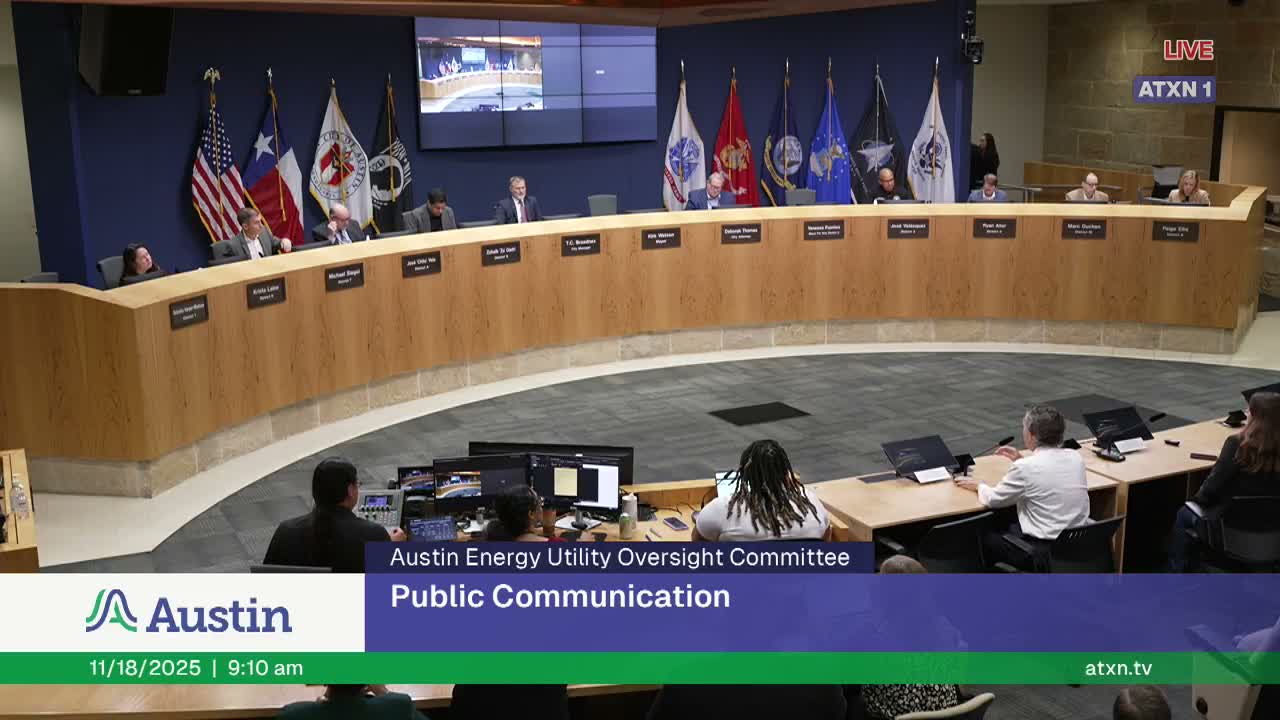
During the public‑comment period two speakers urged changes to Austin Energy programs and permitting that, they said, are limiting equitable access to clean energy.
Scott Johnson, who described a long history working on electric lawnmower and exchange events, told the committee that Austin Energy’s point‑of‑sale rebate program is under‑promoted and…
Already have an account? Log in
Subscribe to keep reading
Unlock the rest of this article — and every article on Citizen Portal.
- Unlimited articles
- AI-powered breakdowns of topics, speakers, decisions, and budgets
- Instant alerts when your location has a new meeting
- Follow topics and more locations
- 1,000 AI Insights / month, plus AI Chat