Get Full Government Meeting Transcripts, Videos, & Alerts Forever!
Get email alerts on the Parking Reform topic
No spam. Unsubscribe anytime.
Bellevue staff outline state-driven parking reform, warn of tight 2027 compliance deadline
Summary
City staff told the Planning Commission that new state laws sharply limit what parking minimums Bellevue can require — including stall size and location buffers — and urged commissioners to help shape outreach and local options before a Jan. 27, 2027 compliance deadline.
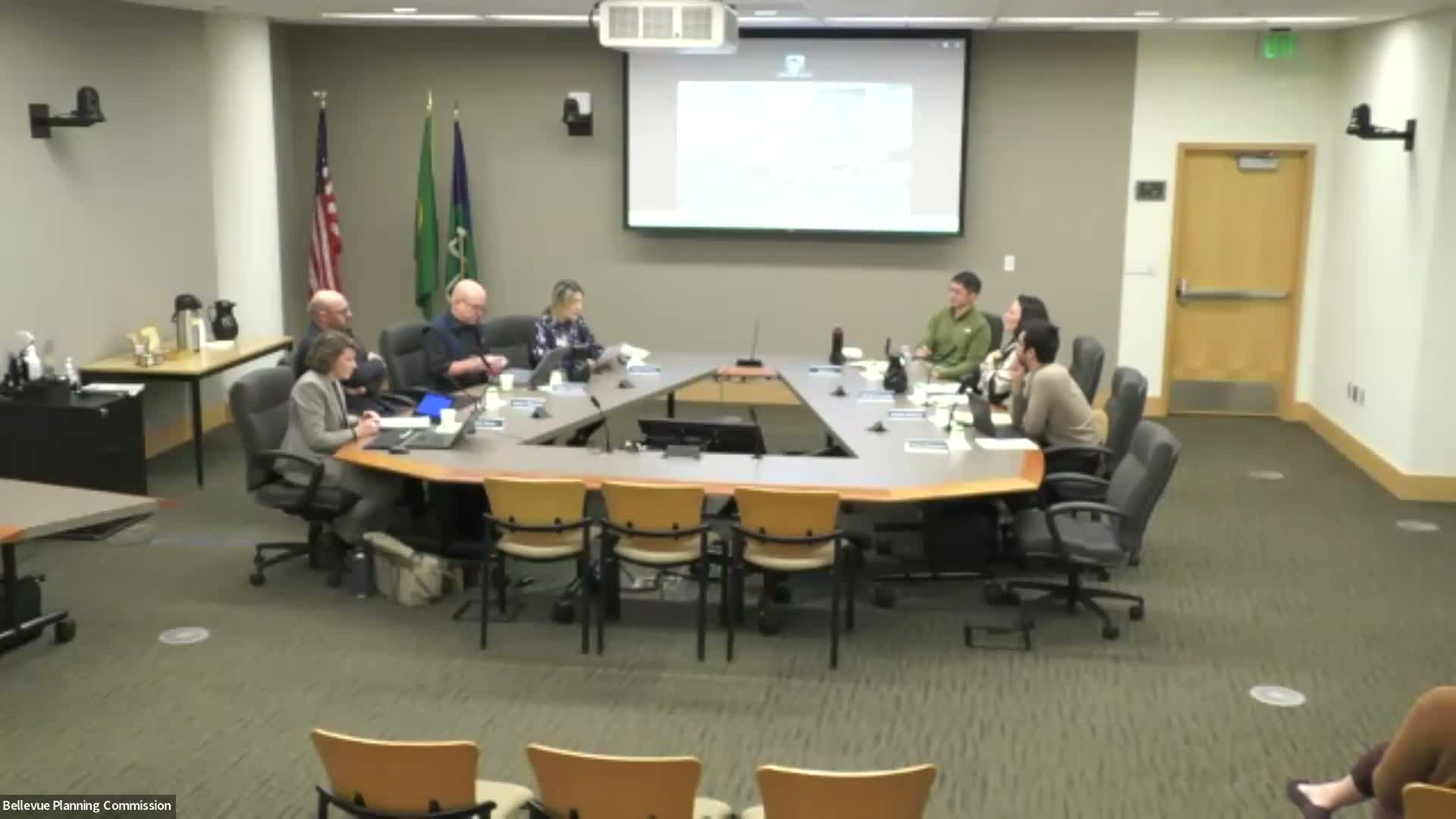
Bellevue planning staff on Feb. 25 presented a council-initiated land-use code amendment to bring the city into compliance with recent state laws that cap local parking requirements and set new standards for stall size and location.
Senior Planner Sean Edgehill, presenting the scope of the parking reform LUCA, said the state legislation establishes walking-distance buffers — a half-mile for light rail and a quarter-mile for certain rapid bus stops — within which cities may not require minimum parking for many residential and mixed-use projects. He said the LUCA will also address use-specific exemptions, development standards and limited exceptions.
"These changes are not optional," Edgehill said. "Bellevue must comply with these requirements before 01/27/2027." He added that the combination of caps and exemptions will require a rewrite and consolidation of Bellevue’s parking standards and that staff will pursue robust outreach and analysis before returning to the commission with a draft.
Why it matters: Staff said structured parking can add more than $50,000 per parking space to construction costs and that long-standing minimums rooted in mid-20th-century assumptions can inflate housing and lease costs, reduce the amount of space available for housing and reinforce auto dependence in a city planning for more transit-oriented development.
Key elements described by staff include: - Location buffers defined by state law (½-mile to light rail; ¼-mile to rapid bus service) where minimum parking cannot be required. - Use exemptions including small residential units under 1,200 square feet, some commercial-to-residential conversions, affordable and senior housing, and child care centers. - Caps on minimums in other areas: roughly 0.5 spaces per multifamily unit, 1 space per single-family unit, and 2 spaces per 1,000 square feet for commercial uses (per staff summary of the legislation). - A state-imposed maximum stall size for minimum-count spaces of 8 by 20 feet (not including ADA stalls) and allowance to count up to six gravel spaces toward minimums.
Public concern and commissioner reaction: Online commenter Jessie Clawson urged the commission to "bring the code into the 21st century," noting many Bellevue parking rules date to the 1960s. "I was a little shocked to note that many of the codes have not been updated for parking since the 1960s," Clawson said.
Several commissioners raised practical and safety concerns. One commissioner said the legislated 8-by-20-foot stall is "really narrow" and suggested 9-by-19 as a preferable local standard for usability; staff responded that the 8×20 limit is a statutory cap and that the LUCA can clarify how dimensions are measured (for example, whether measurements are between columns).
On safety and local flexibility, staff described an "off-ramp" included in portions of the legislation: cities could retain stricter standards only by conducting an empirical safety study showing that the statewide limits would significantly reduce safety. "It's a very high bar," Edgehill said, adding that such studies could be time-consuming and costly.
Next steps and schedule: Staff said they have already held a Feb. 9 public information session and plan an in-person data walk on April 20, targeted meetings with neighborhood groups and developers, and technical coordination with transportation and code-enforcement staff. The commission was told staff expect to develop a draft LUCA between spring and summer, return to the commission during fall for recommended action, and ask the city council to approve changes by year-end so Bellevue meets the Jan. 27, 2027 statutory deadline.
Staff said they are coordinating with neighboring cities and the state technical advisory committee and will post research, FAQs and updates on the city website. The commission asked staff to spell out aisle-width and column-encroachment measurements in the consolidated code and to include clear visual examples for how revised standards would affect real projects.