Get Full Government Meeting Transcripts, Videos, & Alerts Forever!
Get email alerts on the Probation Services topic
No spam. Unsubscribe anytime.
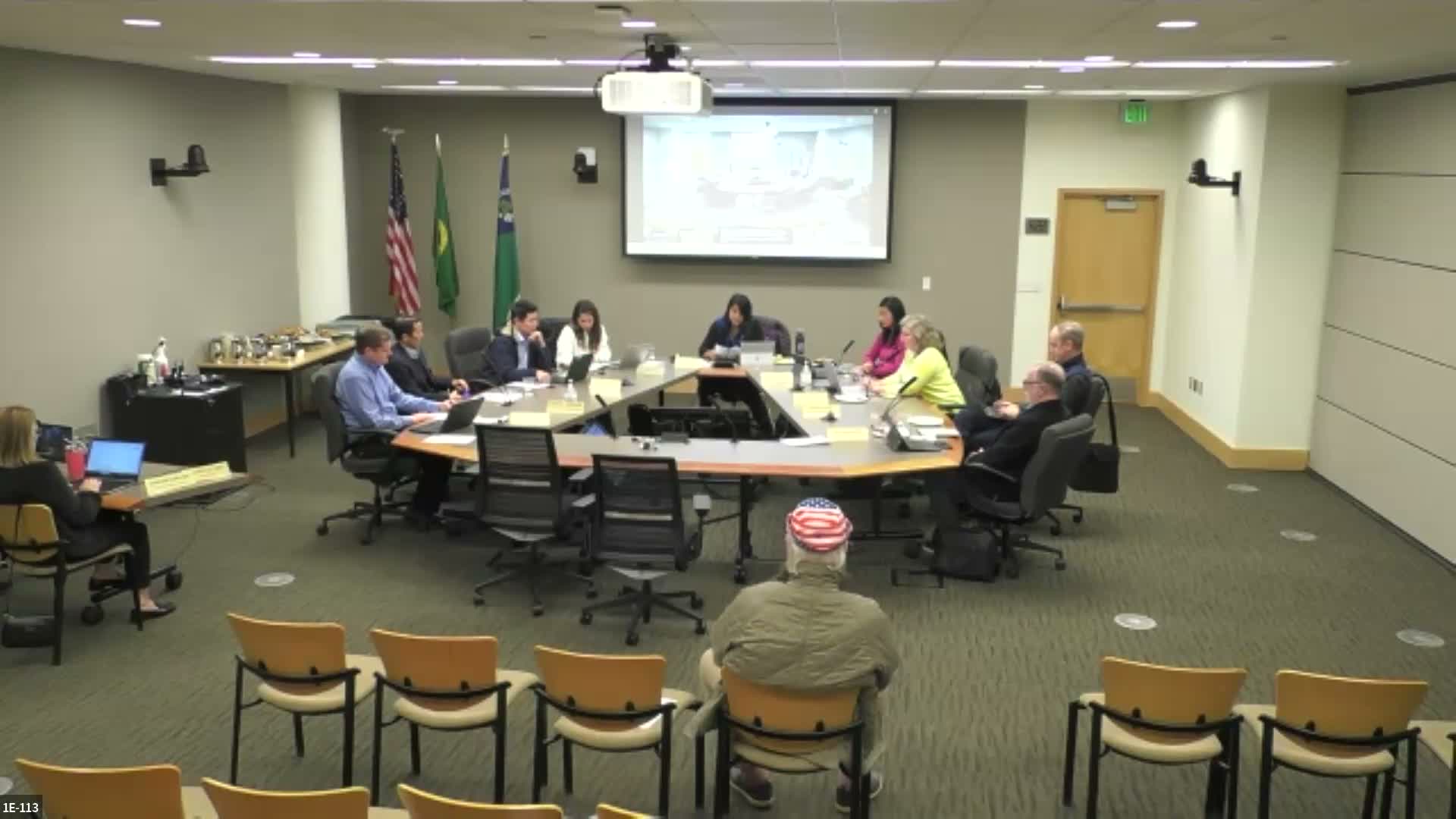
Probation manager outlines Bellevue’s local misdemeanor probation program, caseload and savings
Summary
Probation manager Craig Fritz told the Parks and Community Services Board that Bellevue operates its own probation division serving about 1,500 clients, with a three-year recidivism rate of 15.5% overall and an estimated $1,000,000 in electronic-home-monitoring savings in 2024.
Craig Fritz, Bellevue’s probation manager, told the Parks and Community Services Board in March that the city operates a municipal probation division that handles misdemeanor-level cases referred by King County judges and provides classes, monitoring and reentry supports.
Fritz said the division offers in-house programs including defensive driving (Alive at 25), anger management (Coping with Anger), domestic-violence interventions, a gateway referral service for housing and benefits, a resource closet for clothing and hygiene items, and a Bellevue Work Crew that performs community service in parks. "Clients who are sentenced to probation are able to serve their sentences while still living in the community," Fritz said.
Why it matters: Bellevue’s locally run probation program is paired with Parks and Community Services because city staff provide work-crew opportunities and local program delivery; staff said this model shortens service connections between courts and local supports and, they argued, contributes to lower local recidivism for Bellevue-based offenses.
Fritz reviewed recent trends and key metrics. He said referrals dipped in 2020–21 during the pandemic but rose steadily through 2024, with roughly a 100% increase from 2022 to 2024. On outcomes, he gave a three-year recidivism measure for clients closed in 2021 as 15.5% overall and 3.5% when restricted to offenses committed in Bellevue. Fritz also said the division’s electronic home monitoring program produced "a little over $1,000,000 of savings" in 2024.
Board members asked about eligibility, funding and comparative data. Fritz said the city serves clients for offenses committed in Bellevue (not simply Bellevue residents who offended elsewhere) and that some funding and interlocal arrangements with King County exist, but he did not have a complete funding breakdown in the meeting and offered to follow up. Several members asked for comparative recidivism data and disaggregated success metrics; Fritz said some comparisons require data pulls and that staff would return with more detail.
Operational picture: Fritz said the probation team includes three probation officers, one probation supervisor who also carries a small caseload, and two compliance-monitoring specialists; he estimated combined clients served at roughly 1,500. He described compliance-monitoring cases as higher-volume, lower-touch assignments ordered by judges, while active supervision cases involve monthly visits, classes and program engagement.
Board discussion also explored reinvestment ideas — whether demonstrated savings from alternatives to incarceration could be redirected toward client supports such as education or skills training — and the existence of a volunteer program that helps clients with gateway services.
Next steps: Staff committed to follow up with clarifying information on funding arrangements, more detailed success metrics (including age and offense-type breakdowns), comparisons with neighboring jurisdictions where possible, and the possibility of returning with volunteers/program details.