Get Full Government Meeting Transcripts, Videos, & Alerts Forever!
Get email alerts on the Sewer Rates topic
No spam. Unsubscribe anytime.
Bellevue sewer rate study finds multifamily class over-recovering; staff proposes 3- and 5-year phase-in options
Summary
Bellevue Utilities told the Environmental Services Commission Oct. 2 that a draft sewer cost-of-service study shows multifamily accounts are currently overpaying relative to the utility’s cost allocation; staff recommended phased corrections over three to five years and will return in November with rate-design options and outreach plans.
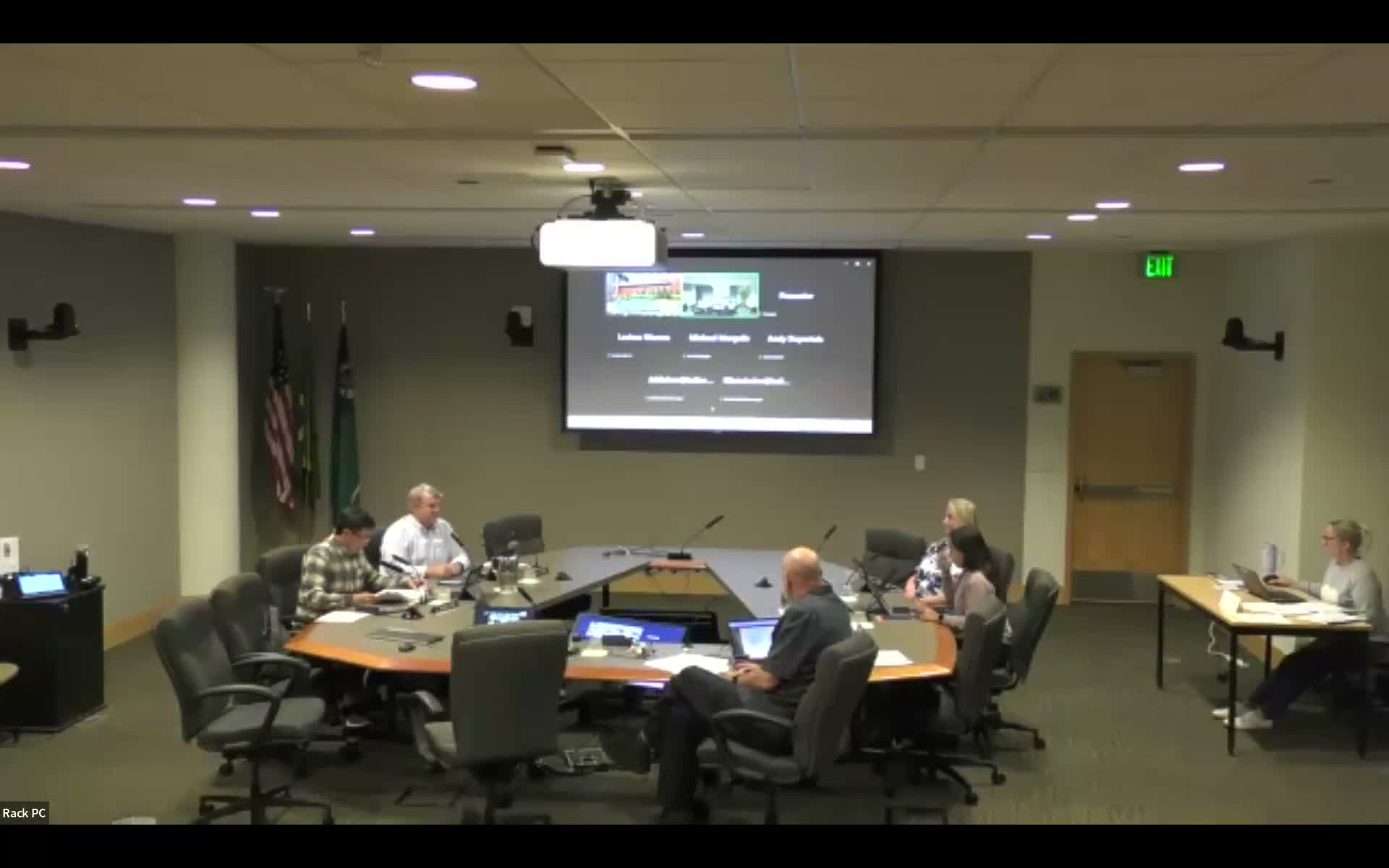
Bellevue — Bellevue Utilities staff presented the draft sewer cost-of-service study to the Environmental Services Commission on Oct. 2, finding that multifamily properties are currently paying more than their measured share of system costs while single-family customers are subsidized.
Assistant Director Matt Thurber introduced the analysis and fiscal manager Matt Hobson walked commissioners through the methodology and results. Hobson said the city used 2027 as the test year and that King County treatment and transmission costs make up roughly half the sewer utility’s 2027 revenue requirement. “This is how we do a checkup,” Hobson said, adding, “A cost of service analysis isn’t a grade. These are checkups.”
Why it matters: Washington law and the city’s financial policies require utility rates to be based on cost of service. The study compares the utility’s estimated cost to serve each customer class (single-family, multifamily, nonresidential) with the revenue currently collected from each class. Staff reported approximate 2027 cost-recovery estimates of about 91% for single-family accounts, about 91% for nonresidential accounts and roughly 123% for multifamily accounts, indicating an unintentional subsidy from single-family and nonresidential customers to the multifamily class.
How the study works: Staff described a four-step approach—divide the total revenue requirement into functions (treatment, flow, customer, and other), identify demand units for each function, compute unit costs (for example, treatment cost per residential customer equivalent), then multiply by class demands to estimate each class’s cost of service. Hobson noted the multifamily rate structure includes a fixed dwelling-unit charge with an allowance that, on average, exceeds actual flow per dwelling unit; that design element explains much of the multifamily over-recovery.
Policy options and estimated impacts: Staff recommended incremental corrections phased over time rather than immediate, full adjustments. Two staff scenarios were highlighted: a five-year phase-in and a three-year phase-in. Staff estimated an overall utility-average revenue-increase baseline near 11% in the example shown; because of the corrective adjustments, single-family customers could see increases several percentage points above that average in early years under shorter phase-in schedules while multifamily increases would be below the average until cost equity is reached. Staff emphasized there is no legal requirement in state statute for a fixed timeframe but that what matters is demonstrable progress toward correcting unintentional subsidies.
Commissioner questioning and next steps: Commissioners asked about alternatives including a seven-year phase-in, public outreach to affected customer groups, and how sewer-only increases would translate into total utility-bill impacts. Staff agreed to return in November with preferred options, rate-design alternatives to give customers more control over bills (for example, reducing fixed allowances and increasing flow-based components), outreach plans, and comparative numbers showing how sewer changes would affect total utility bills. Hobson also agreed to provide a seven-year schedule at commissioners’ request.
Context and limitations: Staff said rates for water, stormwater and sewer are reviewed on a rotating basis; the city has already adopted rates for 2026, so changes would take effect starting with 2027 rate-setting. The presentation used existing forecasts from King County and the city’s internal financial policies; staff noted results are point estimates and the analysis includes a ±10% reasonableness band around cost-recovery metrics.
The commission did not take a formal vote on rate design or timing. Staff will bring refined options to the Nov. 6 meeting for further direction and to inform the 2027–2028 financial planning process.