Get Full Government Meeting Transcripts, Videos, & Alerts Forever!
Get email alerts on the Stormwater System Plan topic
No spam. Unsubscribe anytime.
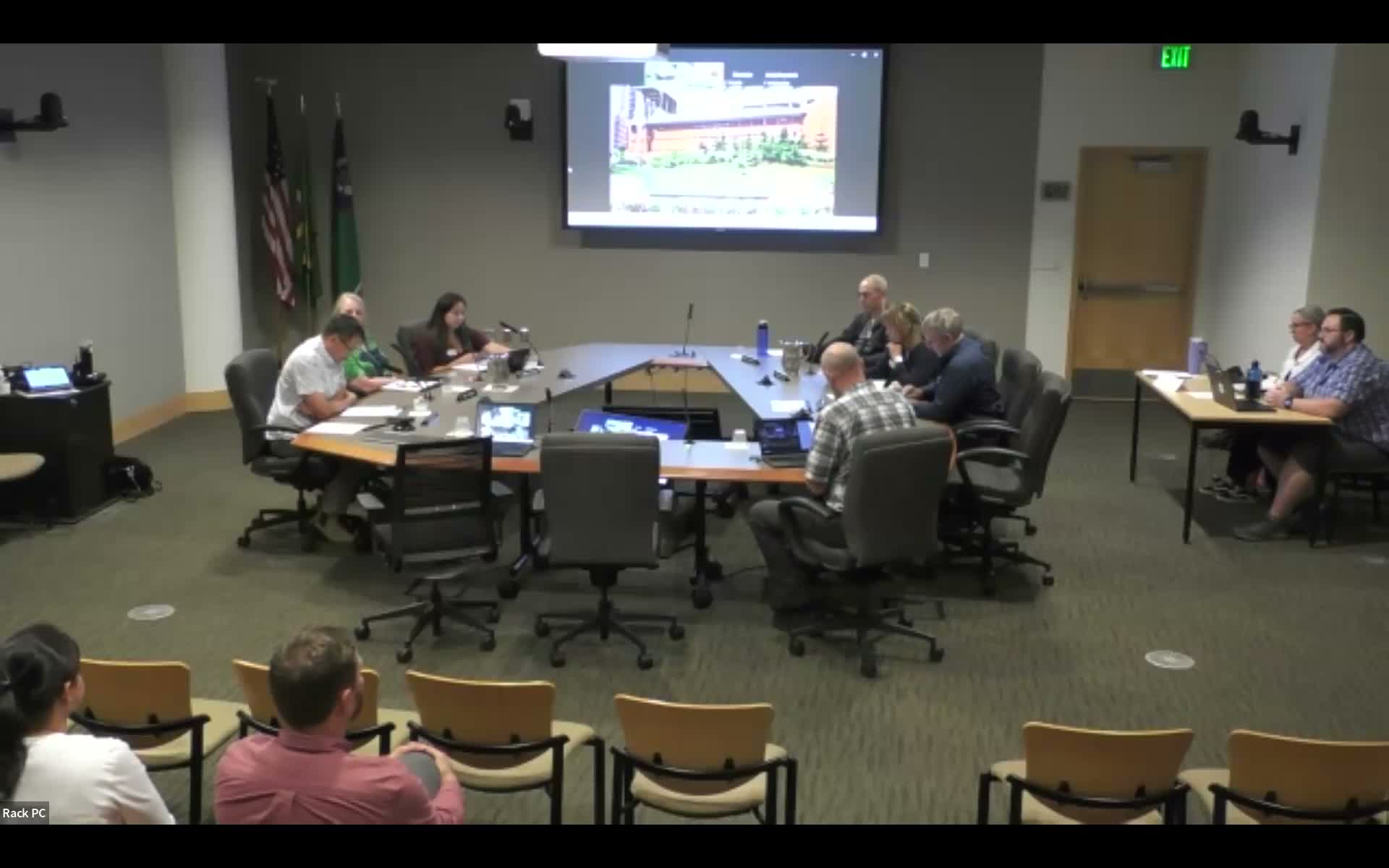
Bellevue utilities preview 10-year storm and surface water plan; outreach, equity and funding flagged
Summary
City utility staff told the Environmental Services Commission they have begun a multi-year update to Bellevue's storm and surface water system plan, emphasizing heavier public outreach, regulatory changes (NPDES 2024–2029), asset assessments and a target for a draft plan in late 2026 or early 2027.
City utility staff briefed the Environmental Services Commission on September 4 on an early-stage update to Bellevue's storm and surface water system plan, saying the effort will combine data collection, stronger public outreach, asset assessment and a capital-investment strategy through a roughly 20-year planning horizon.
"The star is storm and surface water system plan," said Eric Lafrance, planning manager for utilities, opening the presentation. He said the city is updating the plan on about a 10-year cadence (the last update was in 2015) and that the update will feed the utility's capital investment plan and future policy recommendations.
Divya Passapuletti, who presented the technical slides, summarized the plan's purpose: identify system needs and capacity, recommend projects for flood control and water quality, estimate financial needs and recommend operations and maintenance practices. "Stormwater is nothing but rainwater," she said while explaining how runoff can both replenish water bodies and carry pollutants.
Staff described outreach methods already underway — in-person tabling, social media, surveys and focus groups — and said a recent Crossroads event engaged more than 100 people. Participants used stickers to rank priorities; staff reported the top two priorities in that event were protecting fish and wildlife and planting trees.
Regulatory drivers will shape recommendations. Passapuletti listed the Department of Ecology NPDES Phase 2 municipal storm sewer permit (current term 2024–2029), FEMA's floodplain requirements under the National Flood Insurance Program, Washington Department of Fish and Wildlife hydraulic permitting, King County growth-management requirements and federal endangered-species protections as key constraints the plan must reflect.
On assets, staff said about 50% of the city's stormwater pipes have been CCTV-inspected under the renewal-and-replacement (R&R) program and the remainder are planned for inspection in the next few years. Passapuletti described an asset-prioritization workflow that combines operations-led problem lists with an asset-management risk model scoring consequence and likelihood of failure to rank projects.
Staff explained the storm plan will inform the stormwater CIP, which is transitioning from a six-year to a 10-year horizon. Some projects — for example replacing culverts to meet fish-passage requirements — can increase scope and cost significantly, staff said.
On finance, staff described a standard fiscal analysis: identify current revenues and expenditures, model forecasts and evaluate funding options including grants, reallocating lower-priority funds, rate adjustments or using R&R reserves. Passapuletti said, based on current modeling, the utility is not anticipating "radical changes" to rates and that Bellevue Utilities currently carries no outstanding debt and plans to cash-fund many CIP needs while maintaining debt capacity for catastrophic events.
Commissioners pressed staff about how the plan will use best practices from other utilities, how outreach results will be summarized, and how service equity is assessed and weighted. Passapuletti and Lafrance said a consultant with multi-jurisdiction experience will bring outside perspectives, outreach findings will be summarized for future commission briefings, and prioritization uses eight scoring categories with assigned weights (regulatory compliance and reliability carry the highest weights; service equity is included though it is not a regulatory mandate).
Commissioners also asked about neighborhood-level impacts. Lafrance pointed to a planned Kelsey Creek Basin study, supported by grants, that will focus on an urbanized, diverse area and examine retrofit opportunities to address urban pollutants — including road runoff and tire wear particles — that staff said can harm salmon and other aquatic life.
Staff said the update began late last year, public engagement will continue through the fall, program evaluation and policy work will follow, and the draft system plan is expected late 2026 or early 2027. The commission will receive two more presentations next year (one on proposed policy and code changes and a second to review the draft) and will be asked to prepare a recommendation letter to the council when the plan is ready for adoption.
The presentation was informational; no formal actions on the plan were taken at the meeting. The commission later approved routine meeting business (agenda and minutes) and adjourned at 7:38 p.m.
Sources: Presentation and Q&A at the Environmental Services Commission meeting, Sept. 4, 2025; remarks by Eric Lafrance and Divya Passapuletti.