Get Full Government Meeting Transcripts, Videos, & Alerts Forever!
Get email alerts on the Wilburton Luca topic
No spam. Unsubscribe anytime.
Planning Commission hears Wilburton LUCA update as developers and advocates clash over affordability and feasibility
Summary
City staff presented an informational update on the Wilburton Vision land‑use code amendment, outlining new district zoning, a flexible permitted‑uses approach, an amenity incentive system and upcoming feasibility and nexus studies; developers warned baseline requirements make development infeasible, while Habitat for Humanity urged mandatory affordable‑housing requirements.
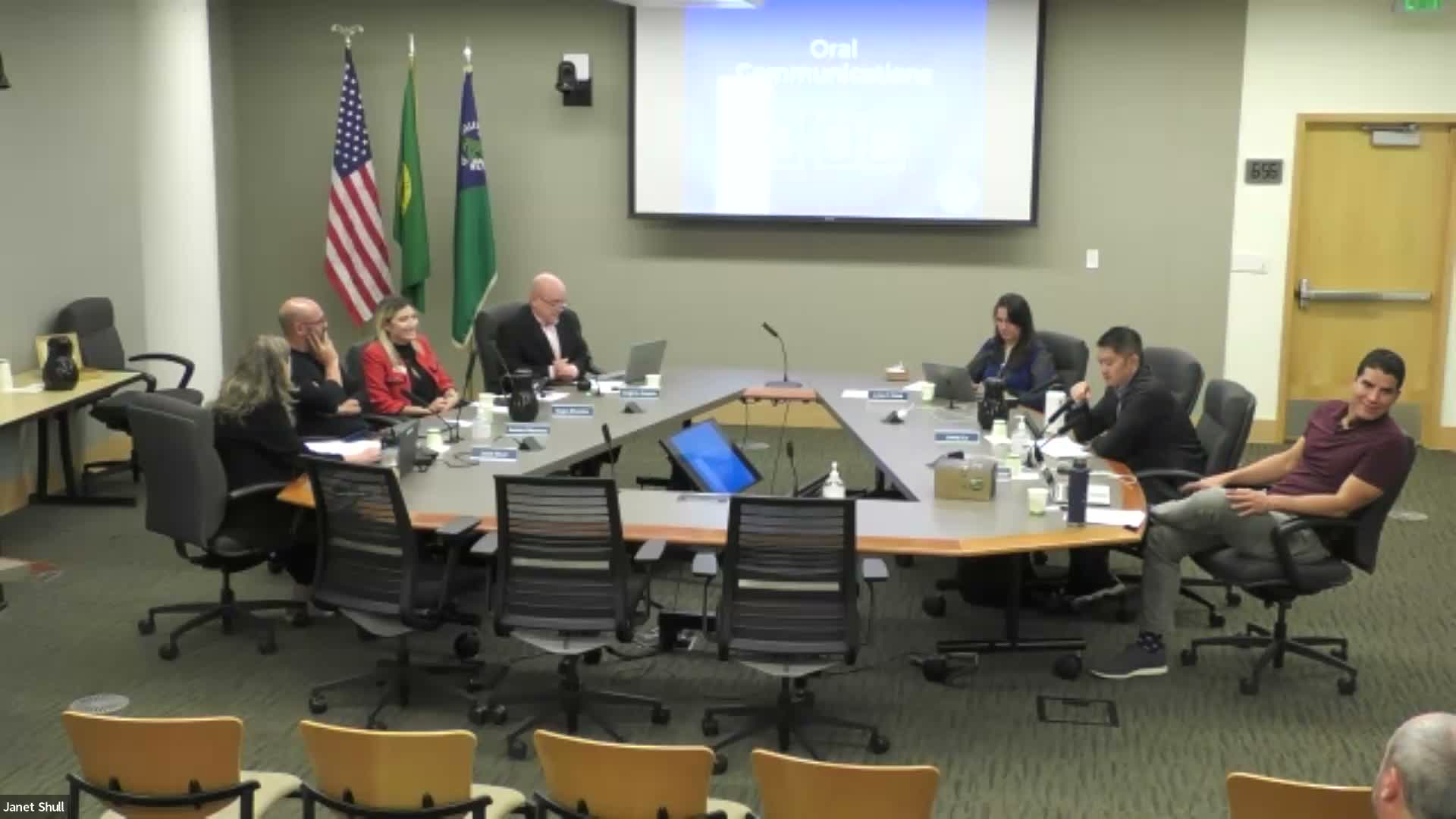
City of Bellevue Planning Commission members received an informational update on Sept. 11 about the Wilburton Vision implementation land use code amendment (LUCA), a staff‑led effort to translate the recently adopted comprehensive plan into new zoning and development standards for the Wilburton neighborhood.
Christina Gallant, development‑services code and policy manager, said the LUCA will introduce new subarea districts (urban core, mixed‑use high‑rise, mid‑rise and residential) and apply a permissive approach in which uses are allowed unless specifically prohibited or conditioned. Staff also proposed tailored provisions for life‑sciences buildings, new block‑size and access‑corridor standards, and a green‑factor approach that increases open‑space expectations while adding flexibility for small sites and elevated open spaces.
Gallant described an amenity‑incentive system that ties additional floor‑area ratio and height to contributions such as affordable housing, family‑sized units, enhanced green building performance, additional publicly accessible open space and improvements to Eastrail and the Grand Connection. She said staff updated a development‑feasibility model incorporating stakeholder cost inputs and has begun an affordable‑housing nexus study to estimate the demand created by market‑rate development and the maximum in‑lieu fee the city could support.
Several members of the development community told commissioners the draft code — as written — risks making redevelopment financially infeasible. "The draft today is not financially feasible for development in its current form," Jesse Clausen, chair of the Chamber of Commerce Plush Committee, said, and urged the commission to pare back costly baseline requirements and rely more on incentives. Neil Molnick, who owns the Ford AutoNation site in Wilburton, said the LUCA must allow ‘‘day‑one development’’ when adopted and cautioned that high baseline requirements, small floor‑plate rules and rigid access standards could prevent projects from proceeding.
Representing Habitat for Humanity, Sahar Amini urged the commission to keep mandatory affordable‑housing requirements on the table. "Incentive‑based approaches have proven not to be effective at scale," Amini said, and argued that a requirement will better ensure the city meets state and local housing goals across market cycles.
Commissioners pressed staff on several technical points. Questions covered the LUCA’s cost levers — including open‑space requirements, parking, and block/perimeter standards — and the relative feasibility of construction types (mid‑rise wood‑frame/podium versus steel‑frame high‑rise). Gallant said mid‑rise development shows some feasibility under the model but high‑rise faces significant near‑term challenges, and staff has removed a proposed minimum FAR and relaxed some block and access requirements in response to feedback. Staff also noted two parking options in the draft: a no‑minimum standard or one tied to 50% of the citywide standard for Wilburton; stakeholders indicated many projects would likely provide parking at roughly the 50% level in the near term.
On design review, Gallant highlighted state requirements favoring objective standards and said Bellevue currently uses an administrative design‑review process rather than a separate design‑review board, a structure staff expects to keep while clarifying objective standards to reduce uncertainty and timeline risk.
Next steps: staff plans a final stakeholder workshop in early October, release of a full public draft on Oct. 10, and a planning‑commission study session on the full draft in November, with council engagement anticipated in early 2025. Commissioners requested additional benchmarking, an apples‑to‑apples feasibility comparison of mandatory versus incentive approaches, and more calibration of amenity incentives to avoid over‑concentration of low‑cost measures.
Votes at a glance: Commissioners approved routine minutes and the meeting adjourned by voice vote; no substantive LUCA actions or regulatory votes were taken at this meeting.