Get Full Government Meeting Transcripts, Videos, & Alerts Forever!
Get email alerts on the Land Use Umbrella Zoning topic
No spam. Unsubscribe anytime.
Neighbors and developers clash over proposed ‘umbrella’ land‑use approach for neighborhood centers
Summary
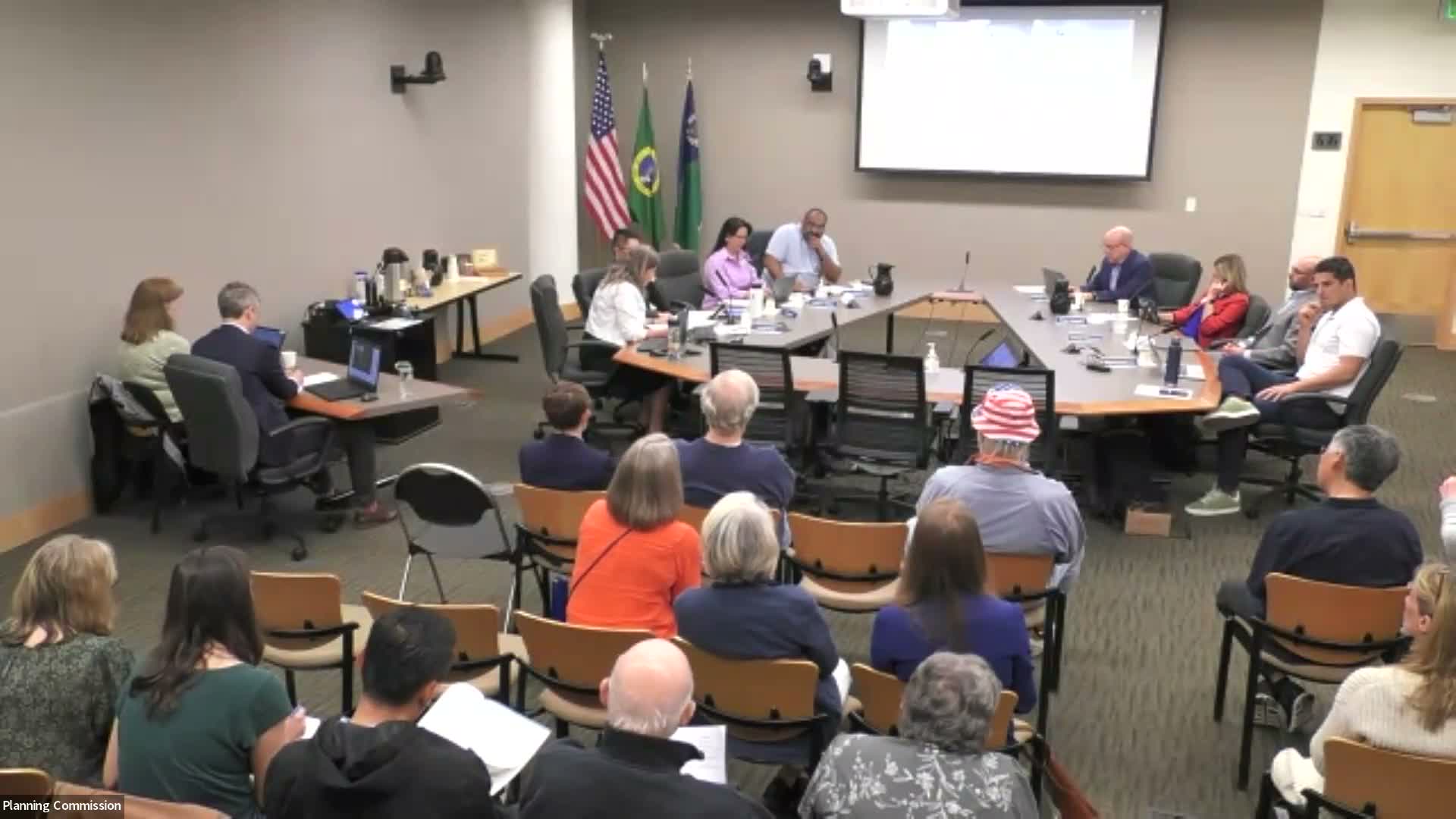
Public testimony at the June 26 Bellevue Planning Commission hearing split sharply over staff’s proposed broader future‑land‑use categories (referred to by commenters as an “umbrella” rezone approach). Supporters said it would enable redevelopment and community space at Newport Hills; opponents said it would diminish notice, favor developers, and erode public process.
Staff briefed the Planning Commission on the final phase of the 2044 comprehensive plan periodic update, including a proposal to group neighborhood centers under broader future‑land‑use categories that some members of the public call an "umbrella" approach.
At the hearing, residents from Newport Hills and representatives of neighborhood organizations offered sharply divided views. Deborah Deutsch, a 42‑year Newport Hills resident, told commissioners she supports the umbrella approach, saying it "would increase the city's effectiveness and efficiency and would result in a more cohesive redevelopment plan" and could help create a community gathering space in the neighborhood.
Other neighbors strongly disagreed. Anne Brashear, secretary of the Newport Hills Community Club, asked commissioners to "reject the staff's zoning umbrella proposal," arguing the method "would reduce the public notice and comment process" and "cut neighbors, other residents, and the planning commission itself out of the decision making process." She said proponents are "cherry pick[ing] neighborhood representatives" and that the umbrella method could allow developers to proceed with less vetted analysis.
Several other Newport Hills residents echoed Brashear's concerns, describing an imbalance of power between developers—who "have millions of dollars" to invest in advocacy—and neighborhood residents who lack legal or lobbying resources. Ellen Heneman said the change "opens the door to secrecy and poor outcomes" and warned that removing procedural guardrails would force neighborhoods to hire attorneys to defend community interests.
Supporters argued the umbrella approach can be implemented with safeguards. Deborah Deutsch and Cameron Kast, among others, said allowing some upzoning or flexibility would enable underused centers to redevelop, add housing critical mass for neighborhood retail and community space, and better leverage transit proximity. Staff told the commission that designations are intended to group similar development types and that the rezone process would still require an applicant to meet decision criteria and include a public hearing before the hearing examiner.
Commissioners pressed staff for more specifics, asking for visual examples that show what "neighborhood business" versus "community business" or a low‑rise mixed‑use build‑out would look like, details on the rezone (and hearing‑examiner) process, a retail viability/economic analysis for Newport Hills, and shadow and typology studies for areas such as Crossroads. Staff agreed to provide those materials in the July 10 packet and noted the EIS and prior outreach covered the broader classification approach.
The commission did not adopt a final position at the June 26 meeting; instead members requested additional materials and analysis to better assess tradeoffs between flexibility for redevelopment and protections for public notice and neighborhood input. The commission set July 10 as the next opportunity to revisit the topic with visuals, procedural details and economic context.