
Senate adopts measure requiring major transmission projects to show majority benefit for West Virginia ratepayers
Get AI-powered insights, summaries, and transcripts
Subscribe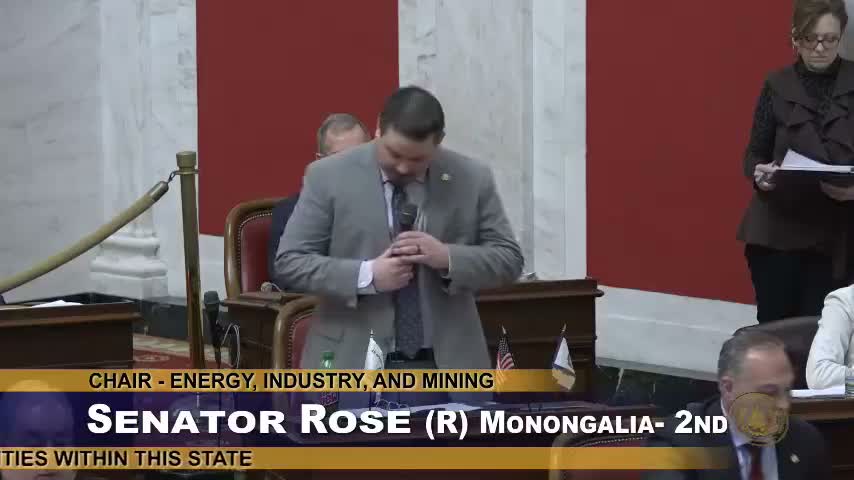
Summary
The Senate passed an energy-transmission amendment requiring that interstate transmission projects demonstrate at least a 50.1% economic benefit to West Virginia ratepayers before the Public Service Commission may allow cost recovery or eminent domain, prompting extensive debate over FERC preemption and regional grid impacts.
The West Virginia Senate on March 12 adopted an amendment to an energy-transmission bill that requires a written, quantitative analysis showing a project would provide at least a 50.1% benefit to West Virginia ratepayers before the Public Service Commission may allow cost recovery or eminent-domain actions for transmission lines that cross the state.
The provision, explained on the floor by the junior senator from the second, says the analysis must demonstrate by a preponderance of the evidence that the project’s benefits to West Virginia exceed 50.1 percent. "If there's gonna be any eminent domain ... then they should benefit from it," the junior senator from the second said, urging colleagues to protect landowners and ratepayers.
Why it matters: proponents framed the measure as protection for West Virginians’ taxpayers and ratepayers against out‑of‑state operators that would use West Virginia land and public resources for projects that primarily benefit other states. Opponents warned the requirement could collide with federal jurisdiction and the Federal Energy Regulatory Commission's (FERC) authority over interstate transmission.
What supporters said: Senator 23 (junior senator from the fifteenth) described the requirement as "show us your math," arguing that transparency is necessary when ratepayers could be asked to shoulder costs for projects that primarily serve out‑of‑state customers. Senator 24 (senior senator from the fourth) said the change "provides additional protection" for West Virginia citizens and cited past examples where neighboring states' actions shifted costs onto West Virginians.
What critics warned: Senator 20 (Senator Summers) and Senator 22 (Senator from Cabell) asked whether the state requirement would be preempted by federal law and whether it would impede legitimate power exports or the governor's economic goals. Senator 13 (senior senator from the thirteenth) cautioned that PJM allocation rules already spread costs across a multistate grid and that some benefits may accrue indirectly to West Virginia.
Process and outcome: After extended questioning about FERC, PJM and constitutionality, the floor adopted the amendment as part of the engrossed committee substitute. The Senate later recorded a final vote on the bill in which the clerk announced the bill passed. The floor record shows 29 yeas and 5 nays on a later recorded question related to the measure’s passage stage; the clerk declared the bill passed and sent it to the House for concurrence.
What’s next: The bill, as amended, will go to the House. If enacted, the new requirement will direct the PSC to require a written economic showing before authorizing rate recovery or allowing eminent domain for large interstate transmission projects that cross West Virginia.