Get Full Government Meeting Transcripts, Videos, & Alerts Forever!
Get email alerts on the Hb 1293 topic
No spam. Unsubscribe anytime.
Bellevue planners move toward objective exterior design rules; commissioners ask for clearer, measurable standards
Summary
City staff presented draft code revisions to implement Washington House Bill 1293, proposing to retain ascertainable objective exterior design standards and remove non‑objective guidelines; commissioners largely supported the direction but asked for more measurable language, clearer plaza definitions and use of architectural composition tools.
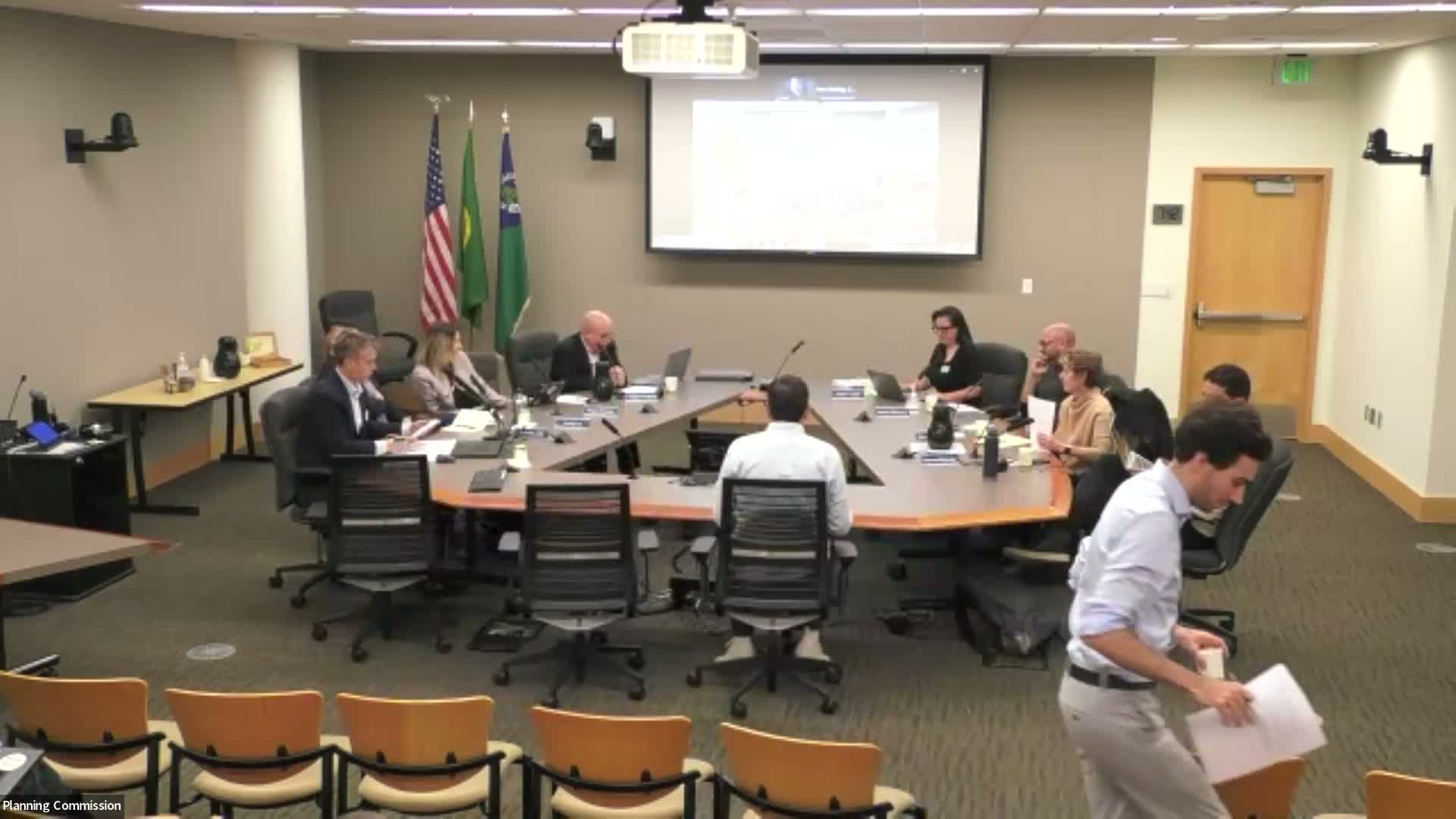
City staff presented the first of several study‑session drafts on Oct. 23 to implement Washington House Bill 1293, which requires jurisdictions to adopt clear, ascertainable exterior design standards and streamlined review procedures.
Nick Whipple and senior planner Kirsten Mant walked the Planning Commission through the downtown draft, explaining the difference between standards (required, ascertainable) and guidelines (advisory). "A standard is really the important requirement... guidelines are intended to be, as the term implies, guiding language that kind of helps with the intent," Mant said, describing the audit and revision process the department used to make language more objective.
Staff noted key procedural changes: consolidating permit review where possible, limiting the number of public meetings for design review projects, and establishing vesting at the time of a complete application so applicants know which code applies during review. Mant said the team retained intent statements to preserve context while removing or rewriting subjective language such as "visually interesting" or "where possible." She said the goal was to be ascertainable without becoming overly prescriptive.
Commissioners generally welcomed the approach and offered specific requests: define or clarify terms such as "where feasible" and "major vs. minor amenities," better articulate standards for plazas and internal courtyards, and consider using architectural composition terminology (hierarchy, proportion, rhythm, solid/void relationships) to make criteria more measurable. Commissioner Villabazis urged the staff to produce objective composition tools commissioners and applicants can apply consistently.
Staff said the downtown package would return for additional study sessions in December and January, followed by planning commission hearings and a subsequent recommendation to city council. Staff also noted an intention to develop an early vesting mechanism for administrative design review permits so applicants can rely on the code at the time of complete application.
The commission provided direction to staff to continue refining the downtown language and to bring remaining overlay districts and process changes back for future study sessions.