Get Full Government Meeting Transcripts, Videos, & Alerts Forever!
Get email alerts on the Immigration And Housing topic
No spam. Unsubscribe anytime.
Duluth council tables statewide eviction‑moratorium push after hours of public testimony
Summary
After more than an hour of public comment urging urgent action, the Duluth City Council voted 5–4 to table a resolution asking the governor for a temporary statewide eviction moratorium and to pursue stronger local protections; the council unanimously passed a separate resolution clarifying city‑federal communications on civil immigration enforcement and read ordinance 5 for first reading.
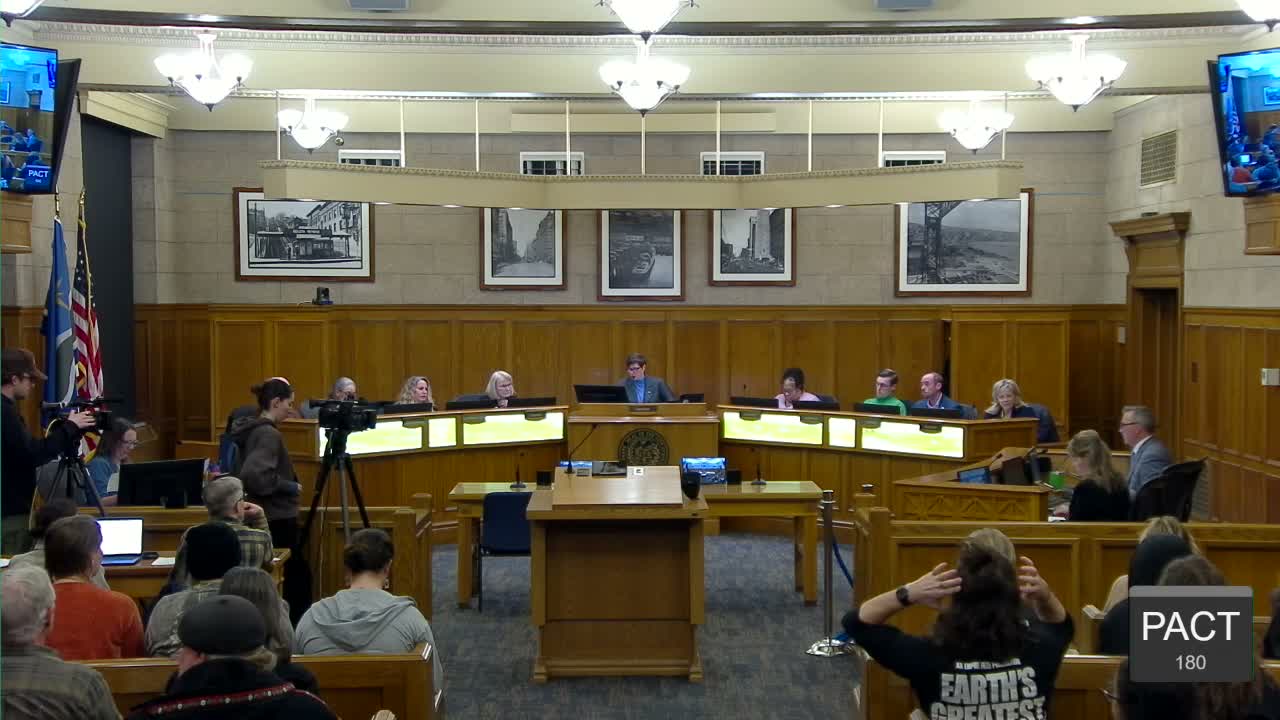
Dozens of residents and community advocates packed a Duluth City Council meeting to urge urgent action on immigration enforcement and housing protections, prompting the council to table a proposed eviction‑moratorium resolution after heated debate.
The measure, Resolution 105, called on Minnesota’s governor to declare an emergency and create temporary statewide financial assistance and eviction protections for families affected by recent federal immigration enforcement actions. Councilor Durwacker introduced the resolution and said it was intended to buy time while state agencies and local partners stood up assistance programs.
Public commenters told personal stories and pressed for bolder steps. Rose Stout, a childcare worker, said the council should do more than make statements: “Simply stating that you will not work with ICE is not enough,” she said, urging the council to codify protections in ordinance 5. Will Richardson said people are living in fear and asked the council to “support the resolution for an eviction moratorium and ordinance number 5.” JT Haines cited recent federal court orders criticizing ICE and urged the council to act.
Opponents and some landlords cautioned about unintended consequences and funding. Barbara Monte, who manages more than 70 rentals, said a moratorium can cause severe financial harm for small landlords without sufficient support and pointed to the administrative burdens observed during the COVID-era moratoriums.
After debate about funding sources, implementation and legal scope, the council voted to table Resolution 105 so authors and staff could refine the language and pursue clearer funding and administrative pathways. The tabling motion passed 5 to 4.
At the same meeting the council advanced related steps: it unanimously approved Resolution 100, which clarifies the communication and enforcement relationship between the city and federal authorities with respect to civil immigration enforcement. Councilor Johnson, a sponsor, said the resolution was vetted by city attorneys and was intended as a foundation for future ordinance work.
Ordinance 5 — a proposed change to the Duluth city code to specify how city employees and Duluth Police Department staff interact with federal civil immigration enforcement — was read for the first time. Council members were urged to work with the city attorney’s office to draft specific amendment language; no final vote on the ordinance was taken.
The council set the moratorium item for further consideration at a future meeting and asked authors to coordinate with county and state partners on funding and administration. No statewide eviction moratorium was enacted in the meeting.
Votes at a glance: • Approval of Resolution 100 (clarifying city‑federal communication): passed 9–0. • Tabling of Resolution 105 (requesting statewide eviction moratorium and emergency rental assistance): tabling motion passed 5–4. • Ordinance 5: read for the first time; no final vote taken.
Next steps: Council members and staff said they will continue to refine ordinance language, coordinate with state legislators and housing administrators on funding channels, and bring revised measures back for further consideration.