Get Full Government Meeting Transcripts, Videos, & Alerts Forever!
Get email alerts on the Hud Funding topic
No spam. Unsubscribe anytime.
Duluth panel outlines HUD 2026 action-plan recommendations including housing, public facilities and ESG funding
Summary
City staff and the Community Development Committee presented the 2026 HUD action-plan recommendations: CDBG housing ($623,000, ~70 units), public facilities ($497,000), public services ($352,000), HOME funding (~$4.45M) and ESG awards (~$207,000). Councilors asked about federal rule changes and contingency plans for variable HUD awards.
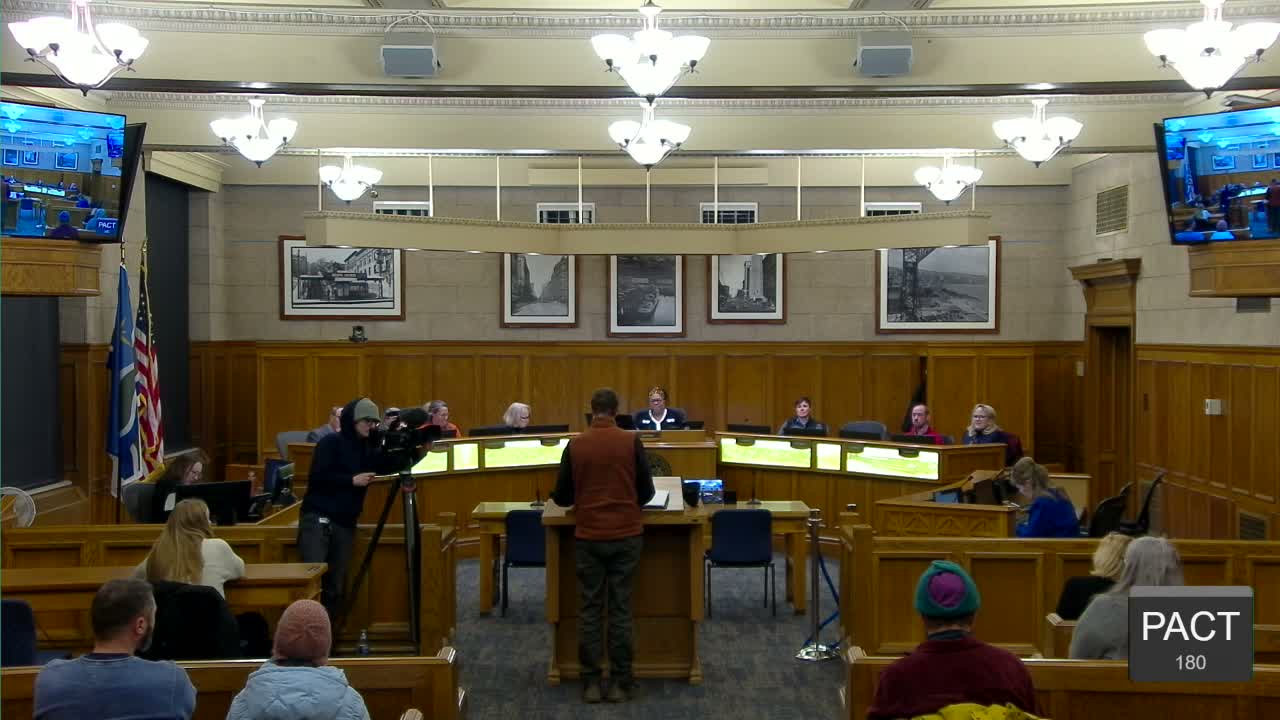
City staff and the Community Development Committee presented the draft 2026 HUD action plan to the Duluth City Council, detailing recommended allocations across Community Development Block Grant (CDBG), HOME and ESG funding streams and explaining the committee’s public-engagement and scoring process.
Suzanne Kelly, a planner in the city’s Planning Department, said the committee reviewed over 500 pages of applications and relied on public meetings, surveys and agency questionnaires to set priorities aligned with the consolidated plan. Committee Chair Steve Wick said the panel received nearly $6 million in requests and expects just over $3 million in HUD funding for 2026, and he outlined priority areas including affordable housing, neighborhood revitalization, homelessness services and childcare access.
Wick said the largest CDBG housing recommendation is $623,000, which the committee estimates will create about 70 new units; a pre-commitment to the Union Gospel Mission did not secure needed LIHTC financing and freed funds for other projects. The committee recommended $497,000 for public-facilities projects and $352,000 for public services (the latter reflecting HUD’s 15 percent cap on CDBG public-service spending).
Annie Schwartz presented economic-development recommendations totaling $409,000 for job training, small-business assistance and childcare workforce training, listing local organizations proposed for funding. Shannon Lee reviewed HOME program recommendations of about $4.45 million to be divided among the HRA (homeless rental assistance), a community land trust and Welch Place Apartments, estimating roughly 49 HOME-funded units across projects.
Will Wilson summarized the Emergency Solutions Grant (ESG) recommendations — $207,000 to cover street outreach, shelter services, homelessness prevention, rapid rehousing and the homeless management information system — and described a contingency plan: if HUD’s final award differs by more than 3 percent, the city will hold a public meeting to reallocate; smaller variances would be redistributed by staff within the proposed allocations under committee guidance.
Councilors asked about recent reporting that some Minnesota cities delayed spending federal housing funds because of rule changes that include immigration-status screening and other restrictions. Kelly said city systems already verify income and basic eligibility, and that staff will apply only HUD-allowed criteria and existing processes, adding the city is monitoring executive orders and will adjust as required.
No final votes on HUD allocations were taken Monday; the committee presented the recommendations to the full council and identified related resolutions (e.g., Resolution 26-0053) for formal consideration at upcoming meetings.