Get Full Government Meeting Transcripts, Videos, & Alerts Forever!
Get email alerts on the Utilities Biosolids topic
No spam. Unsubscribe anytime.
Plantation joins regional biosolids plan amid rising treatment costs and regulatory pressure
Summary
City Council approved joining a 10-utility interlocal agreement to pursue a regional biosolids treatment facility, citing mounting regulatory limits on land application and projected construction and upgrade costs; utilities director said Plantation's share is roughly 4.8% of a projected $500 million plant and funding would come through utility rates.
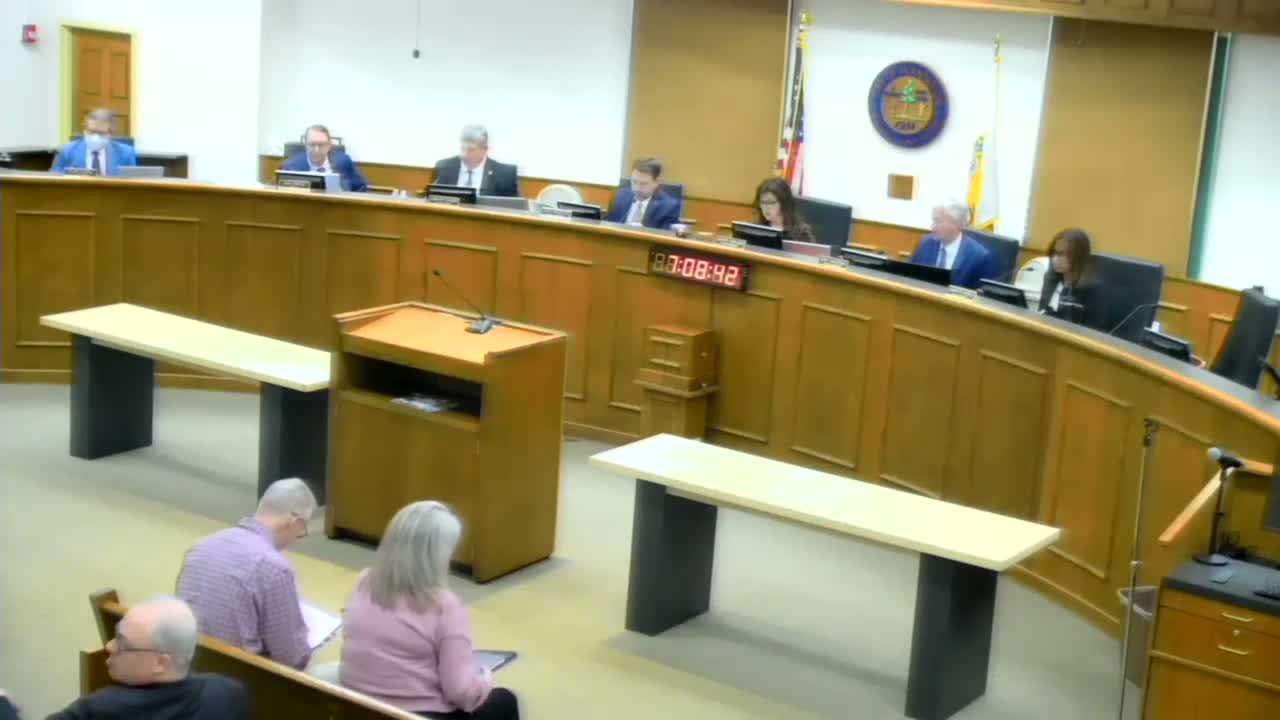
Plantation City Council voted Jan. 14 to participate in an interlocal agreement advancing a regional biosolids treatment facility for utilities across Broward County.
The council approved the measure after an extended discussion in which David Polio, Plantation's utilities director, described a landscape of tightening regulations that is reducing land-application options for treated sludge and making a regional solution necessary. Polio told the council the initial feasibility work points to a roughly $500 million facility shared by 10 large utilities, with Plantation's portion of design estimated at about 4.8% of the plant cost.
"We're looking at a $500 million plant," Polio said. "On our percentage that's about a $50 million design. These numbers can change, but these are conservative numbers." Polio said the work will be funded through the utilities department's normal processes and rate structures, including the reallocation of current land-application payments.
Why it matters: State and local regulators are reviewing rules for land-application and PFAS limits, and Polio said recent bills under consideration (notably a Senate bill discussed in committee) could prevent land application after July 2026, which would leave municipalities scrambling for disposal options. A centralized regional plant, he said, offers scale and joint governance to handle advanced treatment, pelletization and potential beneficial reuse options.
Council members pressed staff on costs, operations and alternatives. Councilmember Fadgen asked whether the 10 utilities are the largest in the county and whether the arrangement spreads cost effectively. Polio said the 10 participants represent the biggest players and that other municipalities either pay a larger entity or have different procurement methods.
Polio outlined both capital and operating considerations: converting existing local plants to meet higher treatment standards (an illustrative $36'$48 million range for upgrades), potential drying and pelletizing equipment, tipping fees, and the unresolved question of how to market or disposition pelletized product. He also cited PFAS and related regulatory risk as a driver of the project.
Opponents and supporters: The council heard no formal opposition in the meeting; several council members said they understood the urgency given shrinking land-application options and the potential for significant rate impacts if the city did not act in concert with other utilities.
Next steps: Staff will continue planning and design coordination through the interlocal agreement. Polio said the timeline anticipates further design and later construction years; funding and rate adjustments would follow normal utility budgeting and rate-study processes.
Action taken: Motion approved by roll call (council vote recorded as unanimous).