Get Full Government Meeting Transcripts, Videos, & Alerts Forever!
Get email alerts on the Property Taxes topic
No spam. Unsubscribe anytime.
Austin staff: certified tax rolls lower typical homeowner’s property tax impact to $8.68 per month
Summary
Deputy budget director Eric Nelson told the Audit and Finance Committee that certified tax rolls and recalculated values reduced the typical homeowner impact in FY26 to $8.68 per month (5.3%) at the voter‑approval rate, down from the proposed‑budget projection of $12.90 (7.9%). The council will set a maximum tax rate tomorrow and consider TRE scenarios next week.
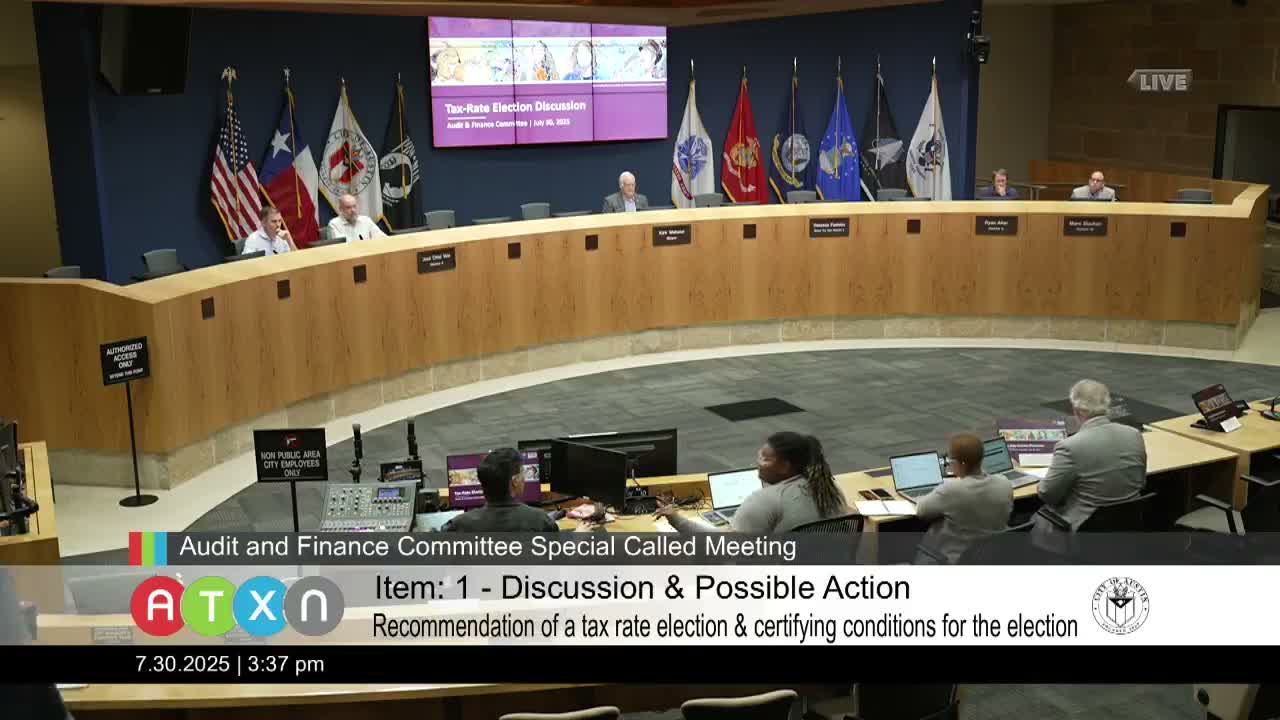
City of Austin budget staff told the Audit and Finance Committee on July 30 that certified property tax rolls have reduced the projected property‑tax impact on a typical homeowner for fiscal year 2026.
“Based on the official roll and the official voter approval rate, we were showing an $8.68 per month or 5.3% increase,” Eric Nelson, deputy director of budget, said during a presentation to the committee. He said that figure is lower than the $12.90 per month (7.9%) increase projected in the proposed budget because the certified rolls and successful homeowner protests reduced the typical homeowner value.
The change lowers the overall monthly burden the staff presented: when combined with the city’s basket of fees and rates, the typical homeowner’s total monthly increase under the certified roll is now $18.13, a 4.0% growth figure, down from the earlier projection of $22.35 (4.9%). Nelson said the official voter‑approval property tax rate is 0.52388 per $100 of taxable value and that each penny of tax rate would generate about $21,900,000 for the general fund. He added that each penny translates to roughly $3.30 per month for the typical homeowner.
The committee’s chair and members pressed for clear taxpayer math. The chair walked through the arithmetic the committee wants reflected in public materials: the proposed base budget would raise the typical ratepayer’s total annual bill by $217.56; a one‑cent increase would add $39.58 annually to that typical bill. Nelson said staff would include a memo and has prepared staff‑amendment language to allocate approximately $5,000,000 that would be generated at the voter‑approval rate.
Why it matters: Council will vote the next day to set the maximum tax rate the city will consider. If the council adopts a budget that increases revenue above the base budget, state law would trigger a tax rate election (TRE). Committee members asked staff to present penny‑by‑penny TRE scenarios at a focused meeting next week so council and the public can see what each incremental rate change would fund.
What’s next: The chair said the council will set the maximum tax rate at its next meeting, and staff will present TRE scenarios in a focused session on Tuesday, August 5, with Thursday reserved for laying out individual budget amendments. Filing deadlines for proposed council amendments were announced for August 4 at 6:00 p.m., and council reserved August 13–15 as potential days to pass the budget.