Get Full Government Meeting Transcripts, Videos, & Alerts Forever!
Get email alerts on the Teacher Incentive Allotment topic
No spam. Unsubscribe anytime.
Birdville ISD board explores Teacher Incentive Allotment; consultant outlines timeline, trade‑offs
Summary
At a Nov. 10 workshop the Birdville ISD board heard a consultant’s briefing on the state’s Teacher Incentive Allotment (TIA): how designations and payouts work, eligibility rules, a likely April application deadline and an earliest payout in 2028. Trustees raised equity and administrative‑capacity concerns and asked staff to form committees to plan next steps.
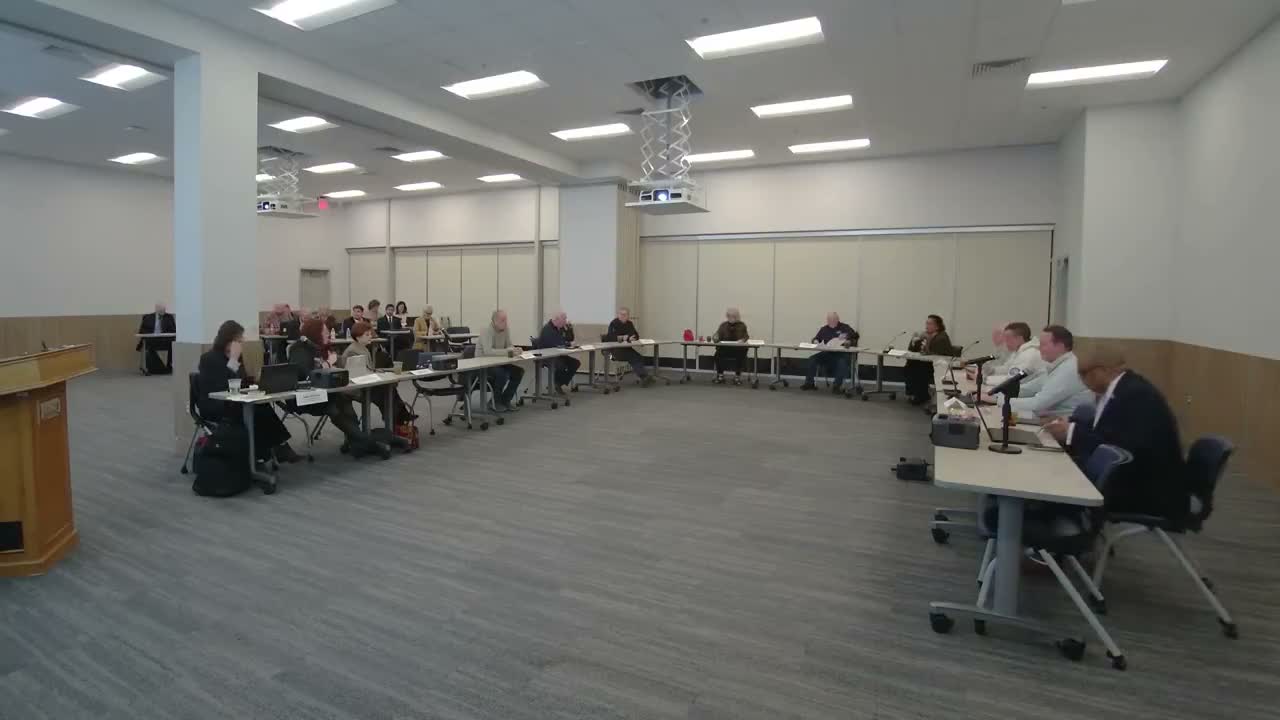
At a Nov. 10 special workshop, the Birdville ISD board heard a detailed briefing on the Teacher Incentive Allotment, the state program that designates and pays classroom teachers for measurable student growth and classroom performance.
"There's nothing achievement based in the Teacher Incentive Allotment," said Garrett Landry, founder and CEO of Steady State Impact, the consultant invited to explain how the program functions. He told trustees the program compares a student to their own prior performance and awards districts based on teacher‑level growth, not proficiency on a single test.
The consultant said participation in Texas has accelerated: he cited roughly 809 districts with approved TIA systems and about 420 districts that were already "paying out," with some 42,000 teachers designated and receiving additional compensation. He described the allotment as embedded in the state funding formula rather than a one‑time grant and noted an enhanced TIA option created by subsequent legislation that allows some districts to use funds for broader performance pay systems.
Why it matters: Landry warned that neighboring districts already paying TIA stipends can create local market pressure for Birdville. Trustees were told a three‑year sequence is typical: if Birdville applied in April (Landry identified the application window as April 2026), 2026–27 would serve as a data‑capture year, third‑party validation (Texas Tech) would follow, and the earliest local payouts would be in 2028 if the system is validated.
Key mechanics and local choices
Landry reviewed statutory requirements and local options. Two state‑required components are a student growth measure (district‑defined) and a calibrated observation/appraisal for each teacher in eligible assignments. Landry said a teacher must be coded in PEIMS as 087 (a classroom teacher) and provide direct instruction for at least 50% of the contract day to be eligible. He also noted that designation "follows the teacher" if they move districts and that a designation lasts five years.
On spending, Landry said statute requires most of the allotment be directed to instructionally facing roles at the campus (he cited a 90% figure), while districts may retain a small portion (commonly 10%) for implementation or employer costs such as TRS contributions. How a district divides an individual teacher’s allotment (for example, 90% to the teacher versus a shared plan) is a local spending‑plan choice that boards commonly approve.
Trustees’ questions and concerns
Board members pressed on capacity and equity. Several trustees warned that phased eligibility and varied campus conditions could produce perceived "winners and losers" and change school culture. "It's going to be a culture change," a trustee said, urging a rollout that prioritizes struggling campuses. Another trustee said, "I hate the inequity," and asked how Birdville would avoid unfair outcomes.
Landry acknowledged the concerns and said districts with recent appraisal waivers will face greater administrative lift to appraise every eligible teacher and calibrate observers. He recommended starting with a limited rollout—for example, select grades or campuses—and expanding as instruments and calibration improve. He also said third parties can help train appraisers though they cannot serve as the official appraiser of record in the state’s validation process.
Evidence and outcomes
Trustees requested research on student outcomes. Landry said Texas Tech has published studies on early TIA cohorts and offered to share those reports with the district. He also told the board that some districts have used TIA to boost teacher retention and that designated teachers can receive materially higher pay in high‑poverty campuses, but he said causation between TIA and long‑term outcomes is still an active area of study.
Next steps
No vote was taken. Trustees and staff agreed to form committees and hold focus groups and staff information sessions before deciding whether to file an application by the April deadline. The board’s next regular meeting is scheduled for Nov. 20; staff indicated a planning and stakeholder process would continue over the winter and spring ahead of any formal action.