Get Full Government Meeting Transcripts, Videos, & Alerts Forever!
Get email alerts on the Land Use Development topic
No spam. Unsubscribe anytime.
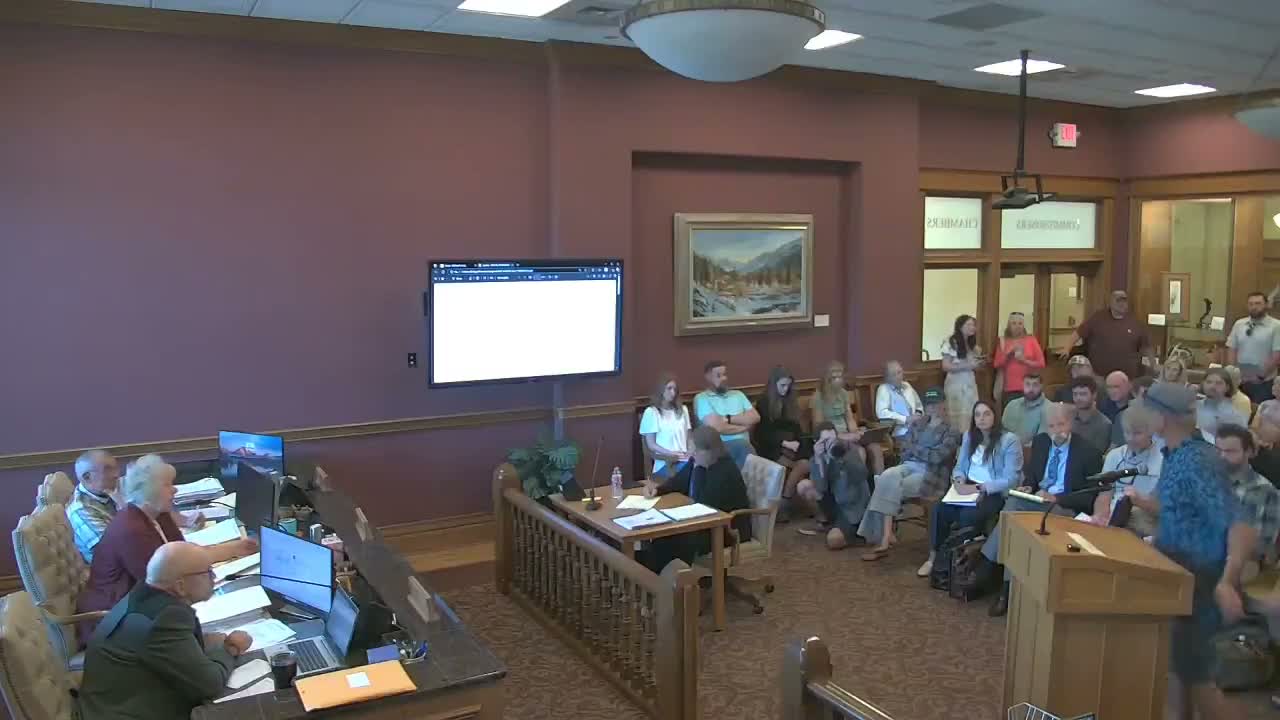
Flathead County commissioners approve preliminary plat for 1,700-acre Flathead Lake Club with conditions
Summary
After hours of public comment focused on water, traffic and wildlife, Flathead County commissioners voted July 21 to approve a preliminary plat for the 1,700-acre Flathead Lake Club; the approval includes 33 conditions, a parkland-waiver tied to permanent open-space dedication and required state reviews prior to final plat.
Flathead County commissioners on July 21 approved a preliminary plat for the 1,700-acre Flathead Lake Club subdivision that would create 359 single-family residential lots, seven commercial and amenity parcels and roughly 864 acres of designated open space.
The vote followed a lengthy public‑comment period and staff presentation that highlighted agency reviews, environmental findings and phasing requirements. Aaron Appert of the county Planning and Zoning office told commissioners the application includes on‑site water and wastewater systems to be constructed by the developer and turned over to the Lakeside County Water and Sewer District when each phase is completed; the district has capacity for the proposed first phase (about 100 equivalent dwelling units), Appert said.
"This is not a final plat; the next step is 33 conditions that must be met before it can go to final plat," the chair said during discussion, stressing that approval moves the project only to the next review stage. The commission’s approval included amended findings and conditions that require an approved riparian resource management plan, vegetative buffers consistent with Montana Fish, Wildlife and Parks recommendations, state DEQ review of water and wastewater facilities before final plat, and a requirement that the applicant show legal authority to proceed if outstanding legal claims exist.
Public commenters were sharply divided. Several Lakeside residents warned of runoff, increased silt and groundwater impacts from proposed golf‑course irrigation and questioned whether the Lakeside County Water and Sewer District can safely absorb the expansion. "I estimate about 500 acre‑feet between groundwater and surface water," Margaret Davis said, arguing that district capacity and cost estimates in staff materials are insufficient and that taxpayers could bear major costs. Jennifer Tipton of the North Shore Water Alliance urged commissioners to delay action until state groundwater discharge and DEQ permit issues are resolved and noted the district’s planned capacity increase of about 200,000 gallons per day, with roughly 100,000 gallons per day committed to the proposed Flathead Lake Club.
Supporters argued the project could bring infrastructure upgrades and jobs. David Fettweit, president of the Lakeside Summers Chamber of Commerce, said a large development could precipitate transportation and sewer improvements the area has long sought. Eric Payne, an area homeowner, cited the Iron Horse/Whitefish experience as an example of a development that brought utilities and economic growth.
Commissioners and staff also focused on technical safeguards. County planners noted Montana Fish, Wildlife and Parks recommended treating the tributary in the subdivision as intermittent and advised a 100‑foot vegetative buffer plus a 30‑foot building setback (130 feet total) around wetlands and the intermittent stream; staffing and equipment for fire protection (an on‑site fire station and hydrants) are included in the applicant’s mitigation plan and would be reviewed before final plat. Eric Mac, county planning staff, said mandatory geotechnical review will be required for slopes between 25%–40% and that no building is allowed on slopes greater than 40% under county rules.
A contentious procedural issue involved parkland dedication. The applicant requested a waiver of the statutory parkland dedication under Flathead County subdivision rules in favor of permanently dedicating open space within the subdivision. Commissioners amended the finding and condition language to require that the open space be permanently set aside on the face of the final plat and recorded as permanent open space maintained by the homeowners association; the amended condition specifies approximately 864 acres to be dedicated as permanent open space.
Following the discussion and a short recess to finalize language, the commission moved and seconded approval of the amended findings and conditions and then voted to approve the preliminary plat. The transcript records a voice vote with commissioners saying "Aye" and the chair declaring the motion carried; the meeting then adjourned. The transcript does not provide a roll‑call tally of individual yes/no votes.
What happens next: approval of the preliminary plat allows the project to proceed to final‑plat review only after required conditions are met. Those conditions include detailed riparian and stormwater plans, DEQ and other state reviews (as applicable), geotechnical analyses where required, demonstration of legal right to develop the property if outstanding claims exist, and completion of the infrastructure obligations tied to each phase before final plat approval.
Authorities and reviews explicitly referenced during the meeting included Montana Fish, Wildlife and Parks; the Montana Department of Natural Resources and Conservation; the U.S. Army Corps of Engineers (permit requirement if fill/excavation affects Waters of the U.S.); the Montana Department of Transportation (MDT) regarding Highway 93 approaches; the Montana Department of Environmental Quality (DEQ) for groundwater discharge and wastewater review; Bonneville Power Administration (BPA) easement considerations; and the Montana Subdivision and Platting Act and Flathead County subdivision regulations (including Section 4.7.24 on parkland dedication).