Get Full Government Meeting Transcripts, Videos, & Alerts Forever!
Get email alerts on the Snow And Playgrounds topic
No spam. Unsubscribe anytime.
Somerville officials warn modern playground surfaces limit snow removal; DPW outlines trade-offs for year-round access
Summary
Commissioners and school officials told the joint committee that many rubberized and engineered playground surfaces cannot be mechanically cleared without damage; DPW said removal often damages warranties and the committee asked staff to audit affected schools and consider surfacing and design changes for future yards.
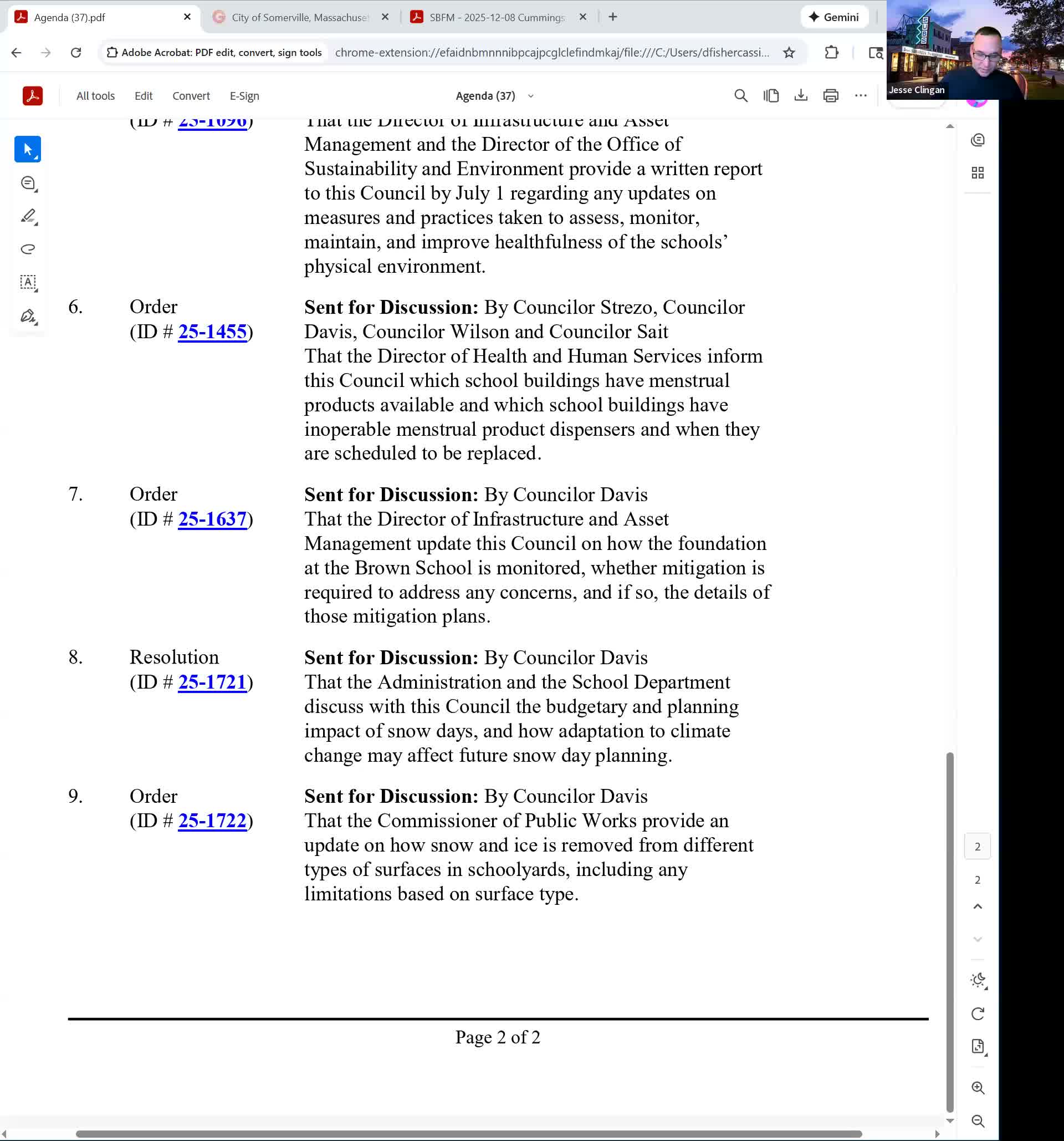
The committee discussed two related items: how climate and changing precipitation patterns may affect snow-day planning and the distinct operational problem that modern playground fall-zone surfacing creates for clearing snow during the school day.
Commissioner Jill Lathan (DPW) explained that snow budgets remain substantial because the city must maintain vendor and staffing readiness year-round and be prepared for fluctuating forecasts. She described the municipal process for calling a snow emergency—typically when forecasts exceed about 4 inches—and said DPW coordinates closely with schools when closure or emergency measures are considered.
On playgrounds, PSF and DPW staff said poured-in-place rubber and engineered wood fiber surfaces meet ADA and shock-absorption requirements but are vulnerable to mechanical clearing; shovels and powered brushes can damage surfaces and void warranties. Commissioner Lathan said volunteers' manual shoveling has caused damage at some sites and that powered brushes designed for synthetic turf are not appropriate for rubberized playground surfaces. Committee members suggested audits of which schools and which areas are inaccessible during snow, exploring alternative surfacing choices (rubber tiles, other materials) for new schoolyard designs, and operational ideas such as leaf blowers for light, powdery snow. The committee requested a focused follow-up next year to study design and operational options for keeping outdoor areas usable during school days.