
Maine hearing on audit-rights technical fix pits employers against insurers
Get AI-powered insights, summaries, and transcripts
Subscribe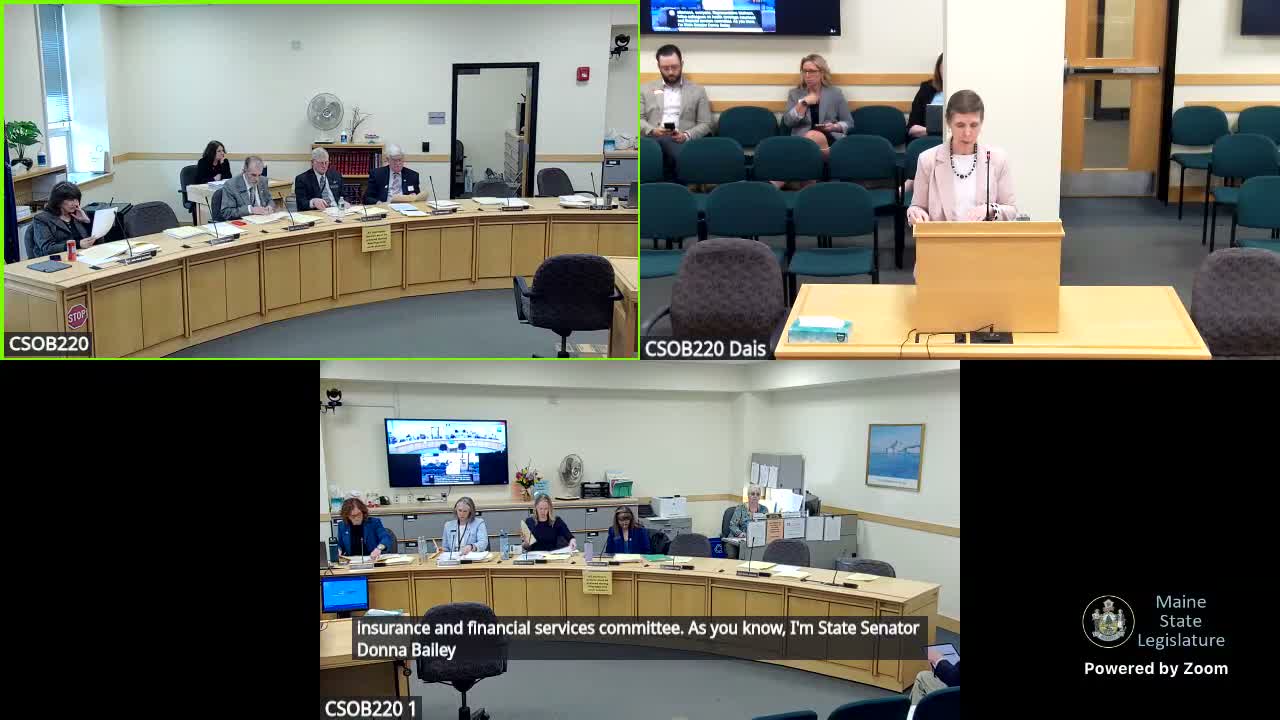
Summary
Sen. Donna Bailey introduced LD 378 to clarify that third-party administrators licensed as insurers are subject to audit-rights established in last year's law; purchasers argued audits find frequent billing errors, while insurers warned of large implementation and privacy costs.
Senator Donna Bailey introduced LD 378 as a narrowly targeted technical correction to LD 1906, saying the change clarifies that entities that collect charges or settle health-benefit claims on behalf of plan sponsors — even TPAs licensed as insurers — fall within the statute's definition of "administrator" for purposes of audit rights.
Trevor Putnacki, CEO of the Healthcare Purchaser Alliance of Maine, testified in strong support and urged the committee to adopt the fix. He said audits are an important tool to reduce erroneous payments and described a municipal trust audit that found a 33% error rate in a 200-claim sample. "Billing is extremely complex," Putnacki said; he cited industry estimates that billing errors amount to roughly 2–4% of total spend.
Insurers and plans responded that the new or clarified requirements would impose significant operational and privacy burdens. Dan DeMerrin, executive director of the Maine Association of Health Plans, urged delay and stakeholder negotiation, saying the law enacted last year was not fully worked through with all sides and that the new or clarified access could be costly and difficult to operationalize. Charlie Sultan of Cigna and Christine Ossenfort of Anthem highlighted manual-work burdens, ambiguity over whether counts are billed or paid, the potential for large volumes of medical records to be produced, and concerns about data-use agreements and third-party liability.
Committee members pressed both sides for evidence: Representative Poppy Arford asked whether the 33% example reflected overpayments or also underpayments; Putnacki said the example was primarily overpayments and that clawback mechanisms sometimes work but are not always successful. Insurers said that many plans already offer scheduled, limited audits and that broadening access could force new staffing and compliance costs.
The committee closed the public hearing and moved the bill to work session materials. No committee-level vote on the underlying statutory language was recorded at the public hearing stage.
What happens next: the sponsor and members will consider the testimony in upcoming work sessions and may seek amendments to address privacy, scope, and implementation concerns.