Get Full Government Meeting Transcripts, Videos, & Alerts Forever!
Get email alerts on the Environmental Policy Neonics topic
No spam. Unsubscribe anytime.
Somerville delays effective ban on plants treated with neonicotinoids to 2028 after debate
Summary
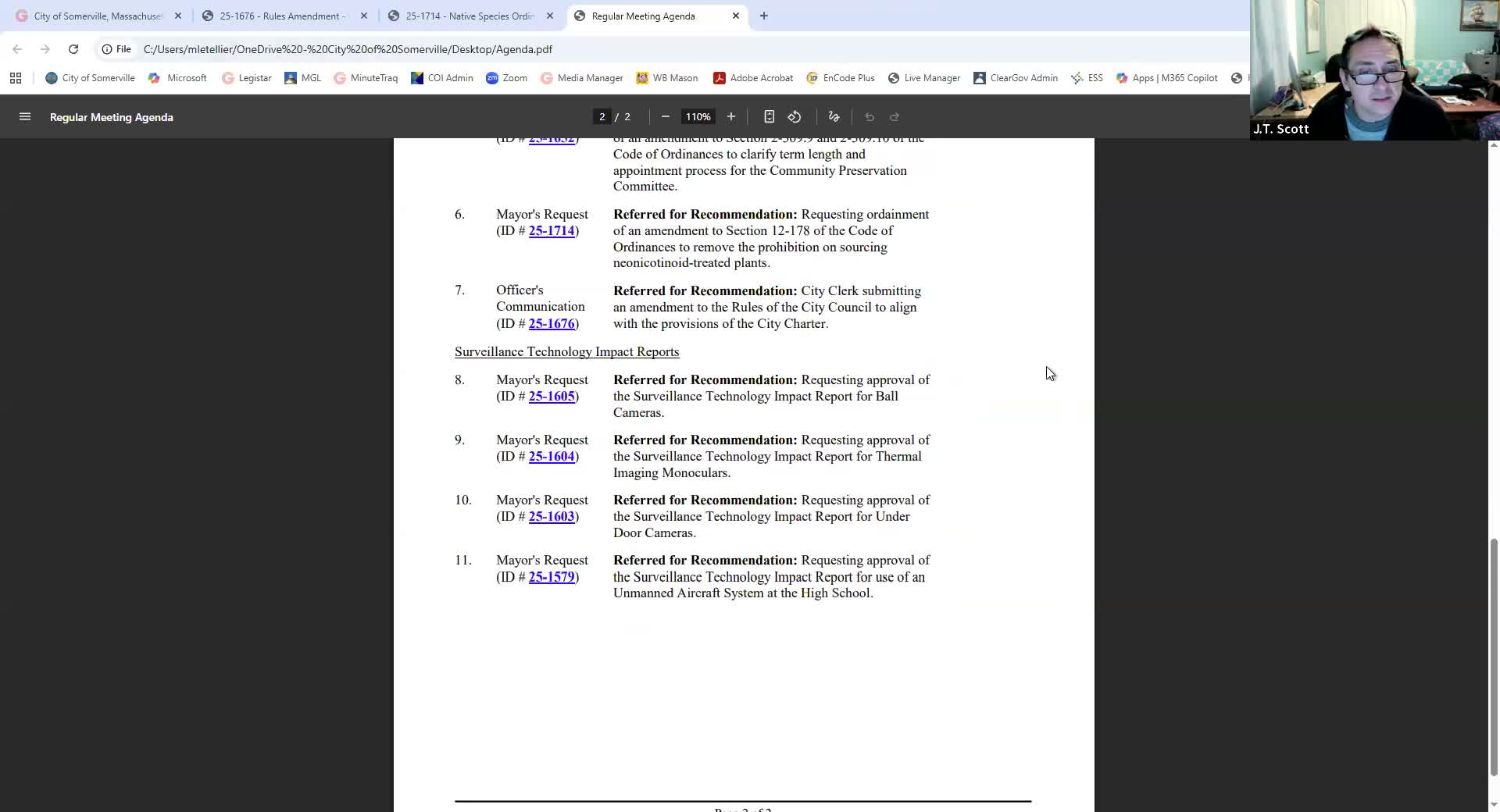
After a lengthy debate balancing pollinator protection and procurement realities, the committee amended the mayoral proposal to move the prohibition on sourcing neonicotinoid-treated plants from Jan. 1, 2026 to Jan. 1, 2028 and recommended the amendment for approval.
Director Luisa Oliveira, head of Public Space & Urban Forestry, asked the committee to remove the ordinance’s sunset clause because the city’s planting projects rely on suppliers that commonly use neonicotinoids; she warned that large projects (for example, the Somerville Junction Park and planned street-tree plantings) require thousands of plants and that wholesale supply of neonic-free stock at that scale is limited. Oliveira said requiring only neonic-free sources as of Jan. 1, 2026 would jeopardize projects or substantially increase costs.
Councilors expressed strong support for pollinator protection but also pragmatic concerns about procurement. Councilor Davis said he did not want the city’s headline to read, “Somerville removes your prohibition,” and preferred pushing the effective date out rather than eliminating the provision. Assistant City Attorney Shapiro confirmed the committee could treat larger buildings differently and said he would double-check whether the State Sanitary Code restricts lease provisions (a separate issue raised earlier in the meeting).
Councilor Ewen Kampen moved an amendment to change the effective date to Jan. 1, 2029; that motion passed on roll call (Davis Yes; Strezo No; Embaugh Yes; Ewen Kampen Yes; Scott Yes). Councilor Strezo then proposed replacing 2029 with 2028; the second amendment passed 3–2 (Davis Yes; Strezo Yes; Embaugh No; Ewen Kampen No; Scott Yes). The committee voted to recommend approval of the amendment as amended, and the clerk recorded all councilors in favor.
Director Oliveira said the extra time can be used to build demand, pilot performance specifications that prioritize neonic-free plants, and advocate at the state level. Committee members asked staff to return with any possible pilot strategies and noted contract-timing implications — contracts put out to bid before the effective date would not be retroactively required to source neonic-free plants.