Get Full Government Meeting Transcripts, Videos, & Alerts Forever!
Get email alerts on the Sidewalk Accessibility topic
No spam. Unsubscribe anytime.
Somerville committee asks analyst to draft commercial-only curb-ramp snow-clearing language
Summary
After debating homeowner and tenant hardship, the Legislative Matters Committee asked staff to rework an amendment so commercial property owners would be responsible for clearing abutting accessible curb ramps; the committee discharged the item without recommendation so the revised language can be prepared for full council.
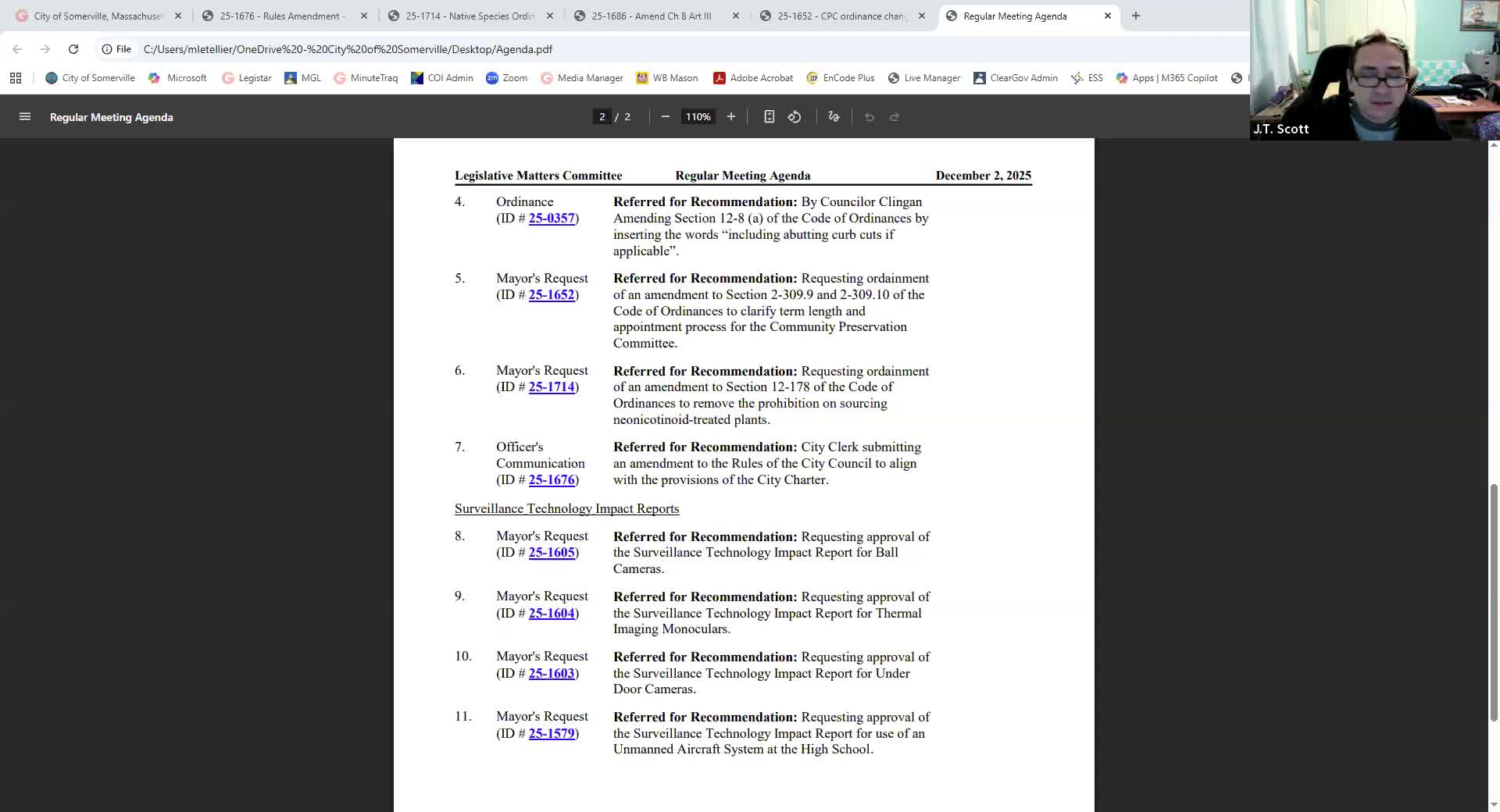
Chair Councilor Scott opened discussion of an amendment from Councilor Klingens to add the words “including abutting curb cuts, if applicable” to the city’s snow- and ice-removal ordinance and asked Director Zaino of ISD whether the department could enforce it. Director Zaino said ISD had reviewed the text and, "we are comfortable with the text, as written, to be something that ISD can enforce."
Councilor Davis objected to applying the requirement broadly to homeowners and renters, warning that plow-created ‘‘walls’’ of frozen snow could make compliance impractical and could impose “a pretty significant hardship” on tenants and older residents. Councilor Strezo, who represents the city on the ADA task force, said the group’s constituents worry about lease clauses that shift clearance responsibilities onto tenants who cannot safely perform that work. Assistant City Attorney Shapiro said he would check whether the State Sanitary Code limits what may be required in a lease regarding snow shoveling.
After additional questions about monitoring and enforcement, several councilors proposed narrowing the amendment so it would apply to commercial or larger multiunit properties rather than to all private residences. Analyst Salisbury told the committee she could draft revised language for a commercial-only obligation before the next council meeting but not during the same evening. Chair Scott said the committee would ask Salisbury to prepare a provision “creating an obligation on commercial properties to clear abutting accessible curb ramps.”
Rather than advance the current draft, the committee agreed to discharge the item from committee without recommendation so the clerk and analyst can produce the commercial-only language and the full council can consider it. Chair Scott noted the change as a way to balance accessibility goals with practical enforcement concerns and to avoid imposing fines on residents who make reasonable efforts but face physical impossibility due to large frozen accumulations.
The committee did not adopt language at this meeting; instead staff will return with a revised draft that limits the obligation to commercial properties or otherwise clarifies exemptions for impractical circumstances.