Get Full Government Meeting Transcripts, Videos, & Alerts Forever!
Get email alerts on the Parks Accessibility topic
No spam. Unsubscribe anytime.
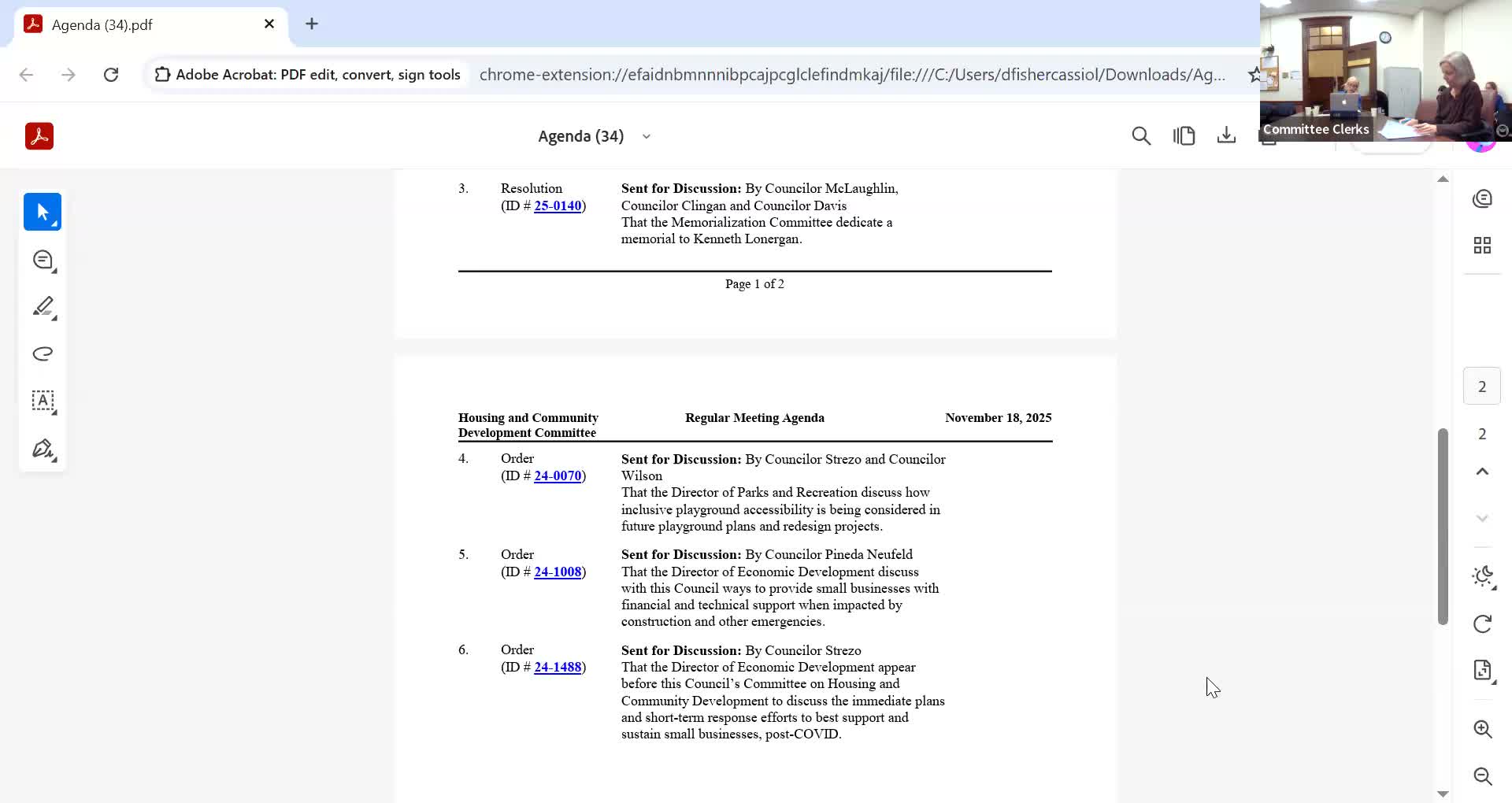
Somerville outlines Kennedy Schoolyard inclusive-playground plans; funding not yet secured
Summary
City staff say Kennedy Schoolyard is slated for Somerville’s first inclusive playground, with community meetings planned and construction targeted for 2026; project remains in the capital plan but is not yet funded.
Luisa Olivera, director of Public Space and Urban Forestry, told the Housing & Community Development Committee on Nov. 18 that Somerville’s parks and playgrounds meet Americans with Disabilities Act (ADA) standards and that the city is moving beyond baseline compliance toward "inclusive play" that accommodates a wider range of physical and non‑physical disabilities.
Olivera said the city inventory increased ADA‑compliant swings from about 23% to 83% through an Inclusive Swings initiative supported by the Somerville Commission for Persons with Disabilities. She said Kennedy Schoolyard is the planned site for the city’s first fully inclusive playground; the project manager (John Brown) has led sustained outreach, including teacher surveys and community meetings.
Design and timing: Olivera said the project team is preparing construction documents for bidding this winter and hopes to start construction in 2026, but she cautioned that the project has not yet been funded and remains subject to capital‑budget decisions. "This project has not yet been funded," she said, urging participation in the scheduled community meetings, which the city is offering virtually to broaden access.
Space tradeoffs and accessibility maintenance: Committee members asked whether the schoolyard could be expanded into adjacent grass or street space. Olivera said the team is exploring reconfiguring parking (eliminating minimal parking where feasible) to expand play areas and will present layout options at an upcoming Dec. 2 meeting. She also noted that ADA compliance requires ongoing maintenance — for example, tree roots can degrade surfacing — and that small sites sometimes constrain full inclusive design.
What’s next: The project remains in the capital improvement plan; staff will return with funding updates and further design options following community engagement.