Get Full Government Meeting Transcripts, Videos, & Alerts Forever!
Get email alerts on the Infrastructure topic
No spam. Unsubscribe anytime.
City engineer outlines $12 million in 2025 capital projects including CDBG sewer lining and Santa Maria work
Summary
City engineer Taitley presented a $12 million capital improvements slate for 2025, highlighting a $1.48 million CDBG sewer‑lining project, street resurfacing, water‑main replacements and a $3.9 million Santa Maria Avenue project funded from TIF Main.
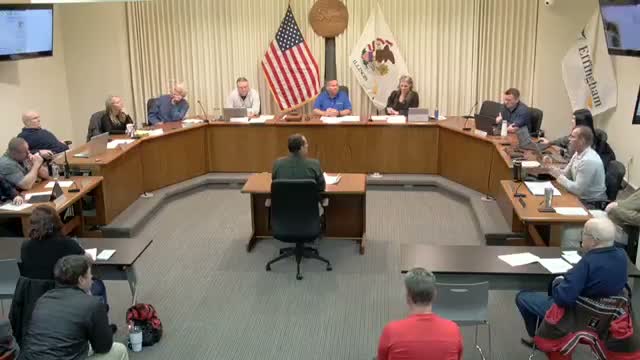
City engineer Taitley walked the council through the city’s 2025 capital improvements, describing a roughly $12 million program split across funds and projects.
Taitley said the CDBG sewer‑lining project covered a southside neighborhood and totaled about $1,480,000, with a little over $1,000,000 from CDBG grant funds. He described a localized sinkhole risk that is mitigated by the lining effort and noted the project’s importance to reducing future excavation and repair costs.
Taitley also reviewed a Santa Maria Avenue project, which has seen about $3.9 million spent from TIF Main to date on a project expected to reach roughly $5.3 million when complete. Other highlighted work included water‑main replacements (roughly 6,000 feet of new main laid in 2025), multiple street resurfacing segments and a box‑culvert/culvert construction project on Evergreen Avenue for which a $110,500 engineering proposal was requested from the Farnsworth Group.
Taitley emphasized contractor and in‑house work contributions, said some projects were paid from general‑fund and motor‑fuel‑tax funds, and thanked the operations and public‑works crews for their role in delivering projects.
Council members praised the visible investment in infrastructure; no decisions were required beyond acknowledgment and the usual contracting steps.
Taitley concluded by noting the cumulative increase in construction costs and urged continued council support for infrastructure spending.