
Comptroller reports $236.7 million favorable variance; Cook County Health reports cash shortfall
Get AI-powered insights, summaries, and transcripts
Sign Up Free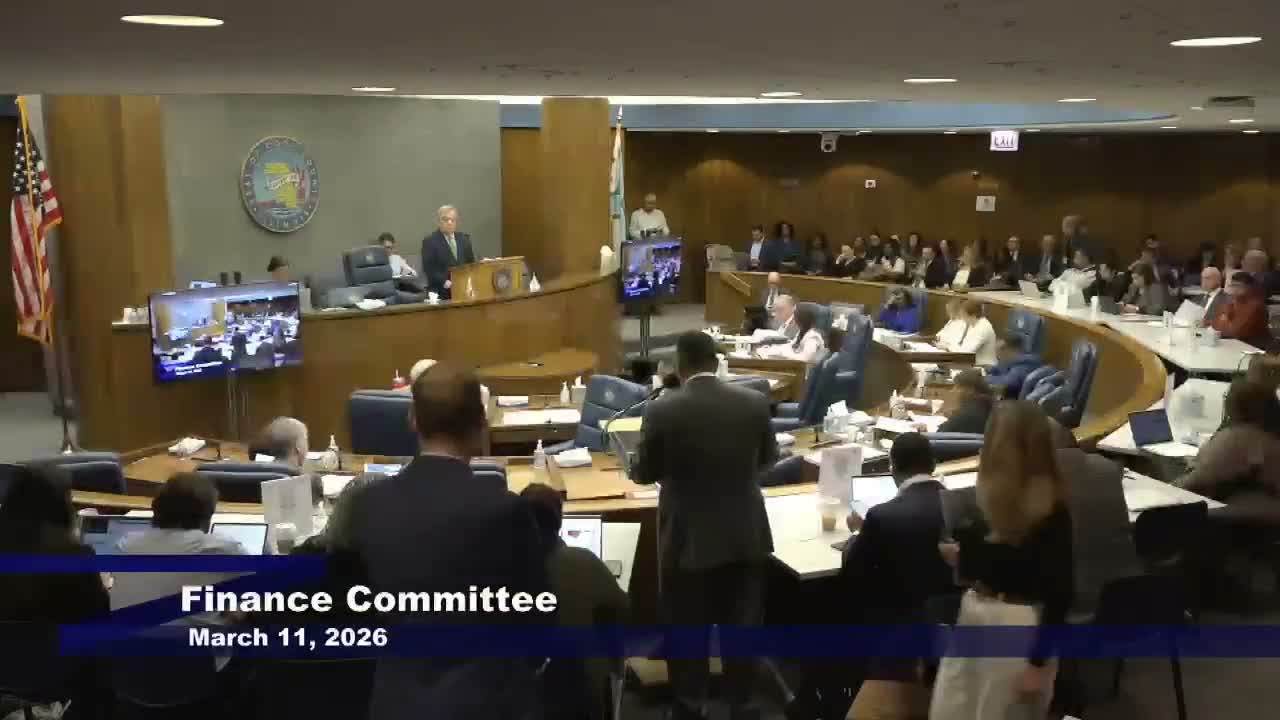
Summary
Comptroller Cyril Thomas reported a $236.7 million favorable General Fund variance for the two-month period ending Jan. 31, 2026, while Cook County Health reported an $81.7 million unfavorable cash position driven by uncompensated care and Medicaid changes.
Cyril Thomas, Cook County Comptroller, told the Finance Committee on March 11 that for the two-month period ending Jan. 31, 2026 the General Fund had a $236,700,000 favorable net budget variance driven largely by higher-than-forecast county sales tax and cigarette tax receipts. The health fund had a favorable cash-basis variance of $81,700,000, Thomas said, while noting that accrual-based reports are a better indicator of enterprise fund condition.
Thomas also reported that the state owed the county $109,900,000 through Jan. 31, 2026, consisting of amounts owed to the General Fund and the Health Fund and other receivables. During follow-up questions, the deputy CFO said the apparent jump in cigarette tax receipts was the result of an audit settlement (approximately $120,000,000), not an increase in smoking trends.
Cook County Health's interim CFO, Scott Spencer, told the committee that on a cash basis the health system was $81,700,000 unfavorable for the two-month period, driven by increases in uncompensated care associated with Medicaid changes and the expiration of enhanced ACA subsidies on Dec. 31, 2025. Spencer said total expenses were $17,000,000 favorable to budget and total revenues were ahead, reflecting property taxes, capitation revenue and an appropriation adjustment.
Commissioners asked for further detail on trends in tobacco and vaping receipts and whether those tax streams are taxed comparably; staff said they would follow up with more detailed analysis and that the Department of Revenue would be asked to provide rates and comparisons.
The report was received as part of routine financial oversight; commissioners had no objection and the related items were included in subsequent roll-call approvals.