Get Full Government Meeting Transcripts, Videos, & Alerts Forever!
Get email alerts on the Recovery Housing topic
No spam. Unsubscribe anytime.
Residents press council to relocate proposed Oxford House; recovery peers urge support
Summary
At a public hearing, neighbors urged the City of Effingham to relocate an Oxford House proposed for a single‑family block, citing safety, traffic and property‑value concerns; recovery peers and a county recovery-support specialist defended the model and urged the council to allow locally based recovery options.
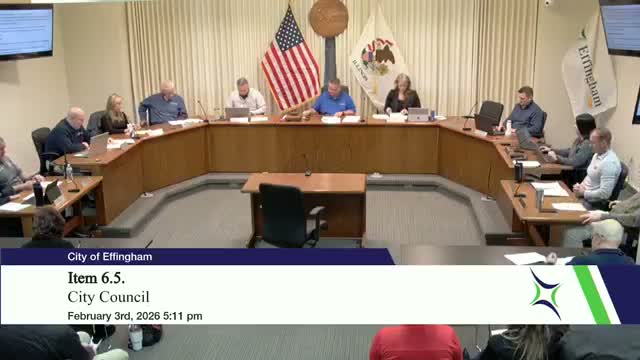
Effingham residents packed the council chamber to urge the City Council to halt or relocate a proposed Oxford House in a single‑family (R‑1) neighborhood, while people with lived experience and recovery‑support professionals asked officials to preserve access to community‑based recovery housing.
Donna Hecht, a North Glenwood resident, said neighbors were “blindsided” when the home opened next door and warned that a house housing as many as 14 men would change traffic, parking and the sense of safety on their cul‑de‑sac. “We have young children,” Hecht said. “We’re afraid.”
Several other neighbors echoed that concern. Gene Fureday, who has lived on Glenwood Street for 35 years, said his family’s ability to let children play unsupervised would be lost if the Oxford House stays in their block. “We are zoned single family residential,” Fureday said, asking the council to “seriously research Oxford House.”
Residents focused on process and scale as much as on the people entering recovery. Shelby Dosenbrock, a lifelong resident, business owner and mother of two, said she supported recovery but was frustrated by “no choice, no public discussion, no opportunity for questions” before residents began moving in and asked for “clear communication of applicable laws, ordinances and codes.” Lisa Lauritsen, a special‑education teacher, raised the same mix of safety and procedural concerns and urged the council to work with property owners to find a location “better suited for recovery.”
Speakers in favor of Oxford House said the model offers accountability and community supports. Felicia DePoster, who said she previously lived in an Oxford House and now works as a peer‑support specialist, described strict house rules, rent responsibilities and peer monitoring that she credited with sustaining her recovery. “Oxford houses don’t bring chaos to neighborhoods. Addiction without support does,” she said. Merle Moulton Jr., who described decades of substance‑use experience, urged the council to welcome recovery housing rather than banish it.
Daniel Cuevas, who identified himself as a neighbor with two children, urged a careful, evidence‑based review of the legal protections Oxford Houses enjoy under the Fair Housing Act and asked officials to “pause this placement” pending an independent review he said should test claims about property values and outcomes.
Tracy (staff), asked by the mayor to clarify the city’s position, said the city did not formally approve either of the two locations discussed by residents and that staff had issued a notice of violation for one property on Virginia Avenue. “The city never gave formal approval for the Virginia Avenue location,” Tracy said, and confirmed staff had begun research to balance zoning enforcement with compliance with federal and state disability laws.
Mayor Schutzbach and other council members thanked the public for turnout and asked for patience while staff and the city attorney continue work on zoning options and legal constraints. The council did not vote on any change to local ordinances during the meeting; Tracy said staff would report back after consulting the city attorney.