
Cook County health department emphasizes data-driven outreach on vaccines, vaping and youth mental health
Get AI-powered insights, summaries, and transcripts
Sign Up Free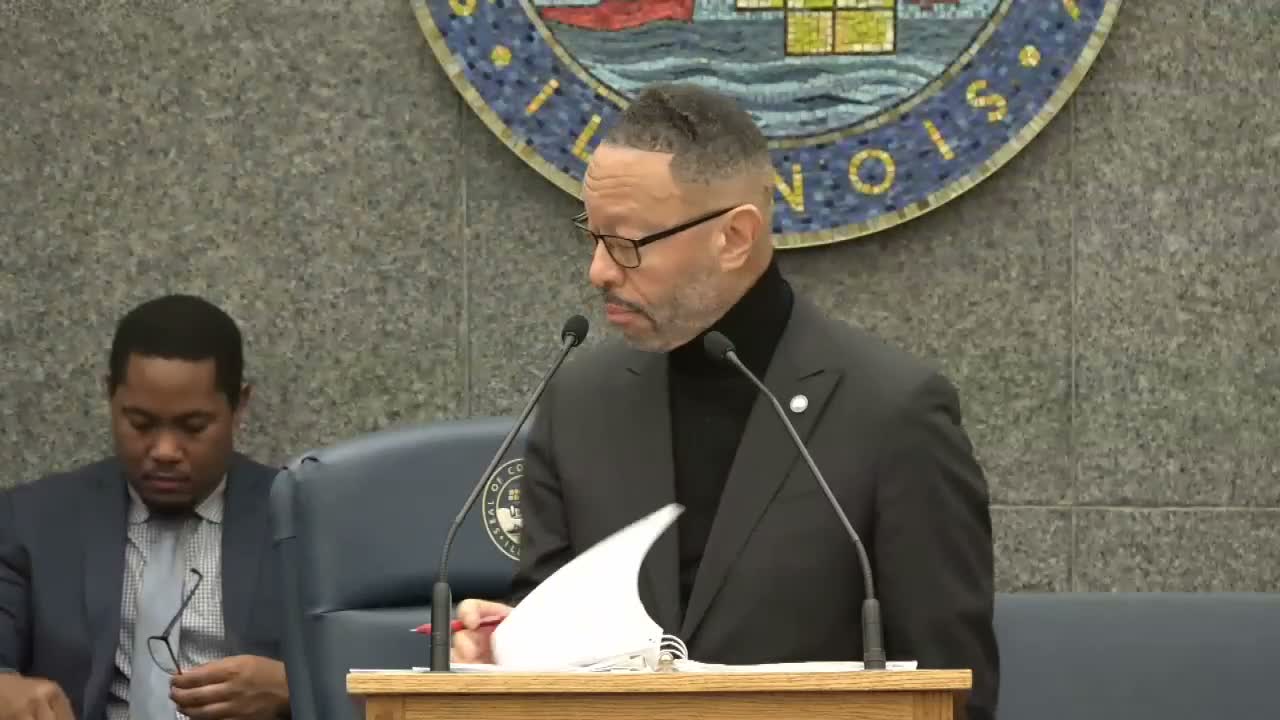
Summary
At a Feb. 3 Cook County Health and Hospitals Committee meeting, CCDPH Chief Operating Officer Kieran Joshi presented Q1 2026 highlights, focusing on school-based vaccination clinics, weekly respiratory surveillance and youth mental-health work; commissioners pressed the department on outreach, enforcement and capacity.
Kieran Joshi, chief operating officer at the Cook County Department of Public Health, told the Health and Hospitals Committee on Feb. 3 that the department is using a cross-cutting “data for action” approach to target public-health interventions across suburban Cook County. Joshi said CCDPH maintains more than 538 indicators on its Cook County Health Atlas and that the agency handled roughly 30 formal data requests in 2025, some requiring days or weeks of staff analysis.
Joshi described a first-year push to bring vaccinations to schools: CCDPH held 29 school clinic events last year and delivered 618 required school vaccinations. “I acknowledge that if you think about the denominator being in about the 10,000 range, that numerator is not very high,” Joshi said, but he added the effort is new and the department plans to expand outreach to the schools with the lowest coverage.
On respiratory surveillance, Joshi said CCDPH produces a weekly respiratory virus report for hospitals and health facilities and operates a dashboard that presents current COVID, flu and RSV activity as an easy ‘stoplight’ indicator. He said the data are used by health-care partners to decide whether to advise masking for staff and visitors.
Joshi highlighted partnerships: he described work with the Epilepsy Foundation of Greater Chicago that supported a new outpatient seizure clinic (noting an estimated $15,000 per patient savings if care shifts from emergency rooms to outpatient visits), and a countywide suicide-prevention report produced with Proviso Township that recommends strengthening economic supports, protective environments and access to care.
On vaping and other nicotine products, Joshi recounted CCDPH’s earlier multiagency investigation into severe vaping-related lung injury that identified vitamin E acetate in adulterated products and said samples were tested through state and federal labs. He warned of increased use of small nicotine pouches among youth and said CCDPH will expand anti-tobacco communications, aided by recent state funding.
Commissioners pressed for specifics. Chairman Daley cited a figure of about 13,000 students who are unvaccinated and asked whether CCDPH would expand outreach beyond clinics to day care and community settings; Joshi said the department is working across the health system with partners such as CountyCare and community health centers and emphasized the need to ensure providers have tools and incentives to vaccinate their patients. Commissioners raised private-school outreach and religious exemptions, and Joshi said outreach initially involved direct contact from a CCDPH manager and that last year the department prioritized the lowest-coverage schools because of capacity limits.
Joshi closed by reminding the public that data requests are available to anyone via a form and promoting a data-ambassadors training program to help community members use the agency’s dashboards. The committee recorded a roll-call vote to receive and file the CCDPH quarterly report.
What’s next: CCDPH staff said they will continue expanding school clinics, report back with more specific counts and follow up on enforcement referrals related to illicit sales when commissioners provide locations or complaints.