Lifetime Citizen Portal Access — AI Briefings, Alerts & Unlimited Follows
Shasta County supervisors vote 4–1 not to use county funds for registrar’s private counsel, allow proponents to seek their own defense on appeal
Loading...
Summary
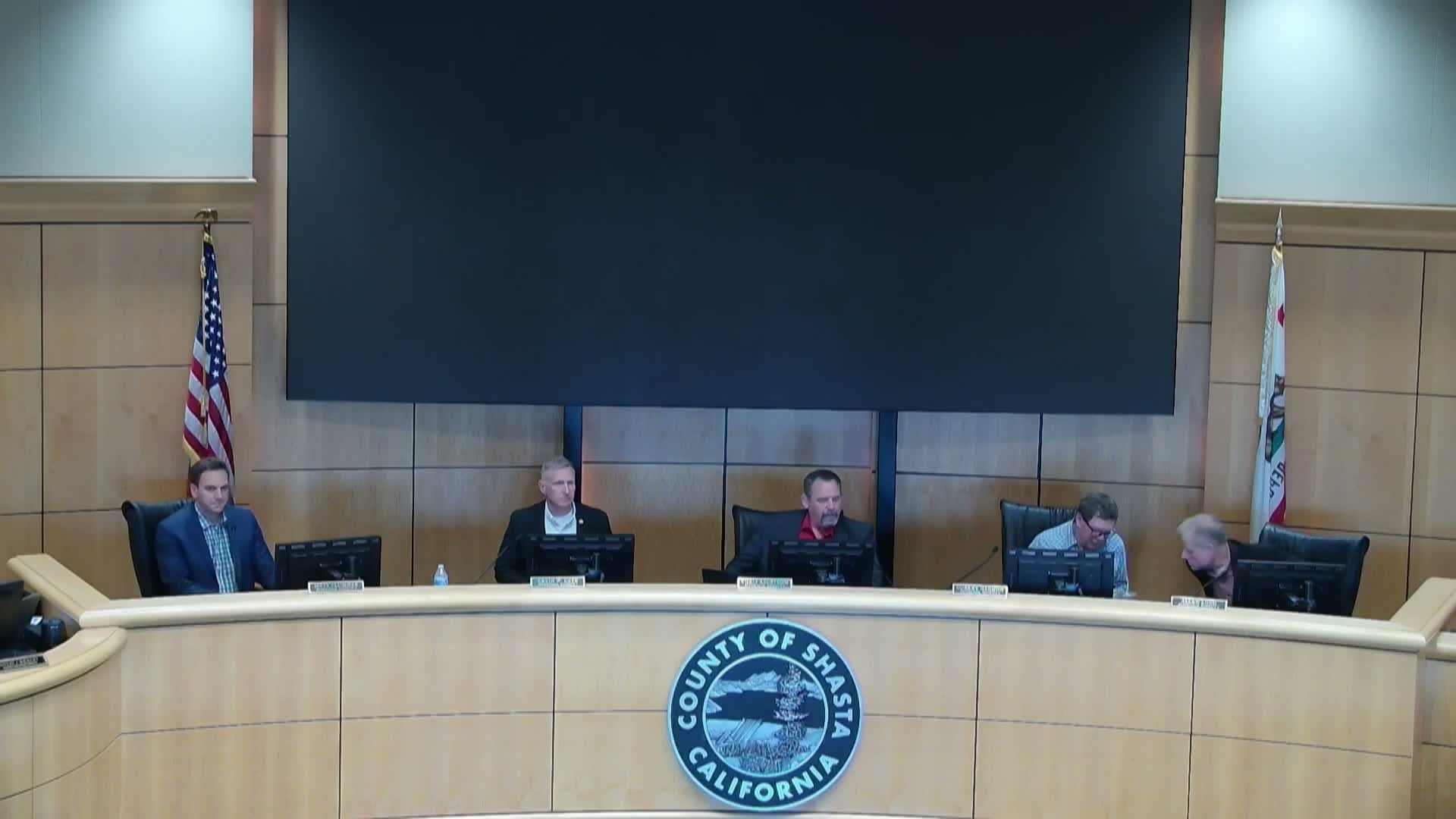
After hours of public comment on an initiative to change local election rules, the Shasta County Board of Supervisors voted 4–1 not to expend county funds to pay for the registrar of voters’ private attorney but approved a motion to permit the petition proponents to seek representation on appeal.
Shasta County’s Board of Supervisors on [date not specified] voted 4–1 to refuse county funding for a private attorney for the registrar of voters while approving a separate action aimed at letting the petition proponents pursue their own defense on appeal in the litigation Jane Doe v. Shasta County.
The vote followed extended public comment from about 17 speakers and more than an hour of legal briefing from County Counsel Joe Larimer, who told the board the county and its elections official are named as "nominal" defendants and that, in his view, "there's no case in controversy that either the county or mister Curtis needs to be defended from." Larimer cited City of San Diego v. Dunkel and said recent authority, including Huntington Beach litigation, limits the scope of home-rule defenses in election administration.
The motion that carried by roll call (4–1) was the board’s decision not to "expend county funds to grant ROV Curtis the ability to hire an attorney on county funds," as stated by the supervisor who moved the measure. At the same time, supervisors approved a motion to give county counsel flexibility—if the case is remanded on appeal—to argue that the petition proponents be allowed to represent themselves in further proceedings.
Why it matters: Petitioners gathered roughly 10,000 signatures to place a county charter amendment on the ballot; proponents and opponents used public comment to frame the dispute as one over voters’ rights, court procedure and potential county cost. Multiple speakers warned that if the temporary restraining order is not lifted and the initiative misses key deadlines it could trigger a standalone special election costing about $1,000,000, a figure repeatedly cited by commenters. Supporters said the court erred by not allowing the proponents to present their defense at the trial hearing; opponents urged the board not to use public funds to defend a measure some said would contravene state election law.
County Counsel’s view: Joe Larimer told the board he did not believe the litigation was "defensible" as a matter of law and that the county is not legally required to pay for separate counsel for the registrar of voters, though the board retains discretion to decide otherwise. He described the county and the elections official as "nominal defendants," meaning they are named so the court can order ministerial steps (such as placing or removing an item from the ballot) but are not necessarily parties against whom damages or liability are being asserted. Larimer said the case is on appeal and that final appellate briefing was due imminently.
Registrar’s position: The county’s elections official urged the board to protect the ministerial process and to allow proponents their day before voters. In an address to the board the registrar argued the signatures were collected lawfully and that "everything about that is legal," urging action to avoid losing the people’s trust. The registrar also named an election attorney he believed could assist quickly if the board decided to support outside representation.
Public comment: Seventeen speakers addressed the board. Supporters of the petition criticized the board’s earlier decision to take no position in court, accused County Counsel of failing to defend the proponents and warned of political consequences. Opponents characterized the proposed charter amendment as a form of voter suppression (voter ID) and praised the trial judge for issuing a temporary restraining order. Many speakers repeated the same factual claims: about signature counts, about the court’s denial of proponents’ counsel at the trial level, and about a commonly cited potential $1,000,000 special-election cost if statutory dates are missed.
What the board decided and next steps: The board’s vote means the county will not allocate taxpayer funds to hire private counsel for the registrar in the Jane Doe litigation. The matter is on appeal; County Counsel said the Court of Appeal could rule as soon as the next day on whether the trial court erred in denying proponents an opportunity to present their defense. If the appellate court remands for further proceedings, the board’s approved direction would allow county counsel some latitude to address the proponents’ ability to present their case.
The meeting ended after the roll-call vote and the board adjourned. The litigation remains active and the appeal schedule may determine whether a rehearing occurs and whether the item can meet election-timing deadlines.