Get Full Government Meeting Transcripts, Videos, & Alerts Forever!
Get email alerts on the Public Meetings Sb707 topic
No spam. Unsubscribe anytime.
Shasta County approves software, policy changes to comply with SB 707; board adopts tight initial public‑comment limits
Summary
To comply with California’s SB 707, the Shasta County Board approved purchasing a hybrid public‑engagement platform and adopting amended teleconferencing/public‑comment rules, along with a FY25‑26 budget amendment of $66,613; the board voted 5–0 after debate about outsiders calling in.
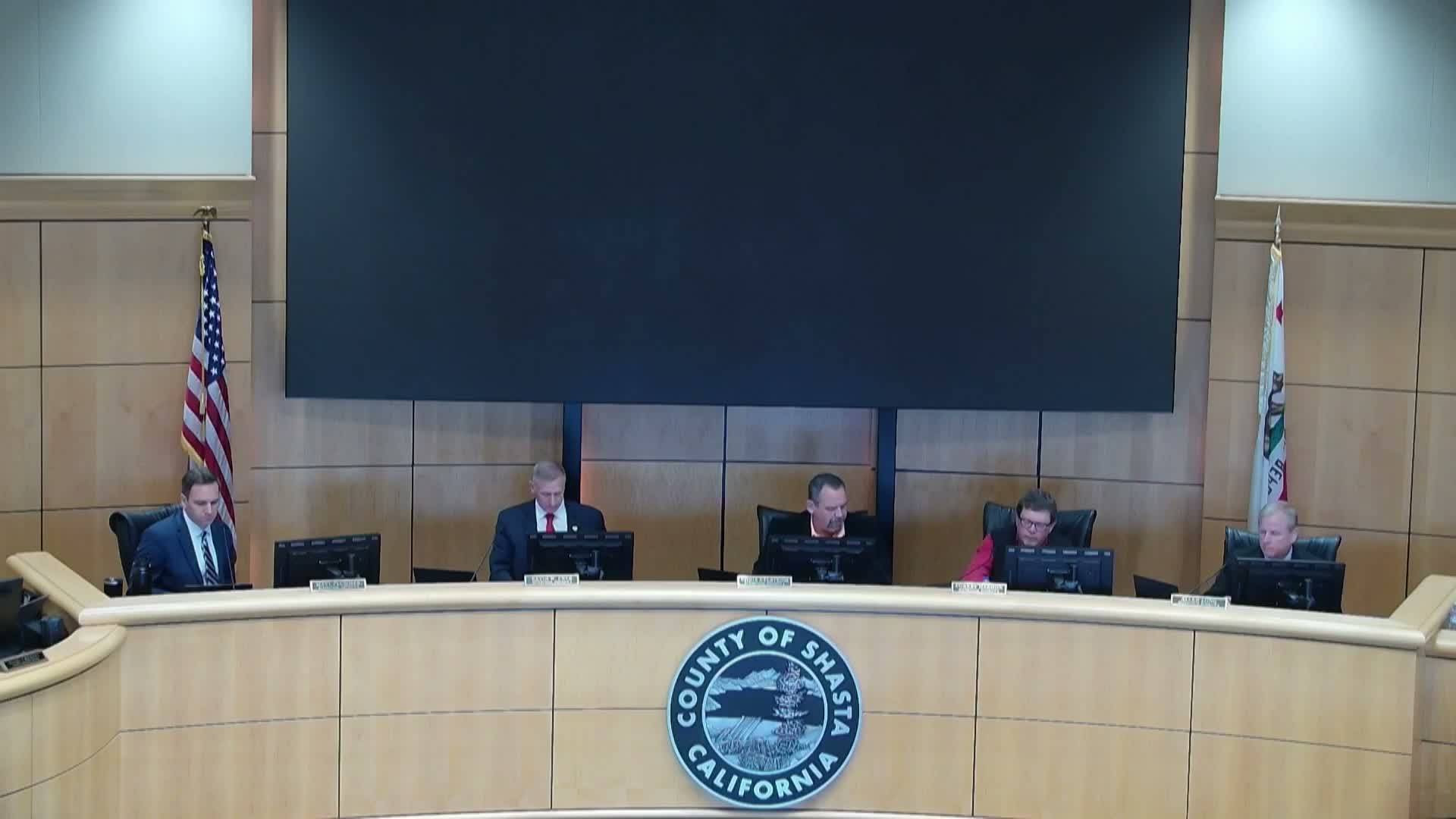
The Shasta County Board of Supervisors voted unanimously on Feb. 10 to approve a purchase and policy amendments intended to bring the county into compliance with SB 707, the state law that expands two‑way remote participation in public meetings.
Clerk Chief Deputy Stephanie Blankenship and senior analyst Bryce Ritchie told the board SB 707 is a mandatory, unfunded state requirement that takes effect July 1, 2026, and that county meeting practices currently fall short. Blankenship described required features: two‑way telephonic or audio‑visual access, written procedures for technology failures and interruptions, and processes to allow remote public comment. "SB 707 also requires legislative bodies to adopt written procedures addressing how the meetings will be handled if technology fails," she said.
Staff recommended a hybrid public‑engagement solution (PublicInput/Citizen Solutions), two kiosks in the boardroom foyer for in‑person signups, and updates to Administrative Policy 1‑101. Bryce Ritchie said the initial FY25‑26 budget amendment request is $66,613 (the vendor’s first‑term payment covers service through June 30, 2027) and that a five‑year estimate for software and hardware is $192,090. The items presented included a 10% contingency for year one in the proposed amendment.
Board discussion focused on how SB 707’s first‑come, first‑served remote queue could let callers outside Shasta County occupy speaking slots and on whether the county should set short time limits. Chair Kellstrom said the county would start "very tight" (the staff packet proposed 2 minutes per speaker and 20 minutes total per item) to test the system and then loosen limits if outside flooding does not occur. Supervisor Scribe moved approval; the motion passed 5–0.
Opponents at public comment said the board had previously resisted improved access for vulnerable residents and urged better accommodation for people with disabilities who cannot attend in person. A commenter said the county had denied an ADA request previously and that SB 707 increases access for some residents; staff said the system will capture whether a speaker self‑identifies as a Shasta County resident for later metrics but the board cannot pre‑prioritize callers by residence under state law.
Next steps: staff will implement the software, install kiosks and return as needed to refine time‑limit procedures after testing. The board and staff emphasized that the initial rules are intended as a temporary trial to manage meeting length and that the county could ease limits if the system operates as expected.
Reported here from the Feb. 10 board meeting: the board voted 5–0 to authorize the software purchase, adopt SB‑707–related policy amendments and approve the FY25‑26 budget amendment of $66,613 funded from the unassigned general fund balance.