
County midyear report shows modest revenue gains but flags HR 1 risks to health system funding
Get AI-powered insights, summaries, and transcripts
Sign Up Free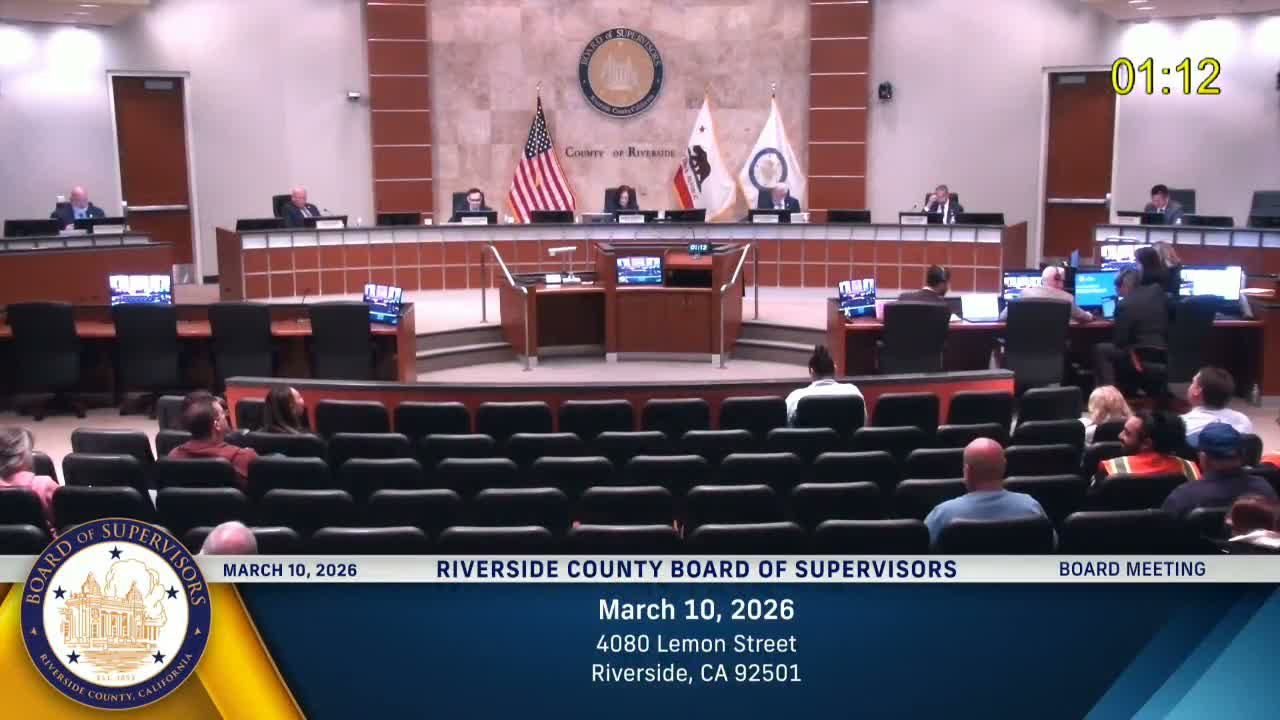
Summary
Riverside County's midyear budget shows a smaller structural deficit and modest revenue gains—driven largely by interest earnings—but county staff warned federal HR 1 could cut health and social service funding, potentially reducing health-system revenue by hundreds of millions and increasing demand on county safety-net programs.
Riverside County finance staff presented a midyear budget update on March 10 showing modest improvements in discretionary revenue and an improved beginning fund balance, but also cautioning that structural pressures remain and federal changes could create significant risks.
The presenter said improved interest earnings and a stronger beginning fund balance cut the county's net structural deficit from $73 million at adoption to an estimated $38 million at midyear. "Discretionary general fund revenue is still not balanced," the presenter said, but noted the county's "just-in-time" funding strategy allowed targeted midyear adjustments while maintaining flexibility for the 2026–27 budget process.
Staff emphasized risks. Higher interest earnings that boosted revenue may be temporary, and costs for county services—ranging from labor and benefits to capital maintenance—continue to rise. The presentation singled out federal HR 1 (referred to by staff as legislation enacted last year) as a major budgetary threat: staff estimated a potential reduction in revenue to the county health system of $280 million on the low end to $456 million on the high end, and warned of increased administrative burden as beneficiaries face more frequent reenrollments. "We could see an increase of approximately 350,000 touches by our departments in the effort to reenroll more frequently," staff said.
Staff outlined possible local responses: continued advocacy through the California State Association of Counties (CSAC) and the Urban Counties of California (UCC), participation in statewide coordination with CWDA, and local operational changes such as data-sharing tools to reduce reenrollment burdens. The presentation also noted targeted midyear funding for specific departments via the just-in-time strategy and listed upcoming milestones including district budget workshops in April, a third-quarter report on June 2 and budget hearings in June.
Supervisors asked for clarifications about coordination with statewide associations and requested cost–benefit or impact analyses; staff said those materials existed on their slides and in internal reports and that county officials are in regular contact with CSAC, UCC and other associations. Several supervisors stressed the need to protect county services and reserves while preparing for difficult decisions ahead.
What to watch next: community budget workshops in April, the third-quarter report on June 2 and the formal budget hearings and adoption in June. The county will continue to refine HR 1 impact estimates and pursue statewide advocacy and local operational reforms to reduce administrative burdens.