Get Full Government Meeting Transcripts, Videos, & Alerts Forever!
Get email alerts on the Land Use Upzoning topic
No spam. Unsubscribe anytime.
Hundreds of residents urge Cambridge City Council to delay Cambridge Street and Mass Ave upzoning amid inclusionary-law lawsuit
Summary
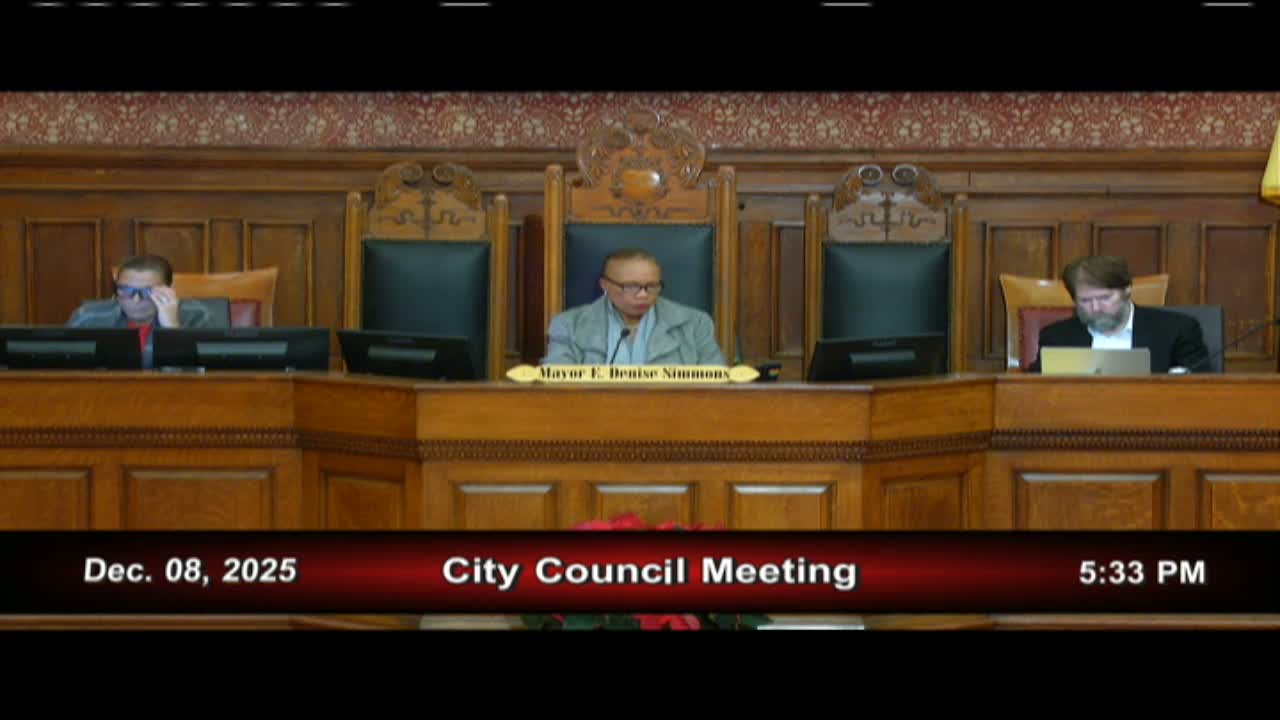
Dozens of Inman Square, Porter Square and North Mass Ave residents told the Cambridge City Council on Dec. 8 to let proposed upzoning petitions expire, citing inadequate community process, threats to small businesses and a pending lawsuit that could void mandatory inclusionary housing requirements.
Dozens of residents pressed the Cambridge City Council on Monday to delay two zoning petitions that would allow taller, denser housing along Cambridge Street and North Mass Ave.
Speakers during a marathon public-comment period asked the council to let the petitions expire and restart community engagement, saying the height increases — described by many as rising from previously discussed six stories to 8–15 stories in some places — were a surprise and would threaten the scale, sunlight, rooftop solar and local small businesses in Inman Square, Porter Square and adjacent neighborhoods.
Community leaders and neighborhood groups, including speakers identifying themselves as representing the New School of Music and the Cambridge Art Association, emphasized support for more housing but said the current petitions lacked the bargain residents expect: legally secured inclusionary units or explicit incentives for affordable and social housing. Helen Walker asked the council to “not ordain these increased heights until we're sure of getting a significant number of inclusionary units in return,” citing a pending lawsuit challenging the city’s inclusionary requirement.
The most repeated concerns were process and scope. Audience members called the changes a “bait and switch,” saying the draft zoning that circulated in community meetings did not reflect the final petition language now before the council. Speakers warned that allowing greater heights “as of right” without design review or clear ground-floor retail protections could displace long-standing shops and increase shadowing and parking pressure. Several speakers urged the council to tie any extra height explicitly to inclusionary housing or to require active ground-floor retail to protect local businesses.
Not all public commenters opposed upzoning. Supporters argued the city faces a severe housing shortage and that additional height along transit-rich corridors can help meet the 2018 Envision Cambridge goals of adding thousands of units. Mark Keebler and other speakers urged the council to proceed, arguing more housing supply will lower rents over time and help the city reach its target of 3,175 affordable units by 2030.
Councilors used the public comment and committee reports to propose and adopt several amendments. The council added language tying additional height on Mass Ave to the city's inclusionary requirement, so that projects above specified heights must comply with the inclusionary code in place at the time of construction. The council also adopted a separate amendment to strengthen active ground-floor retail requirements for parts of Cambridge Street and Porter Square. After debate the council voted to pass the amended petitions to second reading, keeping options open for further amendments and a final vote. Recorded roll-call votes to send the substitute, amended petitions to a second reading carried on 6–3 tallies.
Council discussion also produced a policy order directing the Community Development Department and Law Department to draft a separate petition to strengthen active-use requirements on Cambridge Street and Porter Square, and a motion (chartered and therefore deferred for later action) to lower maximum Inman Square height from 10 to 8 stories for certain subdistricts.
What happens next: the petitions were amended and advanced to a second reading, which preserves the option for further amendment or final passage at a later meeting. Several councilors urged patience: because the petitions do not expire until late January, some said the incoming council members should have an opportunity to weigh in before any final ordinance votes.
Councilors and speakers repeatedly referenced a pending lawsuit challenging the city's ability to require inclusionary units in market-rate buildings. Legal staff said the city is vigorously defending the ordinance, but acknowledged the litigation increases uncertainty and has been a significant factor in residents’ and developers’ planning calculations.
The council recorded numerous votes and committee referrals during the evening; the petitions’ passage to second reading does not itself change zoning but keeps the matters active for future amendment and final action.