Lifetime Citizen Portal Access — AI Briefings, Alerts & Unlimited Follows
Spokane Valley council hears federal lobbying update, readies March D.C. trip
Loading...
Summary
Council members met with Cardinal Infrastructure lobbyists who briefed them on federal funding prospects for local projects (Pines Road, Sullivan/Trent), HUD and COPS grant developments, broadband delays and logistics for a March 24–27 Washington, D.C. delegation trip.
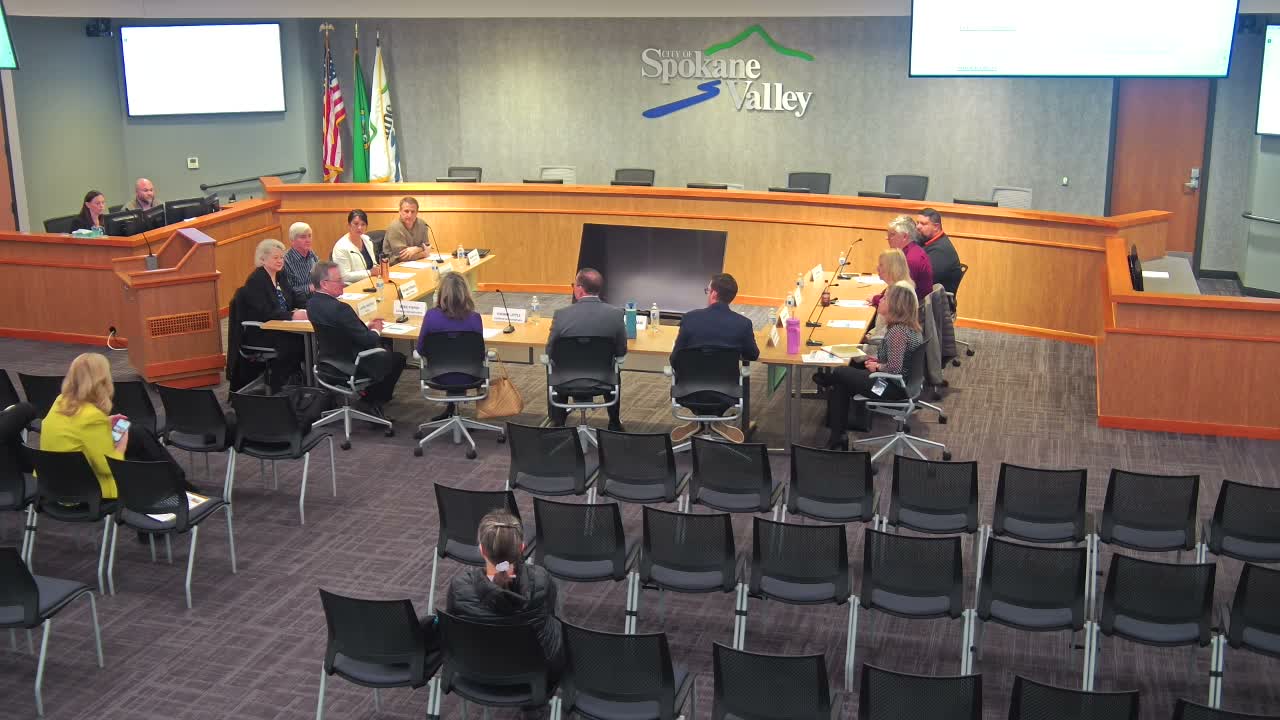
Sherry Little, managing partner at Cardinal Infrastructure, told the Spokane Valley City Council on Feb. 19 that her firm has represented the city in Washington, D.C., for eight years and has helped secure discretionary and earmark funding at USDOT, HUD and the Department of Justice. “We have been together. Cardinal's been serving the city of Spokane Valley for 8 years,” Little said.
Council members used the special meeting to review several federal priorities before a planned March 24–27 trip to Washington, D.C. Staff and lobbyists said they intend to meet the two U.S. senators, the congressman, and officials at the Federal Railroad Administration, Department of Justice (to discuss COPS funding) and HUD (to discuss continuum‑of‑care and CDBG matters). “So our goal is to make it as valuable for you as possible,” Little said, and the team committed to providing talking points and an after‑action report after the trip.
Why it matters: Spokane Valley is pursuing discretionary federal grants that can provide large, project‑level funding but require sustained D.C. engagement. City staff said these meetings create a “forcing event” that can move stalled agency approvals.
Key project updates and federal program notes
- Pines Road grade separation: City staff and lobbyists flagged one remaining FRA agreement tied to construction. City staff stated the outstanding agreement is for about $5,000,000 (the transcript also referenced $5,600,000 in one turn) and said the city is treating the amount as a contingency while finalizing scope requirements with the FRA. Gloria (city staff) described administrative differences between FHWA and FRA and cautioned that FRA’s requirement for highly specified scopes can complicate later amendments.
- Sullivan/Trent: City Manager Kent said the city has already received $14,600,000 in federal funds for the project and has submitted a build grant application for the remaining work. A council member who sits on the regional transportation commission reported Sullivan/Trent ranked first of 13 projects and said the state requested $4,000,000 to support it.
- HUD Continuum of Care and CDBG: Lobbyists updated the council on litigation around proposed changes to HUD’s Continuum of Care program. The meeting summary said a judge enjoined those administrative changes and that the recent appropriations bill directs the administration to continue awarding funds to existing grantees for FY26, which should preserve funding flows this year.
- COPS grants: Staff and lobbyists noted the county‑led application yielded roughly $1.25 million in initial COPS funding to support approximately 10 positions, with additional grant awards later in the year adding to the pool.
- Broadband and federal grant timing: The council discussed joining a regional broadband authority and noted federal guidance shifted from a fiber‑only emphasis to a technology‑agnostic approach (satellite, microwave, fiber), prompting some states (including Washington) to revise applications and delaying final approvals.
Other topics raised
Council members raised concerns about a recent Washington State tax on sales of precious metals (described in the meeting as roughly 3 percent), arguing it may harm local coin shops and drive business across the border; the meeting record shows the council requested more precise information on the tax. Members also urged the delegation to raise energy and Fairchild Air Force Base mission issues — including potential impacts of wind turbines and regional hydropower capacity — and discussed wildfire risk and forest management as a federal priority for the West.
Next steps and logistics
Staff described travel plans for March 24–27 with two full days of meetings; Cardinal and staff will prepare meeting-specific talking points and a post‑trip after‑action report. No binding policy changes or votes on project approvals occurred at the meeting; later the council convened an executive session to discuss potential litigation.