Get Full Government Meeting Transcripts, Videos, & Alerts Forever!
Get email alerts on the Signage Variance topic
No spam. Unsubscribe anytime.
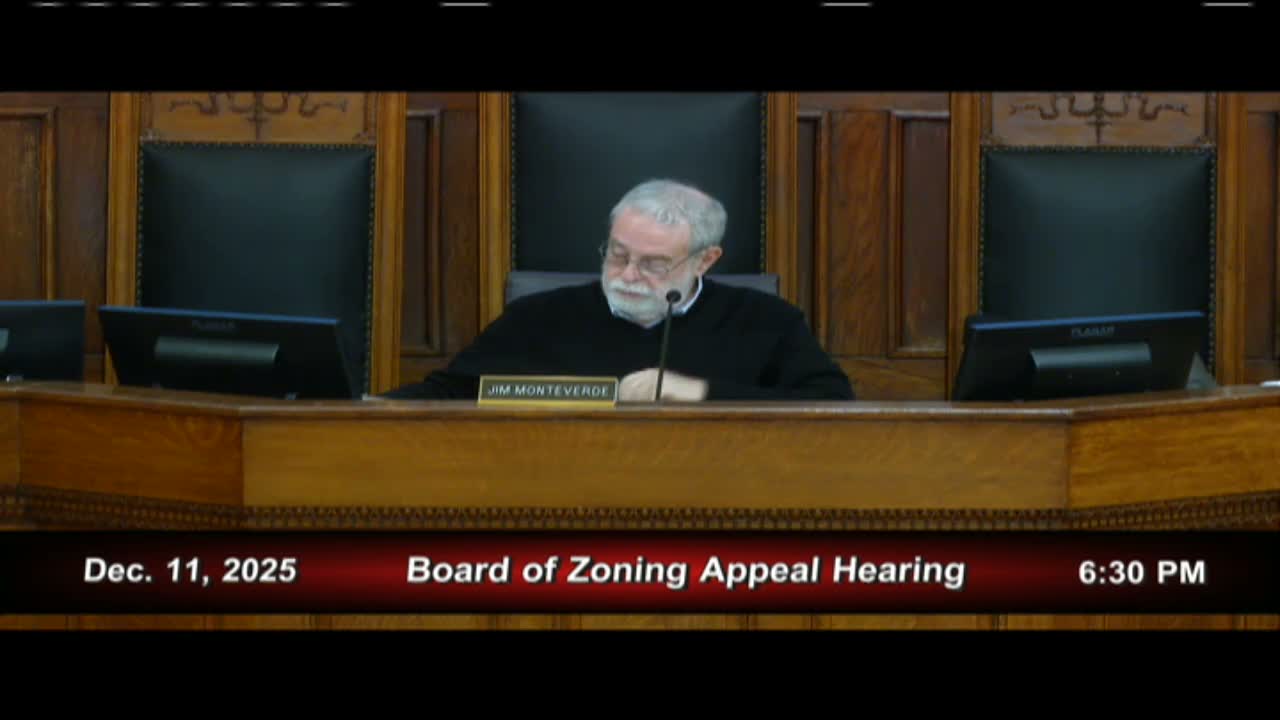
Cambridge BZA grants variance for Royal Sonesta hotel signage, 4–1
Summary
The Board of Zoning Appeals granted a variance allowing the Royal Sonesta hotel to retain and slightly reduce existing oversized rooftop signage; board members cited building orientation and waterfront constraints as the claimed hardship. The vote was 4 in favor, 1 opposed (Chair Monteverdi).
The Cambridge Board of Zoning Appeals voted on Dec. 11 to grant a variance allowing revised rooftop signage for the Royal Sonesta hotel, despite zoning limits on total sign area.
Carolyn Parker, representing the Royal Sonesta, told the board the hotel currently has two signs of about 587.9 square feet each and that the proposed revisions would reduce the overall signage area by roughly 21 percent. "We are reducing the overall square footage of the sign by 21%," Parker said, and argued the building nd its waterfront orientation limit alternative locations for effective signage.
Chair Jim Monteverdi pressed the applicant on the legal standard for a variance, saying that to grant a variance the board must find a substantial hardship tied to the shape or topography of the land or structure. The applicant said the hotel—aces constraints due to the Charles River and the site orientation that justify the requested relief. Board member Carol Agate and others noted the existing sign on the property is already larger than what would be permitted under strict application of the sign area limits.
On a roll‑call vote the board approved the variance, conditioned on conformance to the drawings titled "Royal Sonesta" prepared by Persona Triangle dated 08/11/2025 and initialed by the chair; the chair recorded a no vote and the tally was 4 in favor, 1 opposed. The decision incorporates supporting statements and dimensional forms filed with the application.
The board offered no special additional conditions beyond requiring conformity to the submitted drawings. The applicant was reminded that any physical changes must match the approved elevations and that the usual permitting and licensing processes apply next.