Get Full Government Meeting Transcripts, Videos, & Alerts Forever!
Get email alerts on the Alpr Contract And Privacy topic
No spam. Unsubscribe anytime.
Cambridge committee signals end to Flock Safety contract after unplanned camera installs and privacy alarm
Summary
After presentations from the police department, Flock Safety, the ACLU and privacy advocates, Cambridge’s Public Safety Committee and city manager said the city will move to terminate its contract with Flock Safety following the discovery of two cameras installed under a pre-existing work order and broader concerns about nationwide data-sharing and security.
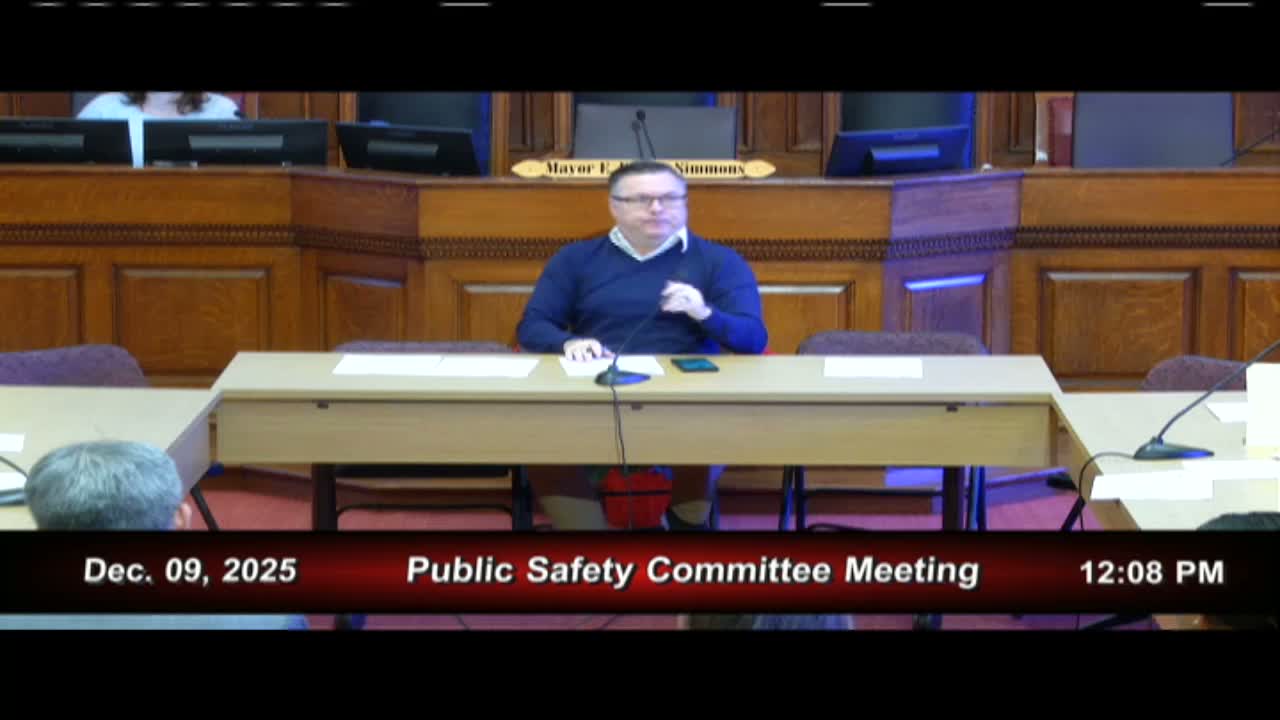
Vice Mayor and Public Safety Committee chair called the committee to order to continue discussion of automatic license plate readers (ALPRs) and the city’s contract with vendor Flock Safety.
Cambridge Police Commissioner Christine Elo told the committee the city paused ALPR operations this fall amid questions about Flock-related breaches reported elsewhere and community concern about data governance. “When we partnered with Flock, it was because they answered all the right questions to our concerns around data sharing, retention, ownership and privacy,” Elo said. She added that the department had taken the cameras down and paused recording while it reassesses governance and protections.
Deputy Superintendent described a recent violent incident involving five masked people with firearms and said ALPRs can be “incredibly useful” if tightly controlled. The deputy superintendent said the department had administratively deactivated its Flock account and restricted admin access, but learned just before the meeting that two cameras had been installed under a pre-existing work order; those cameras were removed once discovered.
Kevin Kane, director of government affairs at Flock Safety, told the committee Flock found the unexpected installs on its end, removed the cameras, and notified law enforcement. “At no point in time was any data searched, accessed, queried, or anything like that,” Kane said. He described Flock’s standard controls — encryption, audit logs and two‑factor authentication — and said customer communities own the data and can opt in or out of sharing.
Gideon Epstein of the ACLU of Massachusetts disputed Flock’s assurances and presented public records he said show widespread external searches and networked data-sharing. Epstein cited network audits that he said show tens of thousands of devices and millions of searches, including queries that explicitly referenced immigration or ICE and at least one query tied to a Texas investigation of a self‑managed abortion. He argued those examples show that external agencies can use LPR networks to locate people and that contract language and the platform’s architecture make restricting access unreliable.
Alex Matthews of Digital Fourth urged the committee to strengthen surveillance oversight, including annual reviews, clear committee responsibility under the city’s surveillance ordinance and creation of a standing privacy commission. He also recommended reviewing federal and regional partnerships that involve data sharing.
During public comment, 10 speakers — including local residents, an MIT professor and volunteers with Digital Fourth — urged the committee to reject Flock and ALPRs. Commenters raised specific concerns about camera placements near public housing and health centers, the potential for use in immigration or reproductive‑health enforcement, and the history of breaches involving vendor accounts.
In committee discussion, several councilors said the presentations and public comment had eroded their confidence in continuing with the vendor. Councilors asked Flock and police about whether any personal data had been exposed (Flock and CPD said no searches or breaches were found tied to the unplanned installs) and about data retention; Flock and CPD said Cambridge’s retention policy was 30 days.
City Manager Ian Huang said the city had been “on pause” while negotiating stronger contract language and technical safeguards but that the November incident had shaken the city’s confidence in Flock’s operational controls and record keeping. Huang said the administration was on a path to terminate the contract and “start over” in thinking about ALPRs and whether a vendor could be trusted to meet Cambridge’s legal and community standards.
The vice mayor indicated the committee may file a policy order recommending termination of the city’s contract with Flock. No formal committee vote to terminate the contract was recorded at the meeting; the only formal roll‑call vote recorded was the motion to adjourn, which passed unanimously. The city manager said any future steps would include community engagement and coordination with the city council.
Next steps: the city manager and staff will pursue contract and legal options with the intent described in the meeting to terminate the current Flock contract and return to the council and community with options for future ALPR policy and oversight.