Get Full Government Meeting Transcripts, Videos, & Alerts Forever!
Get email alerts on the Immigration Enforcement topic
No spam. Unsubscribe anytime.
Residents urge Flathead County commissioners to refuse cooperation with ICE, DHS and CBP
Summary
At Monday's Flathead County meeting a string of residents told commissioners to stop sharing data or resources with ICE, DHS and CBP, citing constitutional and human-rights concerns and urging withdrawal from cooperative agreements such as 287(g).
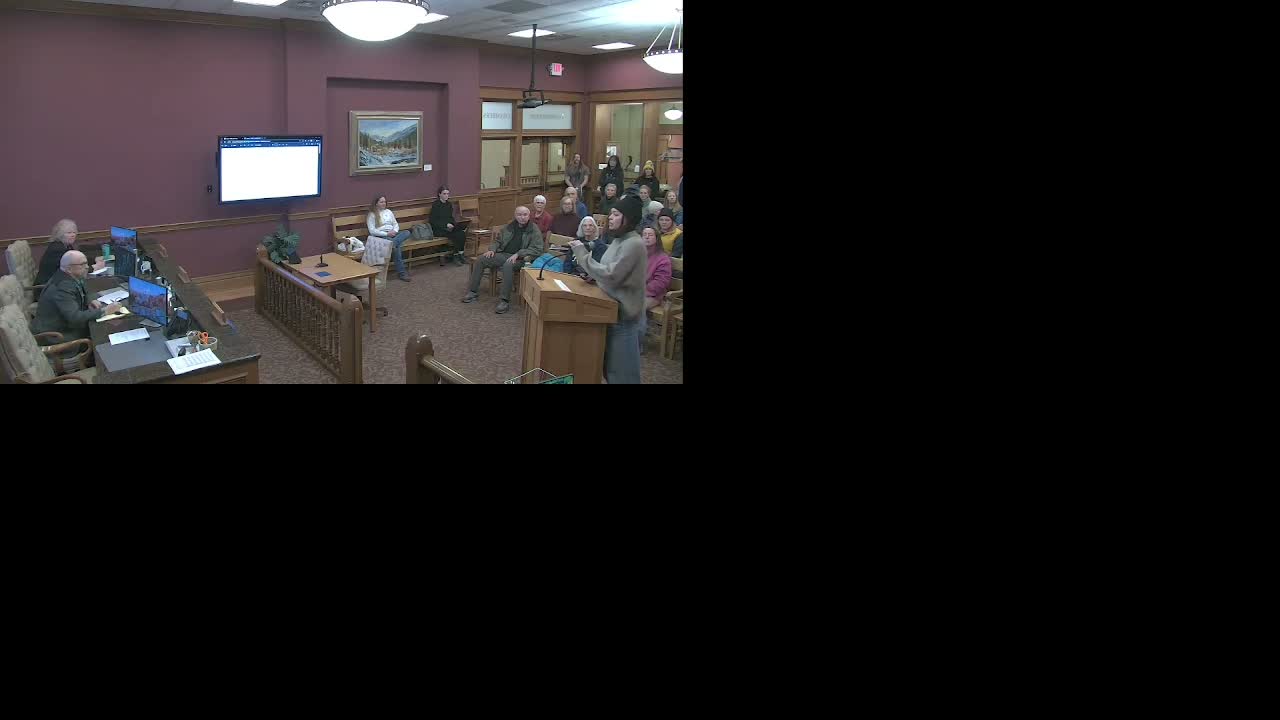
A series of residents used the meeting’s public comment period on Jan. 26 to press Flathead County commissioners to refuse cooperation with federal immigration agencies, saying local resources and police assistance should not support ICE, Customs and Border Protection or the Department of Homeland Security.
"No data sharing, no collaboration, not 1 dollar of our resources for their deportation machine, period," said Marcela Cloud of 415 West 3rd Street in Whitefish. Cloud told commissioners they "work for us, the people of this county" and warned residents are organizing to hold officials accountable.
Liana Glaz of Whitefish echoed those remarks and cited a specific case she said involved the local CBP office: "They shackled him and denied him food and water for 24 hours during his transport," she said, urging the county to pull out of its 287(g)-style agreement and to adopt a policy stopping cooperation with ICE, DHS and CBP.
Other speakers raised similar concerns. Danielle Tuohy, a Kalispell resident who said she works with pediatric patients, warned that allowing federal enforcement into schools and streets "puts our sheriffs and our police departments at risk" and criticized short federal training programs for ICE agents. Dee DeYoung framed the issue as a constitutional one, citing the First, Fourth and Fourteenth Amendments and asking county law enforcement to require judicial warrants rather than administrative DHS actions.
Speakers stressed community and humanitarian impacts. Christine Frisby described being the mother of eight adopted children, five of whom are not white, and said she feared immigration enforcement would traumatize families. Victoria Cabaldon, who works with the Crisis Intervention Team, said more untrained enforcement personnel would increase community trauma.
The commissioners did not take immediate action during the meeting; the chair thanked speakers and moved the agenda forward to a scheduled 9 a.m. briefing with congressional representatives. The public comment period lasted roughly two minutes per speaker, and commissioners acknowledged the concerns raised by multiple residents.