Get Full Government Meeting Transcripts, Videos, & Alerts Forever!
Get email alerts on the Water Quality topic
No spam. Unsubscribe anytime.
Commissioners approve letter of support for Lakeside wastewater project after debate
Summary
After public opposition citing hydrogeologic risks and ongoing litigation, Flathead County commissioners voted to sign a letter supporting Lakeside County Water and Sewer District's FY27 funding request; the district says it holds a DEQ groundwater discharge permit, is designing a phased plant and is pursuing funds to reduce ratepayer costs.
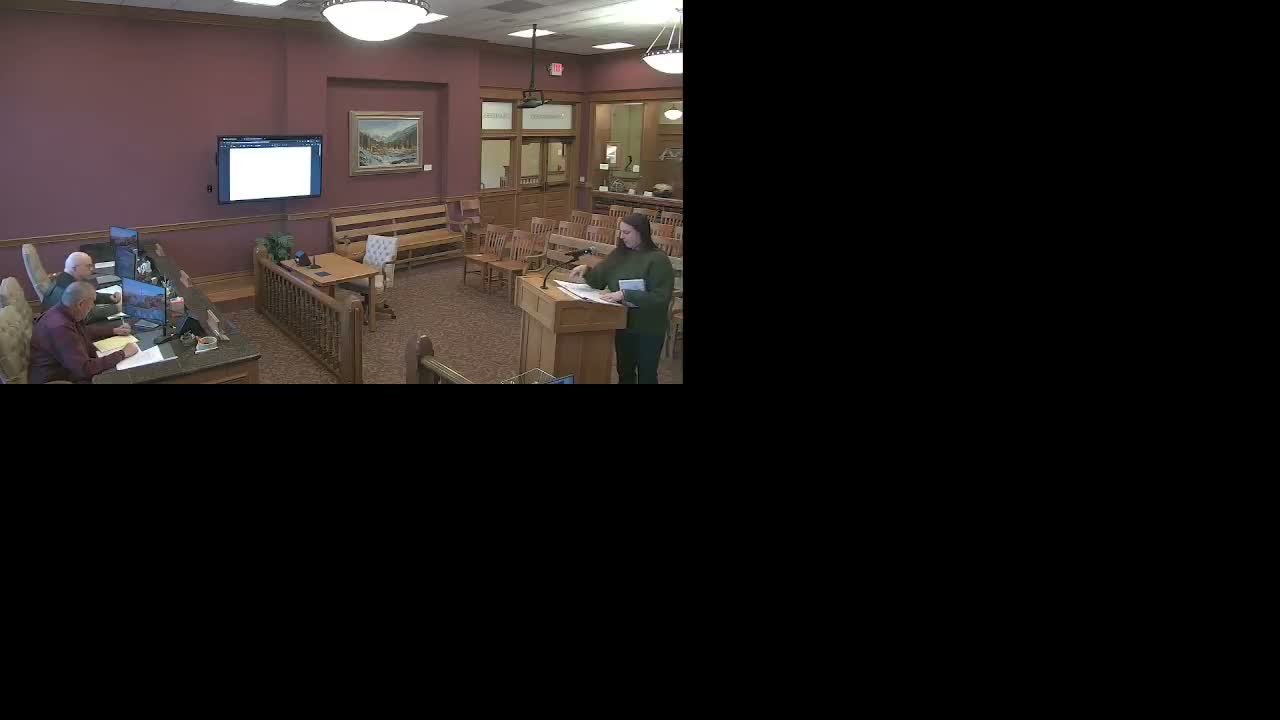
Flathead County commissioners voted March 3 to sign a letter of support for the Lakeside County Water and Sewer District's FY27 congressional funding application despite public commenters who urged withholding support pending further hydrogeologic review.
Jennifer Tipton, representing the North Shore Water Alliance, told the commission that independent analysis from Howard Environmental LLC and LiDAR and satellite imagery show "preferential flow pathways" near the proposed Lakeside discharge site that could move wastewater into surface waters in days or weeks. Tipton said putting "200,000 gallons of wastewater a day in the shallow Delta aquifer is an unacceptably high risk for Flathead Lake" and urged the board to "withhold this letter of support and instead advocate for a project that finds an environmentally sound, scientifically validated location." Mary Flower of Citizens for a Better Flathead echoed those concerns and urged creation of a local task force to identify alternative sites and to press the congressional delegation not to fund what she called a "poorly planned" project.
Rodney Olsen, general manager of the Lakeside County Water and Sewer District, responded that the district has invested significant planning and design work and has obtained a groundwater discharge permit from the Montana Department of Environmental Quality. Olsen said the treatment plant is being designed in phases: "Our plant is being designed for 600,000 gallons a day," with 200,000 gallons per day covered by the permitted groundwater discharge and other flows land-applied through permitted fields. He said the district is exploring additional treatment technologies (including a possible membrane plant) and solids-handling equipment to dry biosolids to the 20% solids level requested by the landfill.
Commissioners pressed Olsen on site-selection history, alternatives considered with HDR and local jurisdictions, and whether the landfill had agreed to receive biosolids; Olsen said landfill acceptance is contingent on meeting the landfill's dryness requirements and that district engineers have been coordinating with landfill staff. Commissioners also discussed the timing and limited opportunity to review a lengthy technical submission provided to them the morning of the meeting; Olsen noted the DEQ permit process is the formal avenue for technical review.
After questions and discussion about ratepayer impacts, alternatives and permitting, Commissioner moved and the board voted to sign the letter of support. The vote followed a motion that the commission's letter reflect support for the district's funding application while maintaining oversight and encouraging continued coordination on biosolids handling and environmental protection.
The next step is for the district to submit the application to the congressional office referenced in district materials; the DEQ permit remains the regulatory mechanism for evaluating hydrogeologic risks and any future permit changes.