Get Full Government Meeting Transcripts, Videos, & Alerts Forever!
Get email alerts on the Budget topic
No spam. Unsubscribe anytime.
Del Valle ISD warns of $7.5 million preliminary shortfall as district kicks off 2026–27 budget process
Summary
Deputy Superintendent and CFO Dina Edgar told trustees the district faces a preliminary $7.5 million deficit for 2026–27, driven by one‑time funding expirations and a $3.2 million shortfall tied to Tesla property value protests; the presentation outlined tradeoffs including potential voter‑approved tax‑rate scenarios, use of fund balance and staffing adjustments.
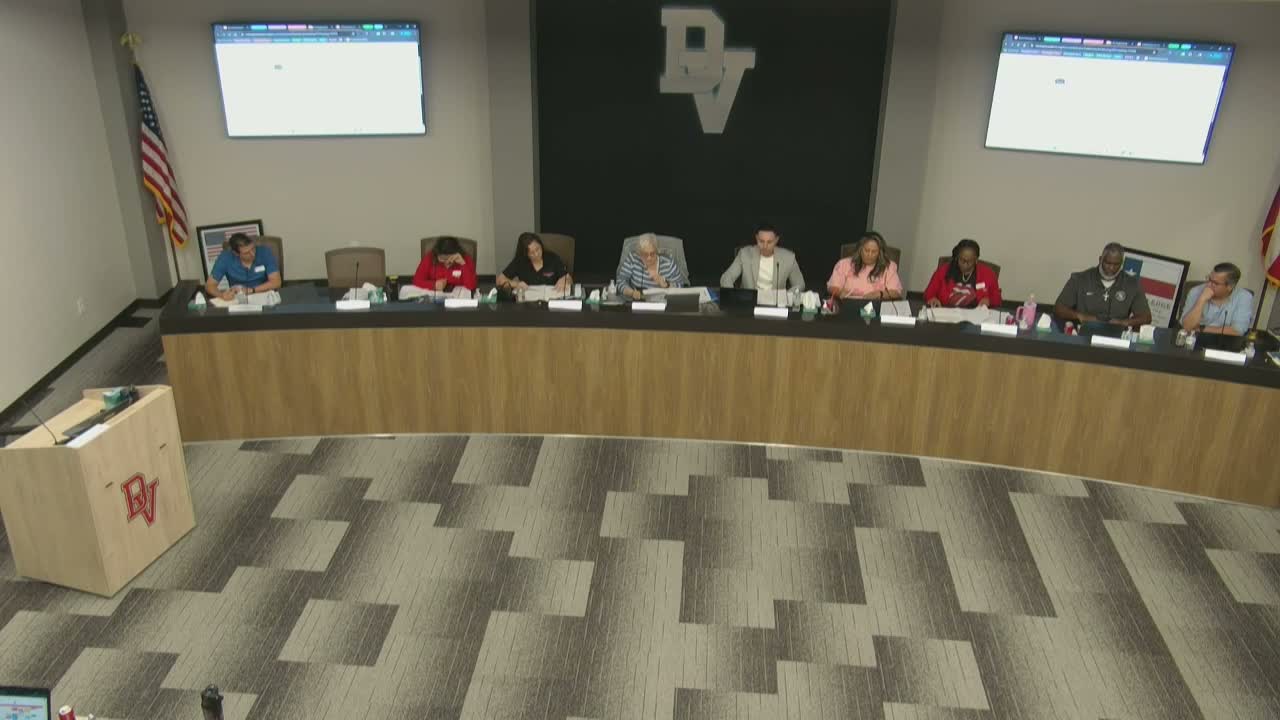
Deputy Superintendent and Chief Financial Officer Dina Edgar told the Del Valle ISD Board of Trustees during a budget kickoff presentation that early assumptions for the 2026–27 budget point to a preliminary deficit of just over $7.5 million.
Edgar told the board the fiscal pressure stems largely from the loss of one‑time federal and local funds and from a shortfall tied to a contest over Tesla property values. "The 3.2 million Tesla shortage this year … accounts for 6 million off the top," Edgar said, explaining that Chapter 313 payments to the district have declined as growth slowed and that a property‑value protest reduced expected revenue. She said the district previously relied on ESSER and other one‑time funding that are now expiring and that the district spent most of those dollars on recurring payroll costs.
The presentation included a legislative review of recent state actions that affect school finance. Edgar reviewed House Bill 2 provisions that raised teacher pay for experienced teachers and introduced the Teacher Incentive Allotment, and she flagged the introduction of Texas Education Freedom Accounts (TEFA) — vouchers that provide up to $10,500 per student to families choosing private schooling — as a continuing enrollment risk. Edgar said revenue per student adjusted for inflation remains below 2016 levels.
On district assumptions, Edgar presented: a conservative 2% increase to average daily attendance, 3% property value growth, a $3 million estimate for Chapter 313 payments, and higher projected costs for property casualty and health‑care. "So earliest projections put us at about 137.4 million in revenue and 145 million in expenditures," she said, summarizing the drivers behind the deficit estimate.
Edgar outlined solution paths the administration will model: modest use of fund balance to smooth the transition from one‑time funds, targeted position reductions through attrition, seeking alternative revenues (including strategic use or sale of district land), and offering scenarios for a voter‑approved tax‑rate election (the presentation used the district acronym "VADER"). She said modeling will include impacts on the average homeowner and that staff will return with refined scenarios in March.
Trustees pressed for details on the Tesla revenue review and on alternatives to a tax election. Trustee Lance Mauldi asked whether the district was reviewing the Chapter 313 agreement and Edgar confirmed an annual review is underway. Trustee Franco urged that the district demonstrate it has exhausted alternative revenue sources before recommending a voter‑approved tax‑rate election to the public.
Next steps include additional board briefings in March, April and May, receipt of certified property values in late April and a budget hearing in June. Edgar said the district could choose to call any voter‑approved tax‑rate election for the November general election if the board decides that is necessary.
The board did not take action at the presentation; the district will present refined modeling and homeowner impact estimates at subsequent briefings.