Get Full Government Meeting Transcripts, Videos, & Alerts Forever!
Get email alerts on the Homeless Outreach topic
No spam. Unsubscribe anytime.
Largo staff urge funding plan to preserve homeless outreach beds and case management
Summary
City staff told the commission an outreach program expanded with ARPA funds has reduced repeat calls for service and placed clients into shelter and housing but faces funding gaps as ARPA support winds down; staff asked for direction to pursue CDBG, grants and a FY27 general-fund request to keep 20 reserved beds and case management in place.
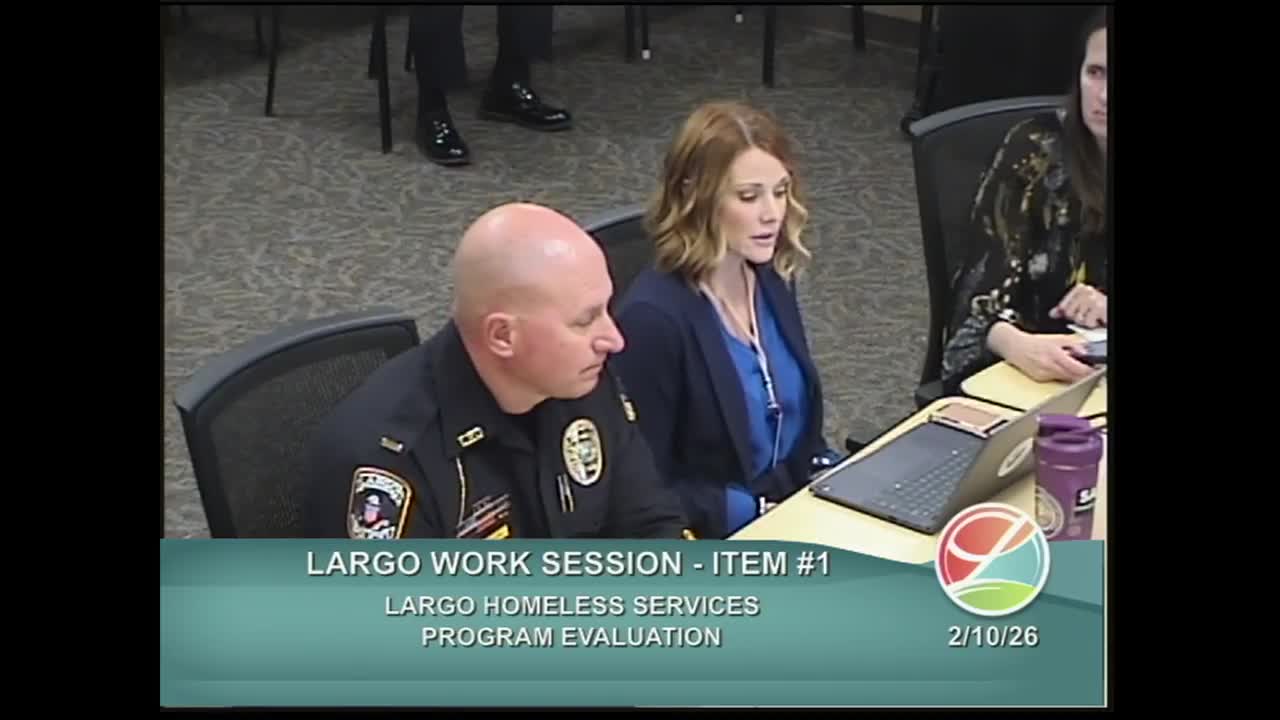
City staff told the Largo City Commission on Feb. 10 that the cityhomeless outreach program, which was enhanced with ARPA funding in 2023, has reduced repeat calls for service and connected many people to shelter and rehousing but now faces a funding cliff as federal ARPA support ends.
At the work session the programteam described a model that pairs a city outreach specialist with a homeless outreach police officer and contracted shelter beds. The outreach specialist, referred to repeatedly in the presentation as Todd Nutt Brown, assesses clients and refers them to one of three primary partners: Homeless Empowerment Program (HEP), Pinellas Hope and WestCare Turning Point. Staff said HEP holds 20 bed nights reserved for Largo referrals and that HEP provides case management, workforce development and medical services that support transitions to permanent housing.
Staff presented several performance measures. Early program years showed about 36% of exits from emergency shelter moving to permanent housing, roughly in line with a national benchmark staff cited. Presenters said more recent data since August indicate stronger outcomes, with an upward trend toward 65% exits to permanent housing for clients in the rehousing pathway. HEP bed-night occupancy was reported at about 91% with a wait list that included roughly 16 clients at the time of the presentation.
Presenters emphasized the workload and intensity of outreach: one staff phone logged more than 5,500 calls/texts in the first six months of 2025 and outreach staff estimated field contacts and phone work typically reach 4–6 unique clients per day plus additional follow-up. Staff described "high utilizers" (clients generating three or more calls in a month) as a small number of people who consume a large share of calls and officer time; they said concentrating outreach on those individuals has helped reduce total call volume.
Several commissioners praised the programas highly effective and urged staff to pursue funding. "The ROI exceeds the cost by far," one commissioner said during the discussion. Staff asked the commission whether to pursue continuing access to shelter beds and case management through a combination of Community Development Block Grant (CDBG) public-services funds, grant opportunities and a proposed FY27 general-fund request. Staff provided an estimate of current annual spending (~$302,000) and said they were evaluating a funding mix that could include about $100,000 in CDBG with the remainder from the general fund unless other grants are secured; staff noted CDBG public-services spending is subject to a statutory cap and would require an action-plan amendment and contract change to add funding months.
On next steps, commissioners directed staff to continue searching for grant opportunities, supply more detailed budget numbers for any general-fund request, and return with the requested information as part of the FY27 budget process. No formal vote or specific appropriation was taken at the work session.
Sources: presentation and Q&A during the Largo City Commission work session, Feb. 10, 2026. Quotes and program figures come from staff presenters and were reported in the session record; where staff gave a range or described a figure as an estimate, the article treats it as such and identifies it as reported by staff.