Get Full Government Meeting Transcripts, Videos, & Alerts Forever!
Get email alerts on the Energy Cleaning Programs topic
No spam. Unsubscribe anytime.
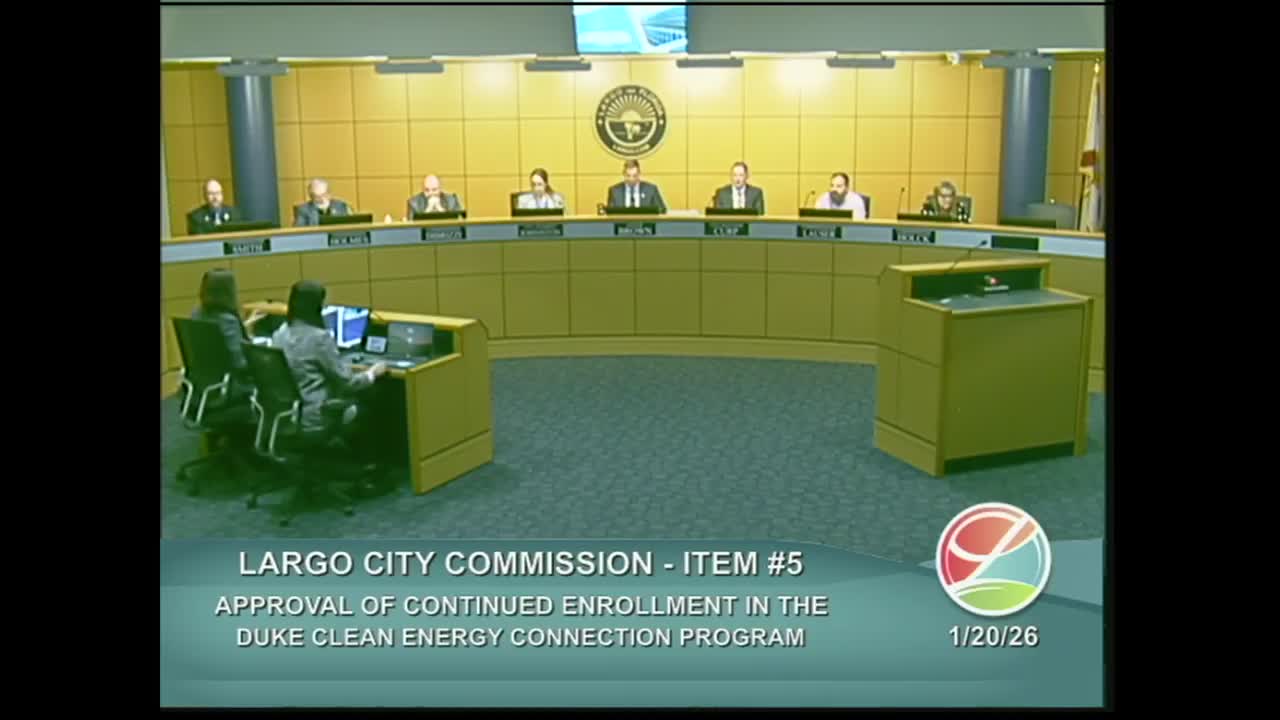
Largo commissioners postpone decision on Duke Energy Clean Energy Connection, order review of Ready for 100 goals
Summary
After an update from city sustainability staff and Duke Energy representatives, the Largo City Commission voted 6–0 to postpone any decision on its participation in Duke's Clean Energy Connection program while the commission reviews its Ready for 100 target and sets parameters for further analysis. Staff said the city has paid just over $159,000 into the program to date.
Sheridan Giamant, Largo's Sustainability and Resilience Administrator, told the City Commission on Jan. 20 that the city has paid just over $159,000 into Duke Energy's Clean Energy Connection (CEC) subscription program and that recent projections now push the program's net-positive year later than originally anticipated.
The update, presented by Giamant with Energy Program Administrator Constance Galati and Duke representatives Travis Nous, Jeff Baker and Tom Lawrie, outlined the program's structure (a subscription fee and a credit back to enrolled municipal accounts), performance problems early in the rollout and how Duke and staff have addressed them. Staff said the city enrolled accounts that consume a lot of electricity or are poor candidates for on-site solar and that the program remains an important tool for the city to pursue its Ready for 100 municipal energy directive.
Why it matters: commissioners expressed concern about the financial risk and long time horizon for a return, the program's limited transparency for municipal auditing, and the effect of weather-related production disruptions. Staff said unenrollment is possible at any time but warned the city would forfeit the money already paid into the program and might not be able to re-enroll in the future because of demand.
Numbers and terms presented at the meeting included staff's report that the city has paid just over $159,000 into the CEC to date, Duke's description of a fixed tariff structure for the program, and staff's projection that the program would reach net-positive results later than previously forecast (staff cited a program-year 12 projection under current assumptions). Duke staff said the program tariff includes a subscription fee set for the program's life and described a credit escalation of 1.5% annually; Tom Lawrie of Duke described net-metering settlement rules and said leftover annual credits are paid out at a wholesale rate that meeting participants noted is materially lower than retail rates.
Public comment during the presentation reflected mixed views. Lisa Hinton of the Suncoast group of the Sierra Club urged caution but recommended that the city maintain its Ready for 100 commitment and give staff more time to press Duke for transparency and reporting improvements. Other speakers urged the city to invest more in on-site solar and questioned past project costs.
Commission action: Commissioner Lauser moved to postpone further action on the city's participation in the CEC until the commission reviews the Ready for 100 goals and establishes clear parameters; Commissioner Smith seconded. The commission voted 6–0 to postpone and directed staff to schedule a prompt work session to revisit goals, review monthly program reports and return with analysis and options. Administration said staff already monitors the program monthly and would convene with council leadership to set a timeline for the work session.
The meeting record indicates the consent docket (including Change Order No. 2 for Nelson Construction, RFQ 22-Q-765, Rosary Road Phase 2, $31,500; and Resolution No. 24-52, technical revisions to the 2025–2028 State Housing Initiatives Partnership local housing assistance plan) was approved earlier in the meeting on a 6–0 vote. The commission also approved the agenda and the minutes from the Jan. 6 meeting, each on 6–0 voice votes.
What happens next: staff will bring the Ready for 100 review and proposed parameters back to the commission after a work session and continue monthly reporting on the CEC program. The postponement keeps the city enrolled for now while the commission considers whether to adjust policy or reduce enrolled megawatts.